Three Different Types of Machine Learning – Supervised Learning, Unsupervised Learning and Reinforced Learning
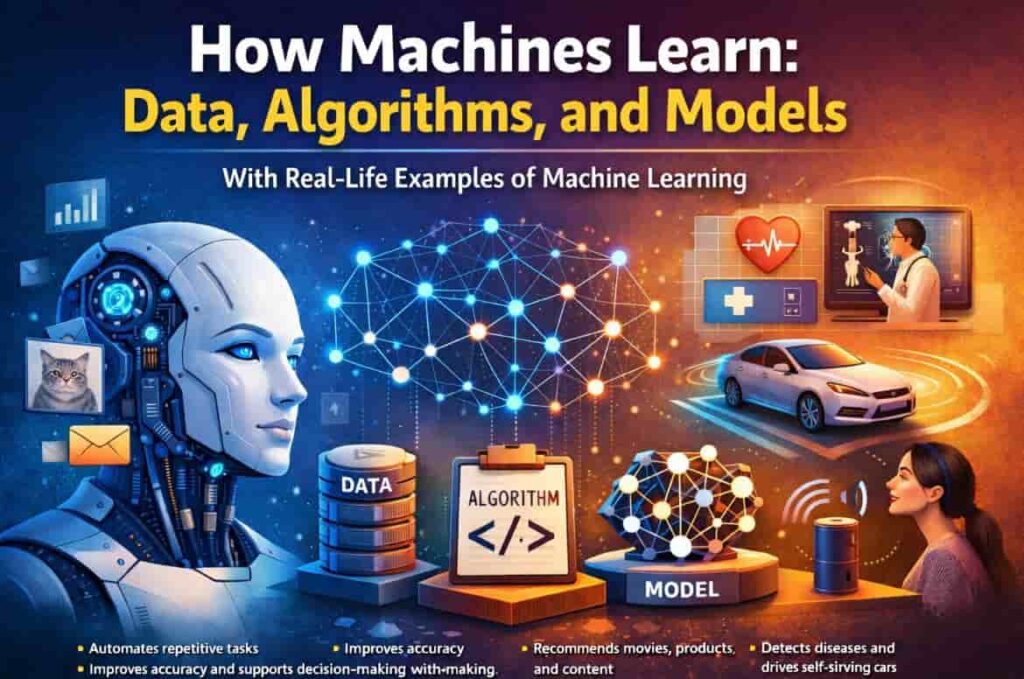
Machine Learning is rapidly becoming one of the most innovative technologies available today (21st Century).The types of machine learning form the foundation of modern Artificial Intelligence systems. Understanding the types of machine learning helps businesses choose the right AI solution. Machine Learning is working in the background to help improve programs like Netflix recommendations, detect online banking fraud, etc. Understanding how this revolutionary technology works is critical to appreciate each of the three basic Descriptive categories of machine learning which are Supervised Learning, Unsupervised Learning and Reinforced Learning.
In this in-depth, well-optimized blog entry, we will provide thorough coverage of each of these examples of machine learning, how they work, examples of them being used in the real world, and contrast the attributes and disadvantages of each example. The readers of this blog entry will have acquired a basic understanding of the core concepts associated with machine learning and that should help to form a framework for any other resource material on the topic of machine learning available on the Internet. To understand how machine learning evolved, you should first explore the History of Artificial Intelligence: Timeline and Lessons.
Machine learning refers to many things, however medical terminology will not let me explain that. Let me just say machine learning is a part of AI that permits systems to learn from data and increase performance without explicitly writing code that explains how you will perform each action at every instance.
Types of Machine Learning in Artificial Intelligence
Most machine learning algorithms are implemented using Python, which is explained in detail in our article Python for AI: The Most Popular Choice for Developers and Beginners in 2026. Instead of creating detailed rule sets for all possibilities, developers develop algorithms that can access more large amounts of data. During development the algorithms access the data and use complex mathematics to build rules based on patterns in the data. The end result of machine learning is an ability to recognize patterns and make decisions without human intervention.
Machine learning provides computers the ability to acquire knowledge based on experience, exactly like humans learn from experience as well.
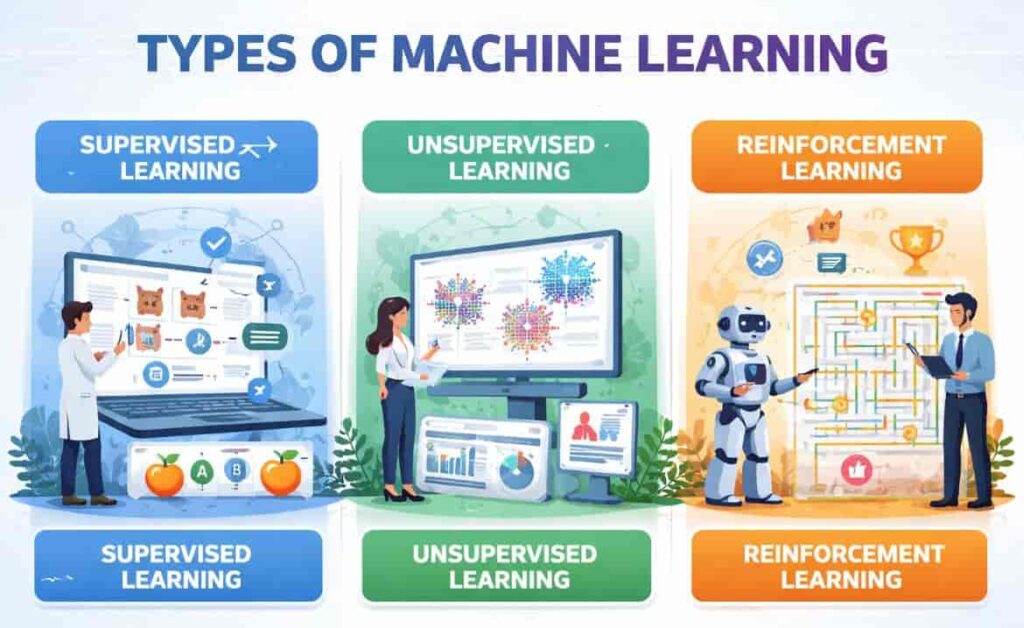
There are a total of three (3) basic types of machine learning;
- supervised
- unsupervised
 reinforcement learning.
 reinforcement learning.
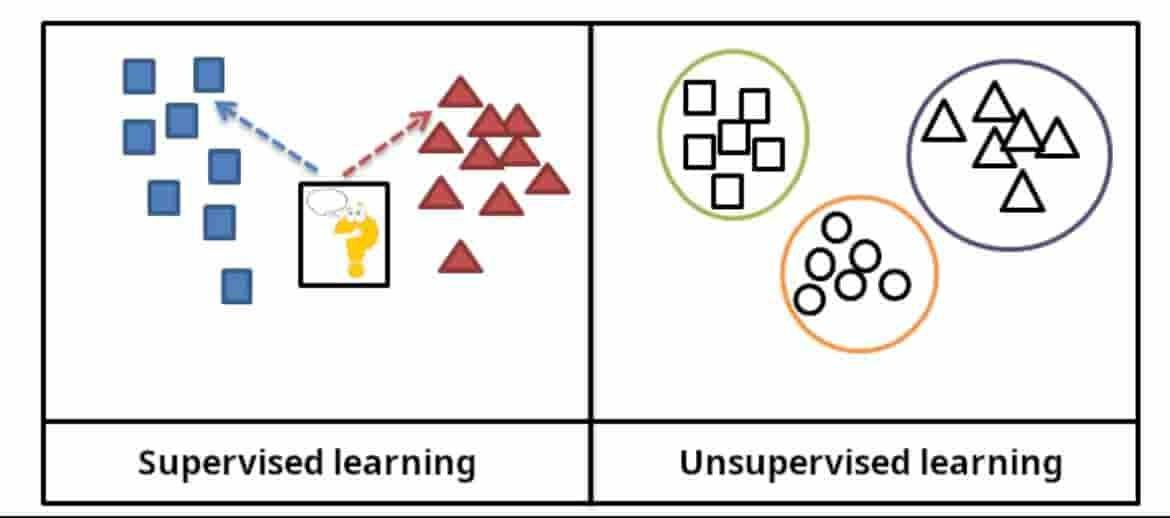
Let’s review the types of machine learning; supervised learning is the most dominant form of machine learning presently. It is called supervised learning because the algorithm learns based on labeled data. This means that each piece of data (input) in the labelled data set is matched with a correct result (output).
AI is transforming industries, as discussed in our guide on How AI is Changing Our Lives: 10 Powerful Real-Life Examples. Consider this example as a student learns from his/her instructor. In this scenario, the student is provided the student will be asked questions and have the correct answer provided by the instructor (the teacher). Ultimately, through experience, the student learns to find patterns and answer newly formed questions correctly. Therefore, using the same analogy, through supervised learning the algorithm will learn the relationship of each input to its corresponding labelled output.
How Does Supervised Learning Work?
Supervised learning generally follows this process;
- collect labelled data,
- separate your collected labelled data into training data and test data,
- train your algorithm using your training data,
- test the performance of your trained model using your test data.
- Based on observing an example dataset, make a prediction about what results would occur when presented with an unknown dataset.
An example of this may include how an email is marked as either spam or not spam; therefore, a supervised learning algorithm using its training will learn from historical data
(i.e., spam, and not spam) to develop general rules for classifying future examples as spam or not.
Types of Supervised Learning
There are two main categories of supervised learning.
- Classification
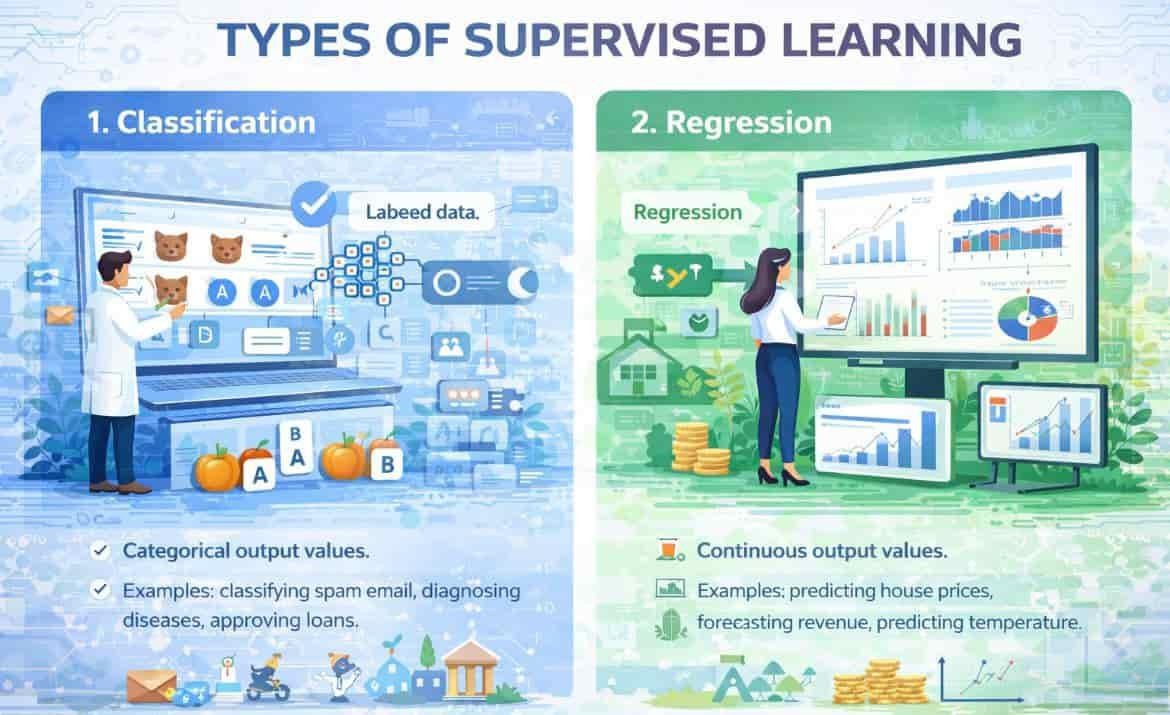 The output variable is considered categorical, and the purpose of classification is to classify the input data into one of the pre-determined categories based on a set of criteria. Examples of classification problems include email being classified as spam or not, patient being diagnosed with a disease or not, or a loan being approved or rejected.
- Regression
Output variables considered to be continuous can be predicted using regression techniques. Some examples of regression predictions are predicting the sale price of a house, forecasting sales revenue, or predicting the temperature.
The result of a regression problem is a number.
Most Commonly Used Algorithms in Supervised Learning
Some commonly used supervised learning algorithms are linear regression, logistic regression, decision trees, random forest, support vector machine, k-nearest neighbors, and neural networks.
Each algorithm has its advantages based on the size of the dataset and the type of problem being solved.
Real-life uses for supervised learning include:
Email spam classification; facial recognition systems; medical diagnostic systems;
credit default prediction models; stock price forecasting;
speech recognition systems.
The most practical and widespread approach to using machine learning has been by using labeled datasets through supervised learning due to their availability within structured business environments.
 Unsupervised Learning:
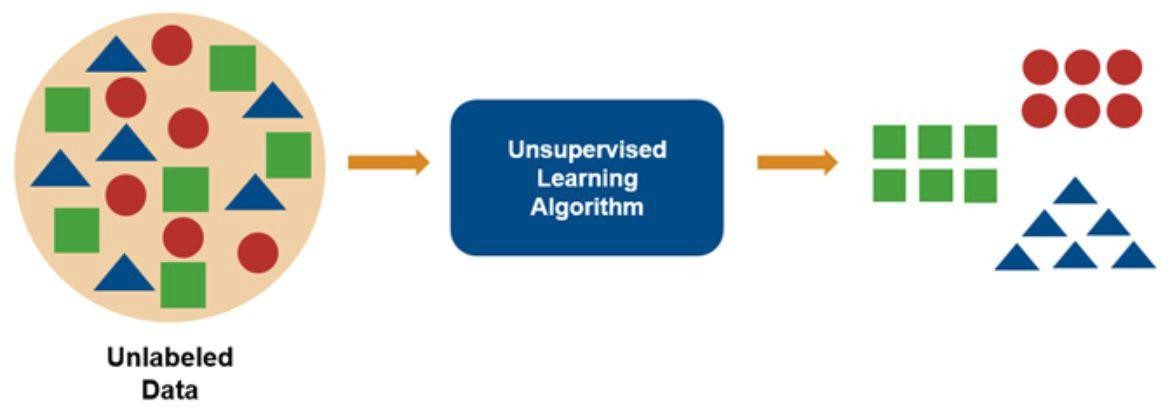
Unsuspected learning refers to the mode of learning that utilizes unlabelled datasets since the unsupervised model does not possess prior knowledge of the proper answer. The goal of the unsupervised learning model will be to discover hidden patterns or the structure(s) within the collection of data.
For example, if you had a pile of colored balls with no identified labels, you would naturally tend to sort them by colour or size; likewise, this basic mechanism exemplifies how unsupervised learning performs its function.
The Unsupervised Learning Algorithm Works Through:
- The input of unlabelled data into an algorithm.
- The identification of similarities or relationships.
- The creation/organization of newly established groupings.
- The extraction of new insights or data that were not known before.
Unlike supervised learning, the unsupervised learning model does not utilise a “teacher” to direct the system; therefore, the model is left to find its own patterns or relationships contained within the dataset.
Types of Unsupervised Learning fall into three primary categories:
- Classifying
Classifying is the act of determining the nature of the output variable when the output variable is categorical (“Yes” or “No,” “True” or “False”) Example: 1) spam or not spam; 2) disease or no disease; 3) approved or rejected. The output variable is placed into
pre-existing categories for the purpose of classification.
- Regression
Regression provides an output for a continuous variable based on an input variable(s). Examples include: 1) predicting house prices; 2) predicting sales revenue; 3) predicting temperature. The output from a regression model is a numeric value.
Commonly Used Algorithms in Supervised Learning Algorithms used in supervised learning include:
- Linear Regression
- Logistic Regression
- Decision Trees
- Random Forests
- Support Vector Machines (SVMs)
- K-Nearest Neighbors (KNN)
- Neural Networks.
These algorithms can offer different benefits based on the type of problem (supervised/unsupervised) and the data set’s size.
There are many real world use cases for supervised learning. Examples include:
- Email spam filtering
- Facial recognition
- Medical diagnosis
- Credit risk evaluation
- Stock price forecasting
- Speech recognition
Because supervised learning uses labeled data that is typically available in a structured business environment, it has become the easiest and most common way to apply machine learning. Unsupervised learning differs from supervised learning due to its use of unlabeled data. Algorithms do not know what the desired output is prior to training the algorithm.
Instead, they discover previously unknown structures and patterns within the data while training.
When given a set of unmarked different colored balls, you would naturally start to group them based on similar characteristics like color and size. That grouping resembles what unsupervised learning does.
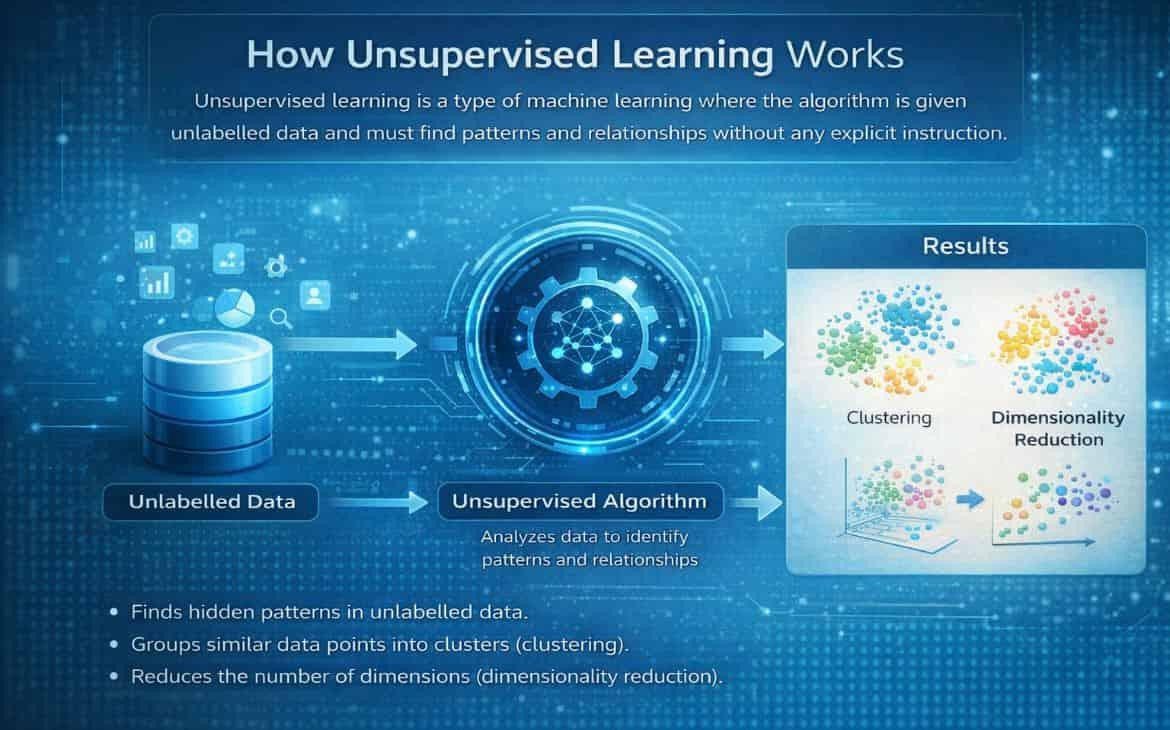 How Unsupervised Learning Works
Typical steps in the unsupervised learning process include:
- Provide the algorithm with unlabeled data.
- Identify similarities or patterns;
- Group or organize the data; and
- Extract useful insights.
One of the key aspects of unsupervised learning is that there is not a “teacher” to direct the model; instead, the system finds patterns on its own.
The different methods of unsupervised learning can be classified into three primary classifications:
- Clustering
Clustering is the process of grouping together a set of data points that have similar characteristics. For example, businesses will use clustering to segment their customers based on their purchasing habits.
- Association
Association is finding relationships between two or more variables. An example of this is market basket analysis, in which retailers examine the products purchased together.
- Dimensionality Reduction
Dimensionality reduction is reducing the number of input variables while still providing the basic information needed for a model. Dimensionality reduction is used to simplify complex datasets and provide greater speed in running models.
Common Unsupervised Learning Algorithms
Some of the more popular algorithms in the unsupervised learning category include:
- K-Means Clustering
- Hierarchical Clustering
- DBSCAN
- Apriori Algorithm
- Principal Component Analysis (PCA)
For any dataset, the variation between these algorithms will determine which is best suited for a given set of data (as well as the intended outcomes).
Where Unsupervised Learning Is Used In The Real World Unsupervised learning has many real-world applications, including:
- Customer Segmentation
- Fraud Detection
- Recommendation Systems
- Social Network Analysis
- Anomaly Detection
- Image Compression
For instance, e-commerce companies will utilize clustering techniques to group together customers that exhibit similar buying patterns so that they can effectively target them with customized marketing strategies.
 Reinforcement Learning:
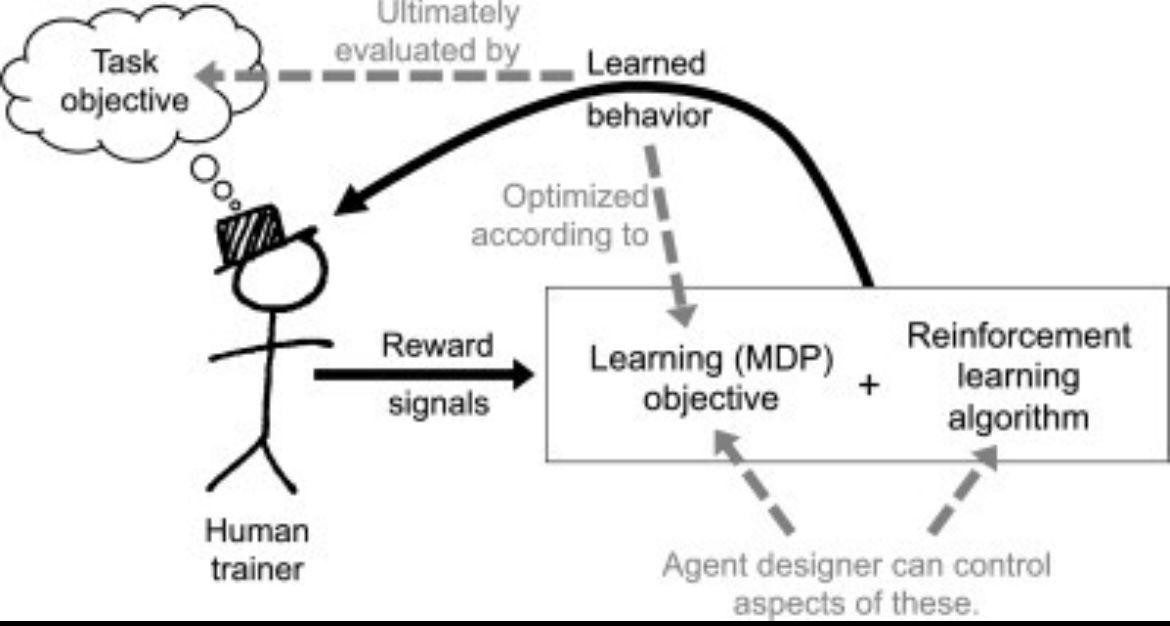
Reinforcement Learning is a completely different methodology from both supervised and unsupervised learning. An agent will learn to perform a task by interacting with its environment; a reward/penalty system is used to incentivize appropriate behavior by the agent (the purpose is to maximize total compensation).
For example: If you had a puppy and you wanted to teach him/her to sit, you would give him/her a treat every time he/she did what you wanted. If he/she didn’t do what you wanted, you would correct him/her. As time passed (and you continued to execute these actions), the puppy would establish a habit of behaving the desired way (to sit). Reinforcement learning is based on this model.
Essential Elements of Reinforcement Learning
Reinforcement learning consists of the following components: Agent: an entity that makes decisions when interacting with an environment; Environment: the setting in which the agent operates; Action: everything the agent does within the environment to achieve its goals; and Reward: feedback the agent receives about its actions. The overall goal of reinforcement learning is to create a policy (a way to decide on the best action to take at any given moment) that will maximize long-term reward.
How does Reinforcement Learning Work?
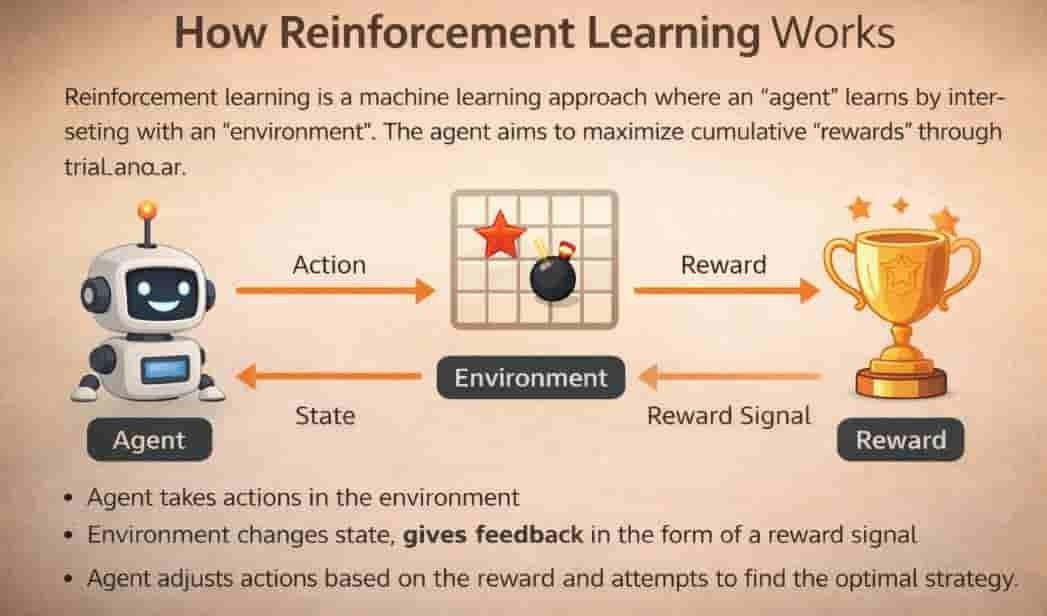 How does Reinforcement Learning Work?
A reinforcement agent uses the following steps to learn from its environment: (1) Observe the state of the environment; (2) Take an action; (3) Get a reward; (4) Adjust policy; (5) Repeat. Continued interaction with its environment allows the agent to improve on its ability to make good decisions. Reinforcement learning is widely used in autonomous systems such as AI in Self-Driving Cars: Making Road Safety a Reality.
Common Techniques Used in Reinforcement Learning
Some popular methods of reinforcement learning include Q-learning, Deep Q Networks (DQN), Policy Gradient Methods, and Monte Carlo Methods. Each of these techniques is particularly applicable to dynamic and complex environments.
Examples of Reinforcement Learning Applications
Reinforcement learning is currently being applied in areas such as self-driving vehicles, robotics, game-playing AI, stock trading systems, industrial automation, and resource management.
AI systems trained with reinforcement learning have been able to repeatedly defeat the best human champ players in chess and go, as well as any computer chess player; hence these AI systems have shown much more ability than a man or a computer to assess the right move.
There Is No One Best Machine Learning Model
Any of these three types of machine learning can be used to solve a given problem depending on the type of data, the business’s needs for accuracy and detail, and the desired time frame.
As a result, when considering a career in data science, artificial intelligence, & machine learning, the successful development and implementation of AI technologies is directly impacted by how well you understand the three primary machine learning types. All three types of machine learning form the underlying basis for today’s modern AI systems.
AI-enabled businesses exist in every industry, including healthcare, finance,
retail/e-commerce, transportation, & entertainment. The ability to make the right decision, whether it be through supervised, unsupervised, or reinforcement learning, will lead to better decision-making and ultimately increased innovation.
Machine learning is more than just a technical skill in today’s digital economy—it can enhance your competitive advantage.
Conclusion:
Machine learning has the potential to change our lives in so many ways. Machine Learning consists of three types: Supervised, Unsupervised and Reinforced. Each type has different methods, strengths and uses in the real world.
Supervised learning is used to predict based on labeled input data. Unsupervised learning is used to identify hidden patterns in unlabeled data. Reinforcement learning is used to learn through reward and interaction.
These three types of machine learning provide the foundation of the global AI systems.
As technology continues to grow, knowing about machine learning types will be an important advantage to everyone. No matter if you are a student, blogger, developer or entrepreneur; mastering this information can help you move forward in the AI world.
Machine Learning is not the future. It is now and it all starts with a basic understanding of each of the three types of machine learning.
Now you clearly understand the three major types of machine learning and their real-world applications.

Author: AI Learner Tech
AI Learner Tech is a premier research and educational hub dedicated to mastering Artificial Intelligence, Machine Learning, and Computer Vision. We bridge the gap between complex academic theories and real-world industrial applications. Join our community to access high-quality tutorials, open-source projects, and expert insights. Website: ailearner.tech