Python for Artificial Intelligence: A Complete Beginner’s Guide to Start AI in 2026
Python for AI has become the most popular choice for developers and beginners in 2026. Artificial Intelligence and machine learning are transforming modern technology, and Python provides a simple, powerful, and flexible programming language to build smart systems. With its clean syntax and rich libraries like NumPy, Pandas, TensorFlow, and PyTorch, Python makes it easier to develop intelligent applications, automate tasks, and analyze data efficiently. This is why Python continues to dominate the world of AI and machine learning today.
Duo of AI & Python
Why Python is the Best Language for AI and Machine Learning in 2026
Artificial Intelligence:
 Artificial Intelligence (AI) refers to the ability of machines to simulate human intelligence, such as learning, reasoning, understanding language, and making decisions. In the context of SEO, AI helps search engines and marketers analyze user behavior, understand search intent, and deliver more relevant results. Technologies like machine learning and natural language processing (NLP) allow AI systems to continuously learn from data and improve performance over time.
Python:
Python is a high-level, open-source programming language known for its simplicity and powerful capabilities. It is widely used in AI, data analysis, and automation, making it an ideal choice for SEO professionals. With its extensive libraries—such as Pandas, NumPy, BeautifulSoup, and Scikit-learn—Python enables marketers to automate SEO tasks, analyze large datasets, and build intelligent SEO solutions efficiently.
Together, AI and Python form a powerful combination that is transforming modern SEO by making strategies more data-driven, scalable, and accurate.
Exploring the Powerful Connection Between AI and Python: Enhancing Your Digital Presence
In today’s technology-driven world, the combination of Artificial Intelligence (AI) and the Python programming language has transformed how businesses grow, innovate, and compete online. Understanding how these two technologies work together can help you strengthen your digital presence, improve decision-making, and build a smarter SEO strategy. This guide explores the connection between AI and Python and explains why they are becoming essential tools in the digital ecosystem.
Artificial Intelligence focuses on enabling machines to learn from data, recognize patterns, and make intelligent decisions. In digital marketing and SEO, AI is widely used to analyze user behavior, interpret search intent, optimize content, and adapt strategies based on real-time insights. Technologies such as machine learning and natural language processing (NLP) allow businesses to move beyond guesswork and adopt data-driven approaches for better search visibility.
Python plays a critical role in bringing AI ideas to life. Known for its simplicity, readability, and flexibility, Python is one of the most popular languages for AI development, data analysis, and automation. Its extensive ecosystem of libraries—such as Pandas, NumPy, TensorFlow, and Scikit-learn—makes it easier to build, test, and deploy AI-powered solutions efficiently.
Powerful Connection of AI & Python
Unleashing the Power of Python: The Backbone of the AI Revolution
In the world of Artificial Intelligence (AI), Python has emerged as the backbone driving innovation and shaping intelligent systems. From data analysis and machine learning to natural language processing and automation, Python’s versatility and robust capabilities make it the preferred programming language for AI development. Let’s explore why Python stands at the heart of the AI revolution and how it can boost your digital presence in an SEO-friendly way.
Python’s Simplicity and Flexibility
Python’s clean and readable syntax makes it ideal for AI projects. Developers can prototype, implement, and refine complex algorithms with ease. Its versatility allows smooth integration with AI frameworks, making Python the top choice for building advanced AI applications.
Extensive Library Ecosystem
Python provides a rich ecosystem of libraries and frameworks designed for data manipulation, statistical analysis, and machine learning. Libraries like TensorFlow, PyTorch,
and Scikit-Learn enable developers to build, train, and deploy AI models efficiently, accelerating innovation across industries.
Strong Community Support
Python enjoys massive popularity among developers, with countless resources, tutorials, and active online communities focused on AI development. This widespread adoption ensures continuous support and shared knowledge, making it easier for developers to overcome challenges and create cutting-edge AI solutions.
Scalability and Performance
Python scales seamlessly to handle large datasets and complex AI tasks. Its performance optimizations, combined with integration capabilities, make AI applications efficient and reliable, allowing developers to push the boundaries of innovation.
Enhancing SEO with Python-Powered AI
Python-driven AI tools can supercharge SEO strategies. By analyzing keyword trends, understanding user intent, optimizing content, and monitoring website performance, businesses can improve search engine rankings, enhance user experience, and drive organic traffic more effectively.
Backbone of AI Revolution
Python: Your Gateway to AI – Why It’s the Best Language to Start With
Embarking on a journey into Artificial Intelligence (AI) can feel like stepping into a world full of opportunities. Choosing the right programming language is crucial, and Python emerges as the
clear frontrunner. This guide explains why Python is the ideal language to kickstart your AI journey, in a beginner-friendly, humanized, and SEO-optimized manner.
Accessible and Beginner-Friendly
Python’s clean syntax and readability make it perfect for newcomers. Beginners can grasp fundamental AI concepts and dive into hands-on projects without feeling overwhelmed. Its simplicity ensures a smooth learning curve, making it easier to enter the exciting world of AI.
Versatility and Rich Library Support
Python’s versatility is unmatched, thanks to its vast ecosystem of AI libraries and frameworks. From TensorFlow and PyTorch for deep learning to Scikit-Learn for machine learning, Python provides all the tools needed for diverse AI applications. This extensive library support simplifies development and empowers enthusiasts to experiment, innovate, and build intelligent systems efficiently.
Community Support and Knowledge Sharing
Python’s vibrant developer community is one of its strongest assets. With abundant forums, tutorials, and online resources, beginners and experts alike can exchange ideas, solve challenges, and collaborate on AI projects. This community fosters learning, growth, and confidence, making Python a welcoming language for all AI practitioners.
Scalability and Performance
Python is not just beginner-friendly—it is also scalable and performance-optimized. It can handle large datasets, complex algorithms, and advanced AI computations with ease. Its efficiency ensures that AI applications run smoothly, enabling developers to tackle sophisticated tasks confidently.
SEO Benefits of Python in AI Projects
Python isn’t only powerful for AI development—it can also enhance your SEO strategy. By leveraging Python for data analysis, content optimization, and automation, businesses can boost organic traffic, improve user experience, and gain insights to optimize their digital presence. Python-powered AI tools make it easier to refine content strategies and elevate search engine rankings effectively.
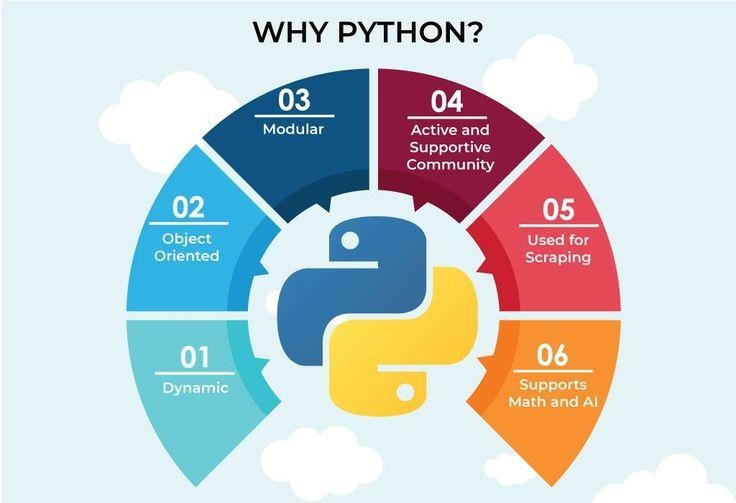
Core Python Concepts Essential for AI: A Beginner’s Guide to Building a Strong Foundation
Entering the world of Artificial Intelligence (AI) can feel overwhelming for beginners, but every successful AI journey starts with one powerful skill: Python programming. Python is the most popular language for AI because it is simple, readable, and highly flexible. By mastering the core Python concepts, beginners can build a strong base and smoothly move toward machine learning, deep learning, and intelligent systems. Here is the complete AI roadmap of the Artificial Intelligence journey.
Why Python Is Important for Artificial Intelligence
Python has become the backbone of modern AI development due to its easy syntax and
powerful ecosystem. AI systems rely heavily on data processing, automation, and
decision-making, all of which Python handles efficiently. Learning Python allows beginners to focus on AI logic and problem-solving rather than complex programming rules.
Understanding Variables and Data Types in Python
One of the most important Python concepts for AI is variables and data types. Variables are used to store information, while data types define the kind of data being stored. In AI applications, Python commonly works with integers, floats, strings, and lists to process numerical values, text data, and datasets. A strong understanding of data types ensures that AI models handle data accurately and efficiently.
The Role of Conditional Statements in AI Logic
Conditional statements allow a program to make decisions based on specific conditions. In artificial intelligence, decision-making is a core function. Python’s conditional logic helps AI systems analyze situations, compare values, and respond intelligently. This concept is essential for building AI models that adapt to user input and changing data.
Loops: Handling Repetitive Tasks in AI
AI development often involves working with large datasets and repetitive processes. Python loops make it possible to repeat tasks automatically, such as training models or processing data multiple times. Mastering loops allows beginners to write efficient programs that save time and improve performance in AI applications.
Functions: Building Organized and Reusable AI Code
Functions play a vital role in writing clean and structured Python code. They allow developers to divide complex programs into smaller, reusable parts. In AI projects, functions are used for data preprocessing, model training, and performance evaluation. Learning functions helps beginners build scalable and professional-level AI systems.
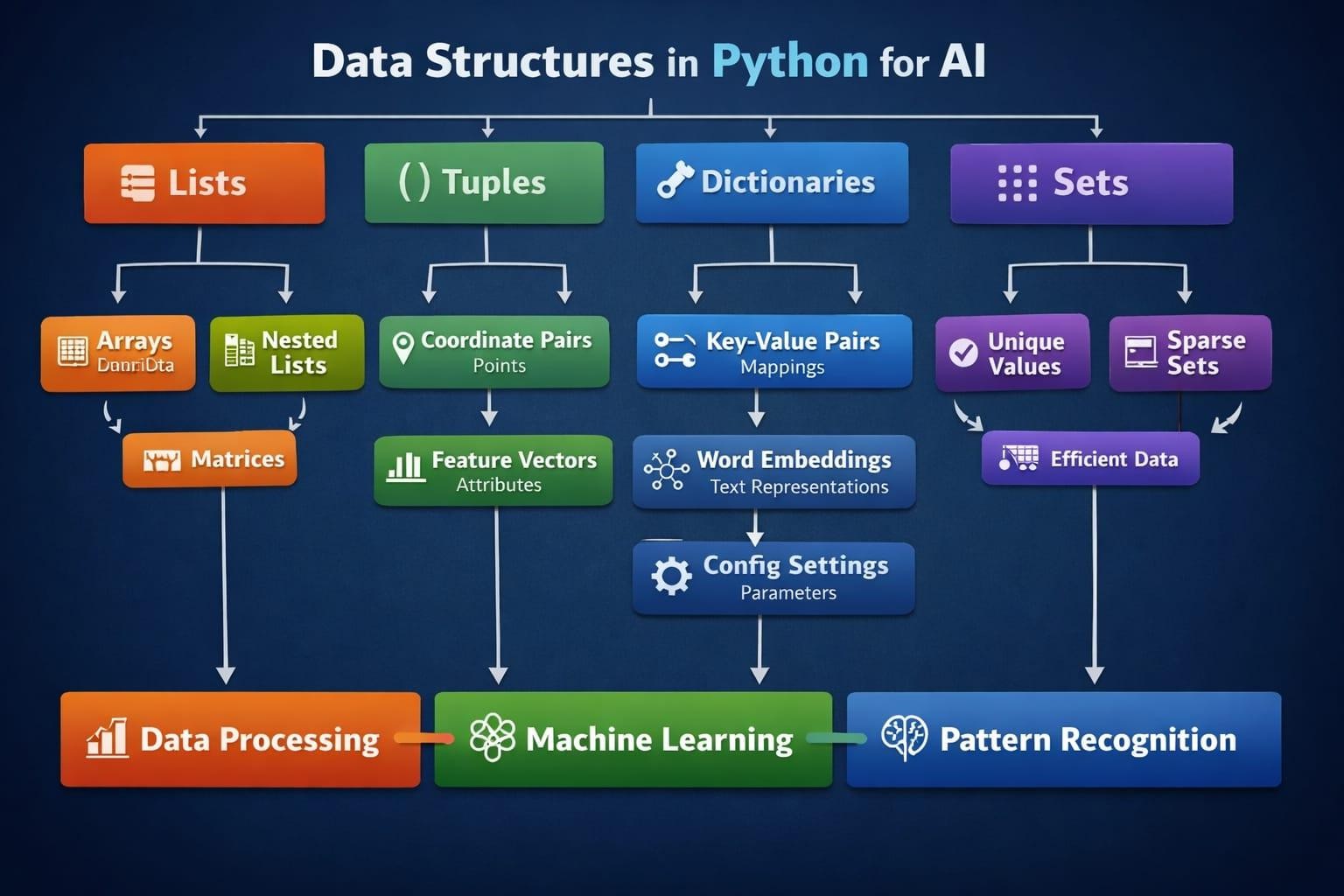
Python Data Structures for AI Applications
Handling data effectively is essential in AI, and Python provides powerful data structures such as lists, tuples, and dictionaries. These structures help organize datasets, store features, and manage configurations. Understanding Python data structures enables beginners to manage complex AI workflows with confidence.
Embarking on the journey to learn Artificial Intelligence (AI) is exciting, but it can also be challenging for beginners who are just stepping into this rapidly evolving field. Many learners struggle with common pitfalls that slow down progress or create frustration along the way. By understanding these obstacles and taking a mindful approach, you can navigate your AI learning roadmap effectively and accelerate your path to mastery.
Rushing Into Deep Learning Without a Strong Foundation
One of the most frequent mistakes beginners make is diving straight into deep learning without first building a solid foundation in fundamental AI concepts. While neural networks and advanced AI models are fascinating, attempting them too early can lead to confusion and burnout. It’s essential to start with the basics, including machine learning principles, algorithms, and data processing techniques, before tackling complex architectures.
Developing a strong understanding of foundational AI concepts ensures a smoother transition into more intricate topics later.
Overlooking Python Proficiency
Python has become the language of choice for AI development, thanks to its simplicity, versatility, and extensive ecosystem of libraries. Beginners who neglect to hone their Python skills often face challenges when implementing AI solutions. It’s crucial to master Python fundamentals such as variables, data types, loops, functions, and libraries like NumPy and Pandas. Strong Python proficiency enables learners to execute AI projects efficiently and lays the groundwork for exploring more advanced AI frameworks.
Neglecting Math Fundamentals
Artificial intelligence relies heavily on mathematical concepts, including linear algebra, calculus, probability, and statistics. Many beginners make the mistake of skipping these fundamentals, which later makes it difficult to understand algorithm behavior or model performance. Refreshing core math skills and understanding their application in AI empowers learners to develop and optimize models effectively, enhancing both comprehension and practical implementation.
Failing to Practice Hands-On Projects
While theoretical knowledge is important, practical experience is crucial for mastering AI. Beginners often focus solely on theory, missing out on the opportunity to apply what they’ve learned. Engaging in hands-on projects, participating in AI competitions, and building personal
projects are essential steps to deepen understanding. These experiences reinforce concepts, sharpen problem-solving skills, and provide real-world context that theory alone cannot offer.
Unveiling the Future of Python in Artificial Intelligence: A Seamless Evolution Towards Innovation
Future of Python in AI
The world of Artificial Intelligence (AI) is evolving at an unprecedented pace, and at the heart of this technological revolution lies Python. Renowned for its simplicity, versatility, and robust ecosystem, Python has become the preferred programming language for AI developers across the globe. In this blog, we explore the future of Python in AI, highlighting how it continues to shape innovations, drive advancements, and enable intelligent solutions for the years to come.
Python’s Dominance in AI Development
Python’s popularity in AI stems from its user-friendly syntax, extensive library ecosystem, and seamless integration with AI frameworks. From machine learning and deep learning to natural language processing (NLP) and computer vision, Python empowers developers to build sophisticated AI solutions efficiently. Its accessibility ensures that both beginners and professionals can leverage its capabilities to innovate and solve complex problems in the AI space.
Scalability and Performance: Meeting the Demands of AI
As AI projects grow in complexity, scalability and performance become critical. Python has made significant strides in this area through technologies like Just-In-Time (JIT) compilation and native code generation, enhancing its ability to handle large datasets and computationally intensive tasks. These improvements make Python a reliable and
future-ready choice for AI applications, from research prototypes to enterprise-level solutions.
Community Collaboration and Support
Python’s thriving global community plays a pivotal role in its future trajectory in AI.
Open-source contributions, knowledge sharing, and collaborative projects foster an environment that encourages learning, experimentation, and innovation. As the community grows, Python becomes not just a language but a platform for AI breakthroughs, empowering developers to tackle real-world problems with creativity and efficiency
Integration with Emerging Technologies
Python’s adaptability ensures it remains at the forefront of AI innovation. Its compatibility with emerging technologies such as edge computing, Internet of Things (IoT), and cloud platforms enables seamless integration of AI solutions across diverse industries. This versatility positions Python as a central tool for AI-driven applications in smart devices, autonomous systems, and next-generation enterprise solutions.
Conclusion: Mastering AI with Python – Building a Future-Ready Foundation
Mastering Artificial Intelligence (AI) starts with a strong foundation in Python and core AI concepts. By learning variables, data types, loops, functions, and essential libraries like NumPy, Pandas, TensorFlow, and PyTorch, beginners can confidently tackle machine learning, deep learning, and real-world AI projects. Avoid common mistakes, practice hands-on projects, and engage with the AI community to accelerate growth. With Python’s versatility, scalability, and rich ecosystem, learners are equipped to innovate, solve complex problems, and shape the future of AI.
AI + Python concept Illustration
The Foundation of AI and Python: A Powerful Duo for Innovation
Artificial Intelligence (AI) and Python have become one of the most powerful combinations in modern technology. Together, they provide a strong foundation for building innovative solutions in areas such as machine learning, data analysis, automation, and intelligent systems.
AI focuses on creating systems that can learn from data, adapt, and make smart decisions, while Python offers a simple, readable, and flexible programming environment to bring these ideas to life. Its clean syntax allows developers to focus more on logic and less on complexity.
Python’s rich ecosystem of libraries—such as NumPy, Pandas, Scikit-learn, TensorFlow, and PyTorch—makes it easier to develop, train, and deploy AI and machine learning models efficiently. This is why Python is often the first choice for beginners and professionals entering the AI field.
Beyond machine learning, Python is widely used in automation, natural language processing, data science, and web-based AI applications, making it highly versatile and future-ready.
Duo of AI & Python
Introduction: What Are AI and Python in SEO?
Artificial Intelligence:
Artificial Intelligence (AI) refers to the ability of machines to simulate human intelligence, such as learning, reasoning, understanding language, and making decisions. In the context of SEO, AI helps search engines and marketers analyze user behavior, understand search intent, and deliver more relevant results. Technologies like machine learning and natural language processing (NLP) allow AI systems to continuously learn from data and improve performance over time.
Python:
Python is a high-level, open-source programming language known for its simplicity and powerful capabilities. It is widely used in AI, data analysis, and automation, making it an ideal choice for SEO professionals. With its extensive libraries—such as Pandas, NumPy, BeautifulSoup, and Scikit-learn—Python enables marketers to automate SEO tasks, analyze large datasets, and build intelligent SEO solutions efficiently.
Together, AI and Python form a powerful combination that is transforming modern SEO by making strategies more data-driven, scalable, and accurate.
Exploring the Powerful Connection Between AI and Python: Enhancing Your Digital Presence
In today’s technology-driven world, the combination of Artificial Intelligence (AI) and the Python programming language has transformed how businesses grow, innovate, and compete online. Understanding how these two technologies work together can help you strengthen your digital presence, improve decision-making, and build a smarter SEO strategy. This guide explores the connection between AI and Python and explains why they are becoming essential tools in the digital ecosystem.
Artificial Intelligence focuses on enabling machines to learn from data, recognize patterns, and make intelligent decisions. In digital marketing and SEO, AI is widely used to analyze user behavior, interpret search intent, optimize content, and adapt strategies based on real-time insights. Technologies such as machine learning and natural language processing (NLP) allow businesses to move beyond guesswork and adopt data-driven approaches for better search visibility.
Python plays a critical role in bringing AI ideas to life. Known for its simplicity, readability, and flexibility, Python is one of the most popular languages for AI development, data analysis, and automation. Its extensive ecosystem of libraries—such as Pandas, NumPy, TensorFlow, and Scikit-learn—makes it easier to build, test, and deploy AI-powered solutions efficiently.
Powerful Connection of AI & Python
Unleashing the Power of Python: The Backbone of the AI Revolution
In the world of Artificial Intelligence (AI), Python has emerged as the backbone driving innovation and shaping intelligent systems. From data analysis and machine learning to natural language processing and automation, Python’s versatility and robust capabilities make it the preferred programming language for AI development. Let’s explore why Python stands at the heart of the AI revolution and how it can boost your digital presence in an SEO-friendly way.
Python’s Simplicity and Flexibility
Python’s clean and readable syntax makes it ideal for AI projects. Developers can prototype, implement, and refine complex algorithms with ease. Its versatility allows smooth integration with AI frameworks, making Python the top choice for building advanced AI applications.
Extensive Library Ecosystem
Python provides a rich ecosystem of libraries and frameworks designed for data manipulation, statistical analysis, and machine learning. Libraries like TensorFlow, PyTorch,
and Scikit-Learn enable developers to build, train, and deploy AI models efficiently, accelerating innovation across industries.
Strong Community Support
Python enjoys massive popularity among developers, with countless resources, tutorials, and active online communities focused on AI development. This widespread adoption ensures continuous support and shared knowledge, making it easier for developers to overcome challenges and create cutting-edge AI solutions.
Scalability and Performance
Python scales seamlessly to handle large datasets and complex AI tasks. Its performance optimizations, combined with integration capabilities, make AI applications efficient and reliable, allowing developers to push the boundaries of innovation.
Enhancing SEO with Python-Powered AI
Python-driven AI tools can supercharge SEO strategies. By analyzing keyword trends, understanding user intent, optimizing content, and monitoring website performance, businesses can improve search engine rankings, enhance user experience, and drive organic traffic more effectively.
Backbone of AI Revolution
Python: Your Gateway to AI – Why It’s the Best Language to Start With
Embarking on a journey into Artificial Intelligence (AI) can feel like stepping into a world full of opportunities. Choosing the right programming language is crucial, and Python emerges as the
clear frontrunner. This guide explains why Python is the ideal language to kickstart your AI journey, in a beginner-friendly, humanized, and SEO-optimized manner.
Accessible and Beginner-Friendly
Python’s clean syntax and readability make it perfect for newcomers. Beginners can grasp fundamental AI concepts and dive into hands-on projects without feeling overwhelmed. Its simplicity ensures a smooth learning curve, making it easier to enter the exciting world of AI.
Versatility and Rich Library Support
Python’s versatility is unmatched, thanks to its vast ecosystem of AI libraries and frameworks. From TensorFlow and PyTorch for deep learning to Scikit-Learn for machine learning, Python provides all the tools needed for diverse AI applications. This extensive library support simplifies development and empowers enthusiasts to experiment, innovate, and build intelligent systems efficiently.
Community Support and Knowledge Sharing
Python’s vibrant developer community is one of its strongest assets. With abundant forums, tutorials, and online resources, beginners and experts alike can exchange ideas, solve challenges, and collaborate on AI projects. This community fosters learning, growth, and confidence, making Python a welcoming language for all AI practitioners.
Scalability and Performance
Python is not just beginner-friendly—it is also scalable and performance-optimized. It can handle large datasets, complex algorithms, and advanced AI computations with ease. Its efficiency ensures that AI applications run smoothly, enabling developers to tackle sophisticated tasks confidently.
SEO Benefits of Python in AI Projects
Python isn’t only powerful for AI development—it can also enhance your SEO strategy. By leveraging Python for data analysis, content optimization, and automation, businesses can boost organic traffic, improve user experience, and gain insights to optimize their digital presence. Python-powered AI tools make it easier to refine content strategies and elevate search engine rankings effectively.
Core Python Concepts Essential for AI: A Beginner’s Guide to Building a Strong Foundation
Entering the world of Artificial Intelligence (AI) can feel overwhelming for beginners, but every successful AI journey starts with one powerful skill: Python programming. Python is the most popular language for AI because it is simple, readable, and highly flexible. By mastering the core Python concepts, beginners can build a strong base and smoothly move toward machine learning, deep learning, and intelligent systems.
Why Python Is Important for Artificial Intelligence
Python has become the backbone of modern AI development due to its easy syntax and
powerful ecosystem. AI systems rely heavily on data processing, automation, and
decision-making, all of which Python handles efficiently. Learning Python allows beginners to focus on AI logic and problem-solving rather than complex programming rules.
Understanding Variables and Data Types in Python
One of the most important Python concepts for AI is variables and data types. Variables are used to store information, while data types define the kind of data being stored. In AI applications, Python commonly works with integers, floats, strings, and lists to process numerical values, text data, and datasets. A strong understanding of data types ensures that AI models handle data accurately and efficiently.
The Role of Conditional Statements in AI Logic
Conditional statements allow a program to make decisions based on specific conditions. In artificial intelligence, decision-making is a core function. Python’s conditional logic helps AI systems analyze situations, compare values, and respond intelligently. This concept is essential for building AI models that adapt to user input and changing data.
Loops: Handling Repetitive Tasks in AI
AI development often involves working with large datasets and repetitive processes. Python loops make it possible to repeat tasks automatically, such as training models or processing data multiple times. Mastering loops allows beginners to write efficient programs that save time and improve performance in AI applications.
Functions: Building Organized and Reusable AI Code
Functions play a vital role in writing clean and structured Python code. They allow developers to divide complex programs into smaller, reusable parts. In AI projects, functions are used for data preprocessing, model training, and performance evaluation. Learning functions helps beginners build scalable and professional-level AI systems.
Python Data Structures for AI Applications
Handling data effectively is essential in AI, and Python provides powerful data structures such as lists, tuples, and dictionaries. These structures help organize datasets, store features, and manage configurations. Understanding Python data structures enables beginners to manage complex AI workflows with confidence.
Embarking on the journey to learn Artificial Intelligence (AI) is exciting, but it can also be challenging for beginners who are just stepping into this rapidly evolving field. Many learners struggle with common pitfalls that slow down progress or create frustration along the way. By understanding these obstacles and taking a mindful approach, you can navigate your AI learning roadmap effectively and accelerate your path to mastery.
Rushing Into Deep Learning Without a Strong Foundation
One of the most frequent mistakes beginners make is diving straight into deep learning without first building a solid foundation in fundamental AI concepts. While neural networks and advanced AI models are fascinating, attempting them too early can lead to confusion and burnout. It’s essential to start with the basics, including machine learning principles, algorithms, and data processing techniques, before tackling complex architectures.
Developing a strong understanding of foundational AI concepts ensures a smoother transition into more intricate topics later.
Overlooking Python Proficiency
Python has become the language of choice for AI development, thanks to its simplicity, versatility, and extensive ecosystem of libraries. Beginners who neglect to hone their Python skills often face challenges when implementing AI solutions. It’s crucial to master Python fundamentals such as variables, data types, loops, functions, and libraries like NumPy and Pandas. Strong Python proficiency enables learners to execute AI projects efficiently and lays the groundwork for exploring more advanced AI frameworks.
Neglecting Math Fundamentals
Artificial intelligence relies heavily on mathematical concepts, including linear algebra, calculus, probability, and statistics. Many beginners make the mistake of skipping these fundamentals, which later makes it difficult to understand algorithm behavior or model performance. Refreshing core math skills and understanding their application in AI empowers learners to develop and optimize models effectively, enhancing both comprehension and practical implementation.
Failing to Practice Hands-On Projects
While theoretical knowledge is important, practical experience is crucial for mastering AI. Beginners often focus solely on theory, missing out on the opportunity to apply what they’ve learned. Engaging in hands-on projects, participating in AI competitions, and building personal
projects are essential steps to deepen understanding. These experiences reinforce concepts, sharpen problem-solving skills, and provide real-world context that theory alone cannot offer.
Unveiling the Future of Python in Artificial Intelligence: A Seamless Evolution Towards Innovation
Future of Python in AI
The world of Artificial Intelligence (AI) is evolving at an unprecedented pace, and at the heart of this technological revolution lies Python. Renowned for its simplicity, versatility, and robust ecosystem, Python has become the preferred programming language for AI developers across the globe. In this blog, we explore the future of Python in AI, highlighting how it continues to shape innovations, drive advancements, and enable intelligent solutions for the years to come.
Python’s Dominance in AI Development
Python’s popularity in AI stems from its user-friendly syntax, extensive library ecosystem, and seamless integration with AI frameworks. From machine learning and deep learning to natural language processing (NLP) and computer vision, Python empowers developers to build sophisticated AI solutions efficiently. Its accessibility ensures that both beginners and professionals can leverage its capabilities to innovate and solve complex problems in the AI space.
Scalability and Performance: Meeting the Demands of AI
As AI projects grow in complexity, scalability and performance become critical. Python has made significant strides in this area through technologies like Just-In-Time (JIT) compilation and native code generation, enhancing its ability to handle large datasets and computationally intensive tasks. These improvements make Python a reliable and
future-ready choice for AI applications, from research prototypes to enterprise-level solutions.
Community Collaboration and Support
Python’s thriving global community plays a pivotal role in its future trajectory in AI.
Open-source contributions, knowledge sharing, and collaborative projects foster an environment that encourages learning, experimentation, and innovation. As the community grows, Python becomes not just a language but a platform for AI breakthroughs, empowering developers to tackle real-world problems with creativity and efficiency
Integration with Emerging Technologies
Python’s adaptability ensures it remains at the forefront of AI innovation. Its compatibility with emerging technologies such as edge computing, Internet of Things (IoT), and cloud platforms enables seamless integration of AI solutions across diverse industries. This versatility positions Python as a central tool for AI-driven applications in smart devices, autonomous systems, and next-generation enterprise solutions.
Conclusion: Mastering AI with Python – Building a Future-Ready Foundation
Mastering Artificial Intelligence (AI) starts with a strong foundation in Python and core AI concepts. By learning variables, data types, loops, functions, and essential libraries like NumPy, Pandas, TensorFlow, and PyTorch, beginners can confidently tackle machine learning, deep learning, and real-world AI projects. Avoid common mistakes, practice hands-on projects, and engage with the AI community to accelerate growth. With Python’s versatility, scalability, and rich ecosystem, learners are equipped to innovate, solve complex problems, and shape the future of AI.
AI + Python concept Illustration
Author: AI Learner Tech
AI Learner Tech is a premier research and educational hub dedicated to mastering Artificial Intelligence, Machine Learning, and Computer Vision. We bridge the gap between complex academic theories and real-world industrial applications. Join our community to access high-quality tutorials, open-source projects, and expert insights. Website: ailearner.tech