
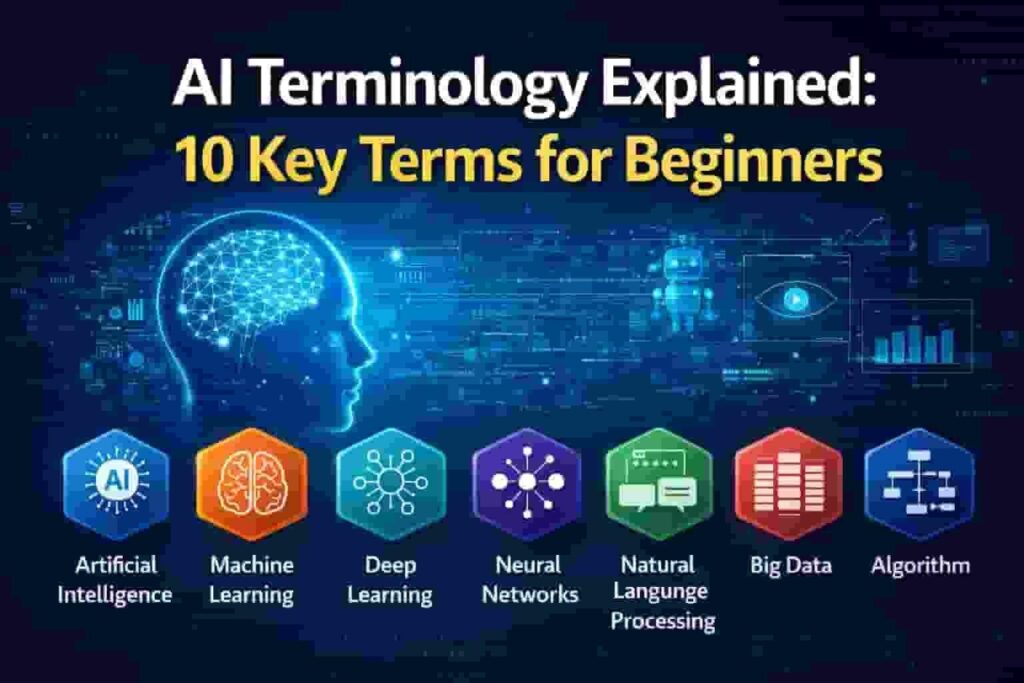
AI Terminology Explained : 10 key terms for beginners
Industries, companies, and everyday life are all evolving towards AI (artificial intelligence). However, beginners often find themselves at a loss when presented with the technical vocabulary associated with AI. To help you with your understanding of some important terms and their meanings in plain language, we have created this guide to AI Terminology Explained.
Students, entrepreneurs, and technology lovers will benefit from learning these essential concepts as building blocks to achieve a solid foundation of knowledge. This blog will provide readers with a clear and professional explanation of ten key AI terms.
Mastering artificial intelligence and remaining competitive in the digital age begins with understanding the terminology behind AI.
Why AI Terminology Explained is Important for Beginners
The rapid evolution of technology means that new and innovative technologies like AI are developed all the time. Therefore, if you cannot understand the basic terminology used in
AI-related discussions, research, or online courses, you will be unable to participate in those types of conversations.
To eliminate confusion and gain clarity and confidence, our intent with the AI Terminology Explained guide is to help you understand the way AI is being discussed in everyday language.
There are some who feel that AI’s technical terminology is so overwhelming that they will never master it. However, if you can structure your learning, you can make understanding the technical aspects of AI much easier.
What is Artificial Intelligence?
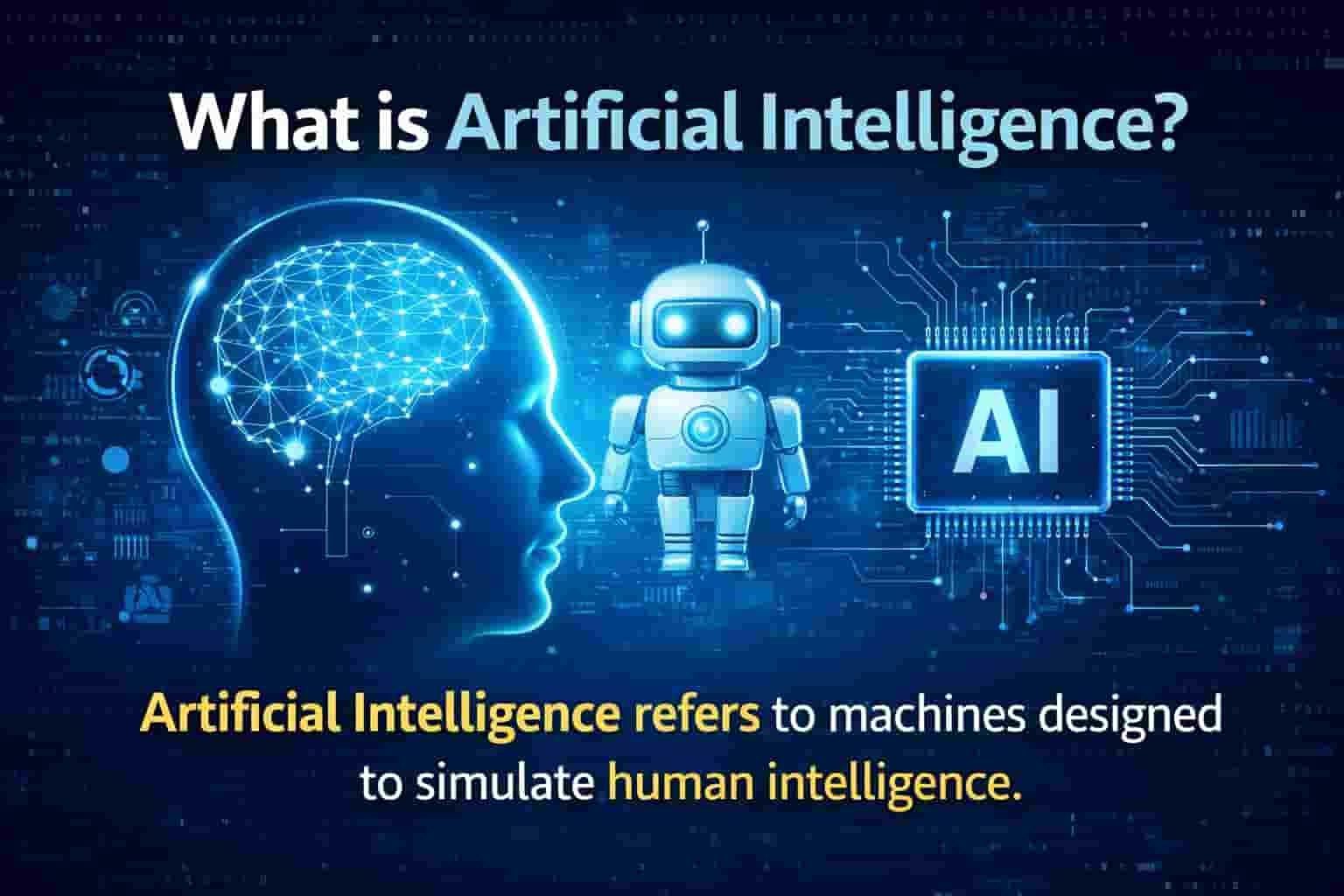
AI or Artificial Intelligence (AI), refers to computer systems created to imitate intelligent human behavior; AI will learn or absorb information, will reason or analyze systematically, but will also have the ability to solve problems.
Some examples of how AI systems are used include chatbots, product recommendation engines and self-driving cars. The main purpose for AI is enabling machines to perform actions that would normally be done by people.
Within the AI Terminology Explained article, AI is the basis for every other term related to it. Positive & Negative Aspects
AI helps businesses operate efficiently by reducing the rate of human error, and by automating
repetitive tasks. By implementing AI into business practices, businesses can cut costs and increase productivity.
Some possible negative aspects of AI include creating concern about job loss due to automation and ethical issues. As a result, automation could eliminate certain jobs that would ultimately
economically hurt those workers who lost them, and therefore affect their families, communities, and society in general.
Positive & Negative Aspects
Efficiency, Reduction of human error, and automation of repetitive tasks are aided by AI systems; meaning companies that utilize AI experience cost cutting and increased productivity. However, some of the downsides to increasing use of AI systems in business include job displacement due to automation and numerous ethical dilemmas. Automation may automate the role of certain workers will generate challenges for the economy as a whole*.
Machine Learning (ML)
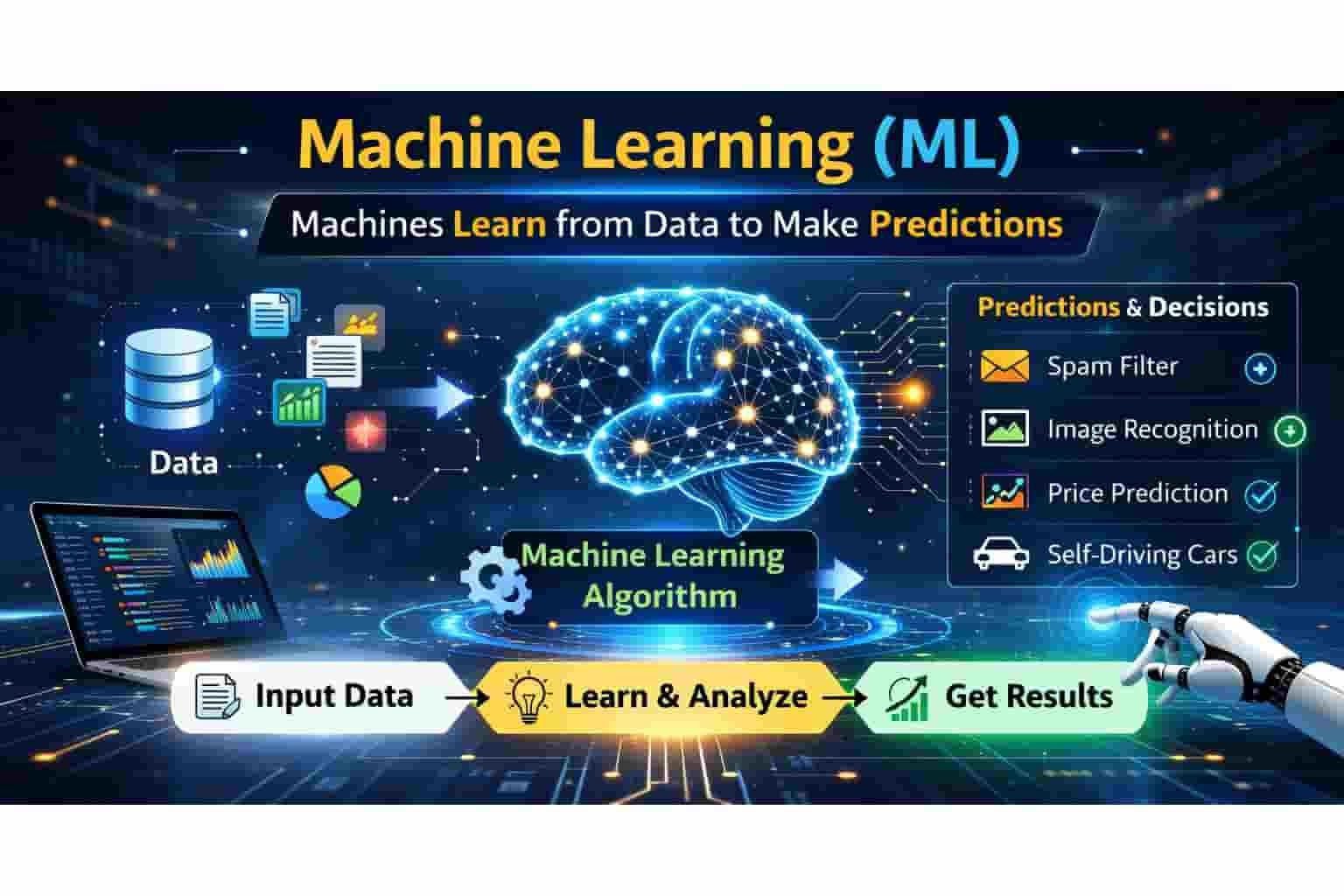
Machine learning, a subset of artificial intelligence (AI), enables machines to gain knowledge from data by learning rather than using hard-coded programming. Rather than following fixed algorithms, these machines learn by experience.
For example, spam filters in email systems will improve over time because they learn which emails are spam from past observations of spam emails.
ML is important because it provides most of the intelligence behind current generation AI applications, according to AI terminology explained in the article on AI terminology.
Proponents of ML say its positive qualities include more precise predictions and more intelligent decision-making. Detractors of ML, however, fear that the use of biased datasets may result in erroneous decisions and discrimination.
Deep Learning
Deep Learning is a type of Machine Learning. It uses a type of artificial neural network (ANN) that imitates the human brain. The ANN will learn by finding patterns in large numbers of input data, which may then be used to solve problems within the ANN’s area of expertise (for example, how to identify a picture or recognize human speech). This guide will show how this Artificial Intelligence (AI) technology will significantly improve existing capabilities of AI.
Although Deep Learning is a very powerful tool and can lead to breakthroughs in many areas, it also requires very large amounts of data and computing power; therefore, it can be very costly and consume large amounts of power.
Neural Networks

A neural network is a type of computation model that simulates how the brain functions by utilizing a network of interconnected nodes (neurons), arranged in layers. Each neuron processes input received from the previous layer and sends its output to the following layer, enabling the network to identify complex patterns within the input data. Neural Networks are an important aspect of AI Terminology Explained, as they are the foundation for Deep Learning with both of these technologies enabling a high degree of accuracy in making predictions; however, they are not easily interpretable as to what caused the predictions, which has led to them being referred to as “black boxes.
Natural Language Processing (NLP)

Machines can use Natural Language Processing (NLP) so that they understand and respond to the human language.
NLP allows virtual assistants, chatbots, and translation tools to communicate with humans and work to bridge the gap between the way humans communicate with one another and the way they communicate with computer systems.
In AI Terminology Explained, NLP explains how AI is able to interact with the average person.
Despite the benefits of improving access through NLP, it still has limitations and frequently misinterprets context or tone, resulting in inaccuracies.
Computer Vision

Machines can interpret and analyze visual information and images using Computer Vision (CV). Some examples of where Computer Vision is used would be for Facial Recognition; Medical Imaging; Security and Safety Systems; etc.
This will also increase the number of processes that can be automated in many different industries.
Computer Vision illustrates that AI can see in “The AI Terminology Explained”.
A potential problem of CV is the possible misuse of use of Facial Recognition technology; thus raising privacy issues.
Big Data

Big Data consists of extremely large datasets. AI systems then analyze these datasets to extract patterns and insights from them.
Without enough data to learn from, AI won’t learn through effective means, because data provides the basis for training Machine Learning models and improving accuracy.
In this AI Terminology Explained article the author will explain how using Big Data will drive an AI’s ability to perform.
However, managing Big Data requires secure systems in place to protect against data breaches and misuse.
Algorithm

An algorithm is a chronological series of steps for solving an issue or accomplishing a task. Algorithms are the basis for AI’s decision-making by directing how data is used and processed. Algorithms are a required part of understanding AI Terminology Explained because they dictate how AI systems operate.
Algorithms can also improve performance; however, if they are biased, they can yield results that are inequitable or discriminatory.
Automation

Automated systems refer specifically to using technology to perform tasks without having humans operating them. Common areas of application for AI-based automation are manufacturing, banking and customer service. In the context of AI, automation is considered an example of practical applications of artificial intelligence. Automation has the potential for increased productivity but there are many concerns related to reducing the size of a workforce.
Ethical AI

Responsible, Fair Development of AI is What Ethical AI is About It’s About Accountability, Transparency and Protection of Privacy.
This AI Terminology Explained Guide shows us How Ethical AI can help ensure that technology is Beneficial to Society.
To ignore Ethics will result in Negative Consequences such as Discrimination and Misuse of Data by Individuals and Organizations.
The Future of AI: Opportunities and Challenges
Artificial Intelligence provides significant growth and innovative opportunities across all industries, including health, education, and business.
However, the main challenges posed by AI include job displacement, ethical considerations regarding AI use, and the risk of data privacy breaches. Achieving a proper balance between technological advances (innovation) and accountability (responsibility) is crucial.
The goal of this AI Terminology Explained article will be to explore these advantages and disadvantages of AI in a manner that includes balanced information regarding each side of this discussion.
Conclusion: Mastering AI Terminology Explained
AI terminology needs to be well known by all, including students, professionals and business owners.
The “AI Glossary” provides definitions of 10 key words that are important for anyone wanting to learn about AI technology.
The definitions provide you a basis for understanding more complex concepts within AI technology, and you can continue to expand upon your knowledge and keep up with the latest technology developments.
If you want to see more professional and educational content, check out ailearner.tech and look at our other AI related content.
