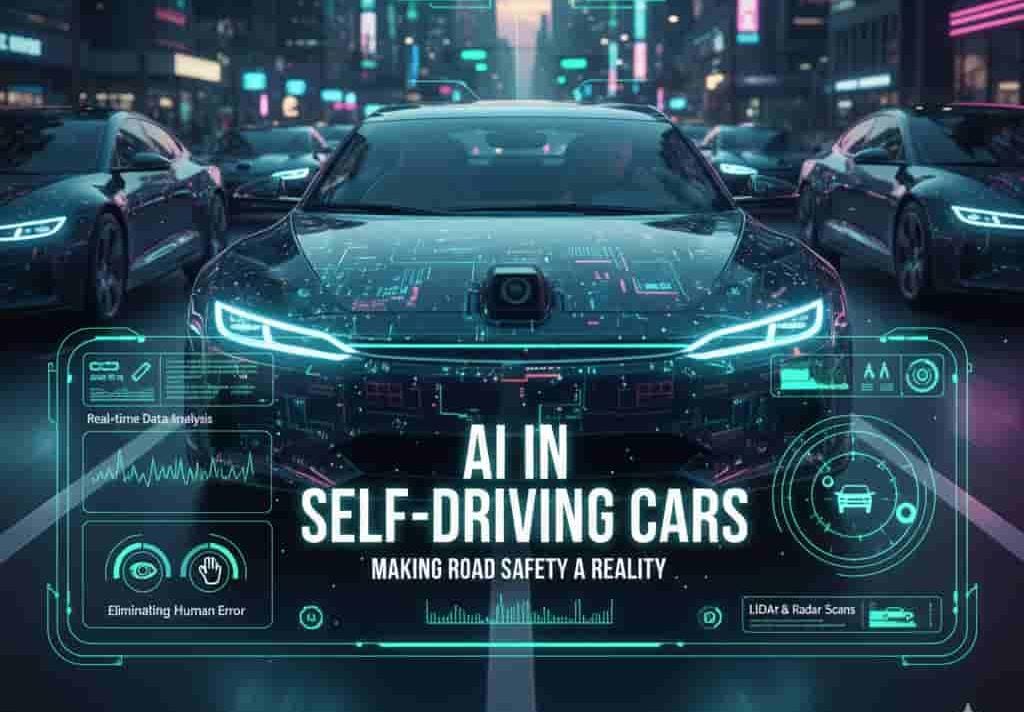
AI in Self-Driving Cars: How Artificial Intelligence Makes Driving Safer
AI in Self Driving
Introduction: AI and the Future of Safe Driving
Artificial intelligence has advanced well beyond basic pattern recognition and chatbots. These days, autonomous systems machines that can see, plan, make decisions, and act in dynamic real-world situations are commonplace. The development of self-driving cars is one area where this change is more crucial or revolutionary.
Safety is the primary promise of autonomous vehicles (AVs). One of the main causes of traffic accidents is human mistake. We could significantly lower crash rates, save lives, and revolutionise mobility by putting consistent, clever, and watchful AI agents behind the wheel.
However, how precisely does the AI in these cars make driving safer? Let’s use the technology to our advantage.
What self-driving cars are
Autonomous vehicles, sometimes referred to as self-driving cars, are outfitted with cutting-edge technologies like radar, cameras, sensors, and artificial intelligence (AI) software. Without human assistance, these systems enable the car to sense its environment,
evaluate data instantly, and make decisions while driving. How AI in self-driving cars Autonomous vehicles can drive more accurately and consistently by using AI rather than manual control.
The Role of AI in Self-Driving Cars
AI is the brains behind autonomous vehicles. AI gives cars the ability to follow lanes, detect people, recognize traffic signs, and react to unexpected obstacles by using machine learning and deep neural networks. These technologies continuously enhance performance and decision-making as they gain knowledge from real-world driving data. Self-driving cars can adjust to various driving situations and road conditions because to this learning capabilities.
How Self-Driving Cars Improve Road Safety
Because human error like distraction, exhaustion, and speeding causes millions of accidents, road safety is a big concern on a global scale. Self-driving automobiles with AI capabilities help lower these hazards by:
- Reacting more quickly than drivers
- Anticipating possible risks beforehand
- Keeping safe speeds and distances
- Interaction with other automobiles on the road
Autonomous vehicles have the potential to drastically lower the number of
accidents, injuries, and fatalities by reducing human error.
How AI Is Changing Transportation
AI is revolutionising the entire transportation sector in addition to increasing road safety. AI is used by intelligent traffic management systems to optimise traffic flow and lessen congestion. AI is used by ride-sharing services to estimate demand and optimise routes. How AI in self-driving cars ,AI lowers pollutants, fuel consumption, and improves efficiency in public transportation and logistics. A more intelligent, sustainable, and interconnected transportation ecology is being produced by these developments taken together.
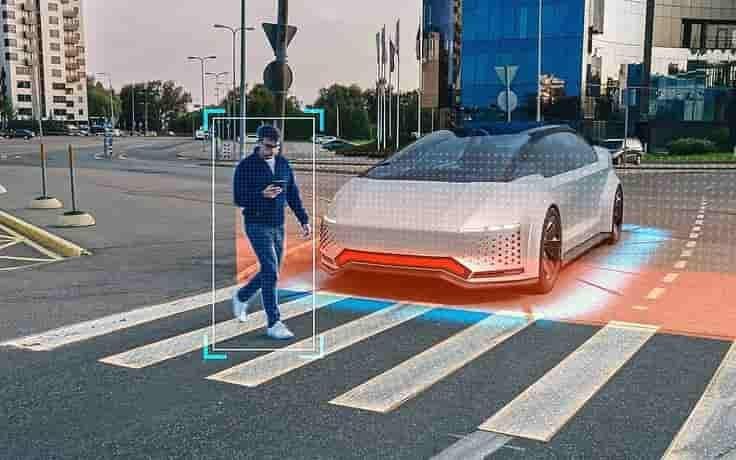
What Is Artificial Intelligence in Self-Driving Cars?
The technology that enables self-driving cars to think, learn, and make decisions for themselves is known as artificial intelligence (AI). Autonomous vehicles employ artificial intelligence (AI) technologies to comprehend their environment, assess road conditions, and react safely in real time, eliminating the need for a human driver. Self-driving cars can recognise lanes, traffic signs, pedestrians, and other vehicles using cameras, sensors, radar, and
AI-powered software, which makes driving safer and more effective.
Artificial Intelligence Explained in Simple Words
Artificial intelligence, to put it simply, is the capacity of machines to behave similarly to people. Without being specifically programmed for every scenario, artificial intelligence (AI) allows computers and other machines to learn from data, see patterns, and make judgements. AI is used in self-driving automobiles to assist the car “see” the road, “understand” its surroundings, and How AI in self-driving cars “decide” what to do, such braking, turning, or accelerating.
Machine Learning and Decision-Making in Self-Driving Cars
Self-driving cars may learn from their experiences thanks to machine learning, a crucial component of artificial intelligence. Large volumes of driving data, such as traffic patterns, meteorological conditions, and road behaviours , are used to train these cars. Machine learning models eventually assist the vehicle in making better judgements, anticipating possible threats, and selecting the safest course of action. The car gets smarter and more dependable as the system processes more data.
Human Driving vs AI Driving: What’s the Difference?
Emotions, instincts, and physical constraints all play a role in human driving. Accidents frequently result from drivers who are agitated, fatigued, or preoccupied.
On the other hand, data, precision, and consistency are the foundation of AI driving. AI systems can react far more quickly than humans and are neither distracted or weary. AI is more adept at managing complicated traffic conditions because it uses real-time data analysis and continual learning, whereas human drivers rely on experience.
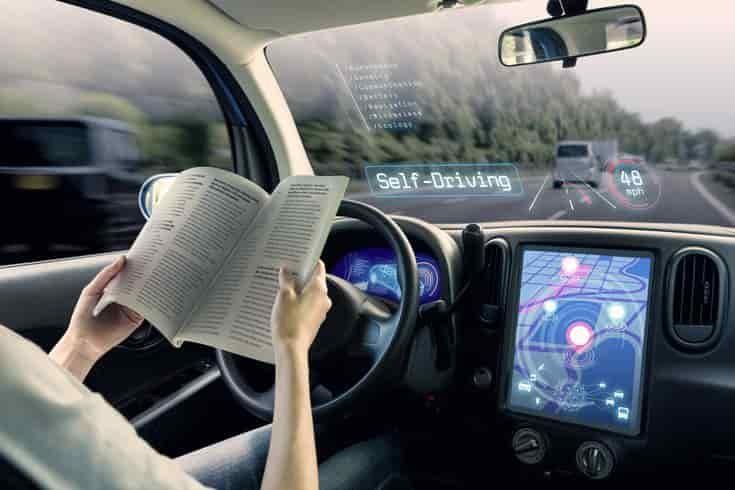
How Self-Driving Cars “See” the Road Using AI
The ability of self-driving cars to “see” and comprehend the road as well as—and sometimes even better than—human drivers is one of their most intriguing features. How AI in self-driving cars is the driving force behind this concept, enabling self-driving cars to sense their environment and make safe decisions instantly. Intelligent software and sophisticated sensors are used to provide self-driving automobiles a comprehensive understanding of the road environment.
The Role of Computer Vision in Autonomous Vehicles
One of the fundamental AI technologies that allows self-driving cars to interpret visual data from the road is computer vision. The car analyses photos and movies using AI algorithms to identify lanes, barriers, traffic lights, and road markers. Computer vision is crucial for safe navigation and accident avoidance because it enables the vehicle to comprehend what it is seeing and decide how to respond.
Cameras, LiDAR, and Radar: The Eyes of Self-Driving Cars
LiDAR, radar, and cameras are used in tandem by self-driving automobiles to provide a comprehensive picture of their environment.
- Visual elements like colours, forms, traffic lights, and road signs are captured by cameras.
- LiDAR aids in precise item detection by measuring distances and producing a three-dimensional map of the surroundings using laser beams.
- Radar monitors the velocity and motion of adjacent automobiles, even in inclement weather or low visibility.
When combined, these technologies offer a 360-degree perspective of the road, enabling AI systems to make accurate and trustworthy driving judgements.
Detecting Traffic Signs, Pedestrians, and Vehicles
Self-driving cars using AI are trained to recognise and follow crucial road features including traffic signs, bikes, pedestrians, and other cars. The system is able to identify moving objects, stop signs, speed limits, and crosswalks in real time by using machine learning models. This makes it possible for the vehicle to reduce speed, halt, or alter course when necessary, protecting both pedestrians and passengers.
How AI Helps Prevent Road Accidents
The potential for self-driving cars to drastically lower traffic accidents is one of their most exciting advantages. The primary cause of traffic accidents globally is human error; millions of crashes occur annually as a result of distractions, exhaustion, and poor judgement. These problems are addressed by AI technology in autonomous cars, which provides intelligent decision-making, real-time analysis, and quicker reaction times than people alone.
Reducing Common Human Driving Errors
AI systems don’t grow weary, distracted, or emotional way human drivers do. They always keep a safe distance, obey traffic laws, and keep an eye on their surroundings. AI can make roads much safer for everyone by removing human mistake and preventing accidents brought on by speeding, abrupt lane changes, or missing traffic signals.
Faster Reaction Time of AI
Data is processed by AI-powered cars hundreds of times quicker than by the human brain. AI is able to respond rapidly to unforeseen obstacles, such as a vehicle braking suddenly or a pedestrian crossing unexpectedly. A human driver would find it difficult or impossible to avoid crashes without this split-second reaction.
Real-Time Risk Analysis and Decision-Making
Autonomous vehicles use sensors, cameras, LiDAR, and radar to continuously assess road conditions, traffic patterns, and adjacent objects. Artificial intelligence systems assess possible threats in real time, anticipating dangers before they materialise. Self-driving cars may make safe decisions, such changing lanes, braking completely, or modifying speed, to ensure the safety of both pedestrians and passengers thanks to their proactive response and anticipation capabilities.
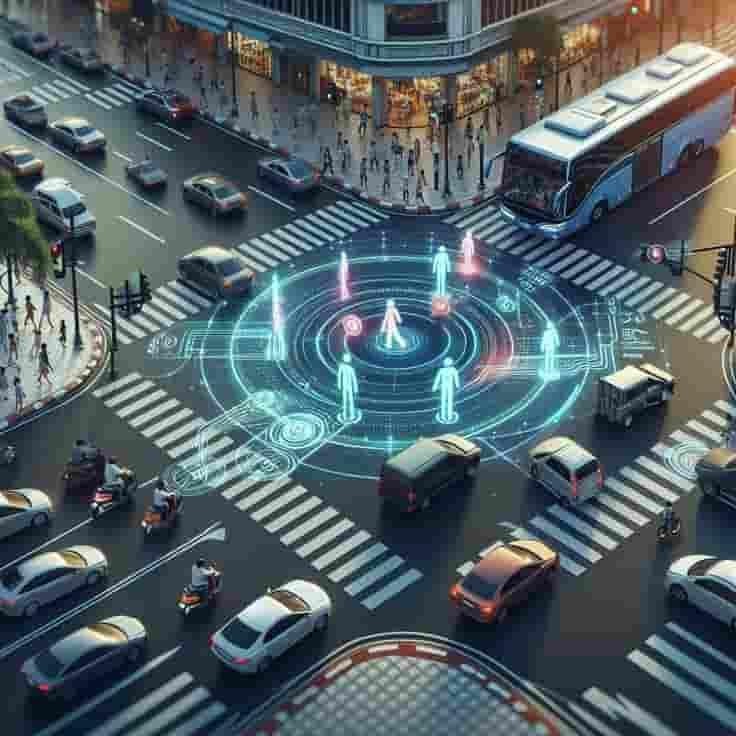
AI-Powered Safety Features in Self-Driving Cars
The goal of self-driving cars is to increase road safety, not just convenience. These cars have cutting-edge systems that use artificial intelligence (AI) to reduce collisions, safeguard occupants, and increase overall driving effectiveness. Let’s examine some of the main safety features driven by AI that make self-driving cars safer than conventional automobiles.
Automatic Emergency Braking (AEB)
One of the most important AI safety features in self-driving cars is automatic emergency braking. The car can automatically apply the brakes when it senses an impending collision with a car, pedestrian, or obstruction thanks to sensors and artificial intelligence algorithms. Accident risk is greatly decreased by this split-second intervention, particularly in unforeseen circumstances where human reaction might be too slow.
Lane Keeping Assistance (LKA)
By keeping an eye on the road’s lane markings, Lane Keeping Assistance assists the car in staying safely in its lane. Artificial intelligence (AI)-powered systems gently reroute the car back into the proper lane if it starts to drift unintentionally, avoiding collisions brought on by distracted driving or drifting.
Adaptive Cruise Control (ACC)
AI is used by adaptive cruise control to keep a safe distance from the car in front of you while maintaining a constant speed. In contrast to conventional cruise control, ACC automatically modifies the vehicle’s speed in response to traffic patterns, lowering the risk of rear-end collisions and reducing driver stress on lengthy trips
Collision Avoidance Systems
AI is used by collision avoidance systems to continuously evaluate the environment around the vehicle and identify possible dangers. The system can avoid an accident by braking, steering, or accelerating if a collision risk is detected. To offer complete protection, this feature cooperates with other safety measures.
Blind Spot Detection
Blind Spot Detection monitors regions that are hard for drivers to see using sensors and artificial intelligence. The system lowers the chance of side collisions by actively assisting with lane changes or sending out real-time warnings if another car enters the car’s blind spot.
Role of Machine Learning in Improving Driving Safety
As one of the main components of AI, ML is an important part of how we improve self-driving cars. Using historical driving data collected from many different sources and learning from experience in real life, self-driving cars can use ML to forecast potential hazards, enhance their performance, and perform intelligent driving maneuvers. ML improves road safety in several ways. Let’s look at some of the ways to enhance road safety through ML.
Learning from Real-World Driving Data
Autonomous vehicles continually accumulate data gathered from various technologies such as sensors, cameras, radar and LiDAR. This data is then analysed via machine learning algorithms which identify trends in traffic behaviour, road conditions and actions taken by drivers. The reason for providing autonomous vehicles with this type of real world experience is to build a better solution for vehicle operations when confronted with complex driving circumstances (e.g., heavy traffic or unexpected obstacles).
Improving Performance Over Time
Another advantage of machine learning is the ability to adapt and improve. For example; the decision-making processes of an AI system are improved with every trip taken. Therefore, self driving vehicles become increasingly precise at recognising lane boundaries; detect obstacles; identify appropriate braking distances; navigate; and ultimately, operate more safely and reliably.
Predicting Dangerous Situations
Machine learning enables an autonomous vehicle to forecast possible dangers prior to them happening. For example; an AI system can use past traffic behaviour, pedestrian activity, and vehicle activity to predict whether a vehicle will change lanes, whether a pedestrian will cross the street inappropriately, or a vehicle will stop abruptly. The ability to provide risk assessments for these situations enables the autonomous vehicle to implement preventative measures to mitigate the possibility of an accident (e.g., reduce speed; re-route).
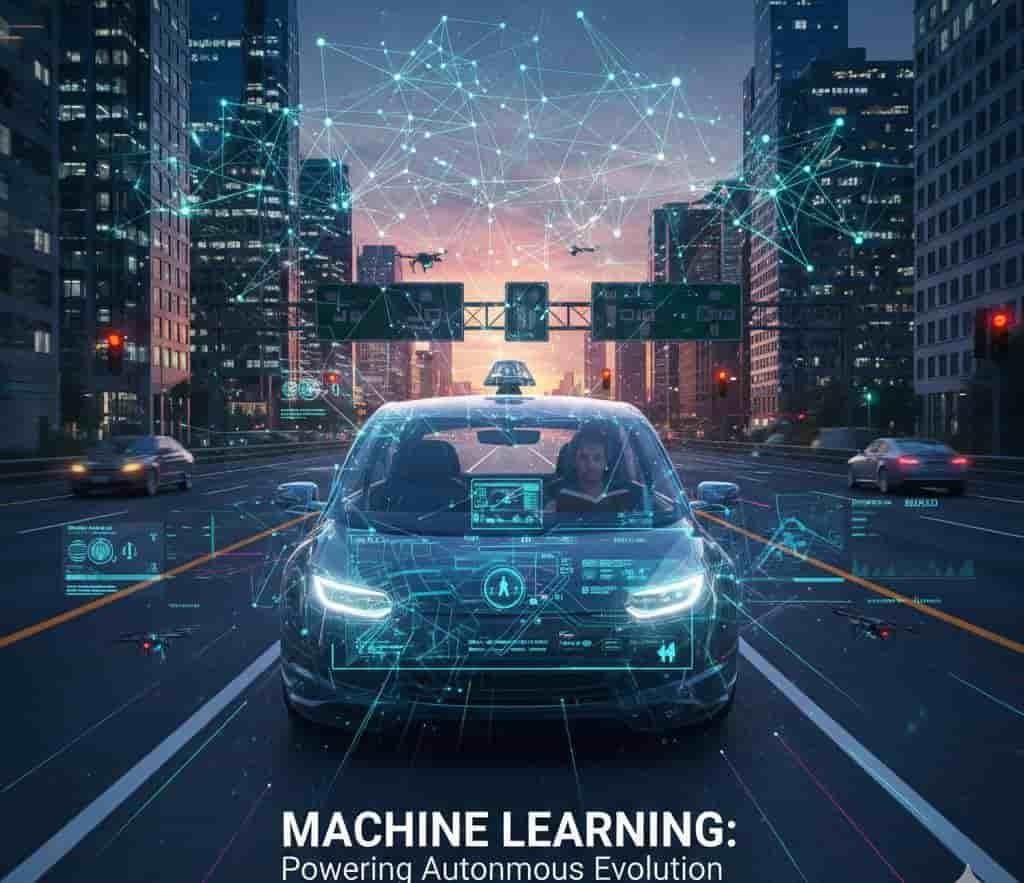
Role of machine learning in Self Driving
Benefits of AI in Self-Driving Cars for Society
AI is not only a new way of using technology in self-driving cars, but it also brings with it many advantages for society. In addition to making roads safer, they can help promote sustainability and inclusiveness—two important aspects of modern society. AI-enabled self-driving vehicles have the ability to change how we will travel in the near future and how that travel will be done.
Reduced Traffic Accidents
Self-driving vehicles offer many social advantages, with one of the biggest being fewer car crashes. Because AI can drive without any distractions or fatigue as a human does, it should exhibit consistent performance. With less need to rely on humans to drive, self-driving vehicles created by AI can contribute to lowering the number of accidents occurring on our roads, thus saving lives and preventing injuries across the world.
Improved Road Efficiency
Another advantage of AI is how it provides self-driving vehicles with the ability to engage in communications between one another and adjust their speed according to real-time traffic situations. This will enable the smooth transfer of cars on our roads, which leads to decreased congestion, improved traffic flow, and optimized routes. The smart co-ordination of traffic will reduce the number of unnecessary stops and delays, making daily commutes quicker and easier for everyone.
Better Mobility for Elderly and Disabled People
Self-driving vehicles will provide a means for individuals with disabilities to have improved independent mobility. Individuals unable to drive due to mobility limitations will be able to use these autonomous vehicles for safe, convenient transportation. This increased access to mobility will improve the quality of life of those who now have to rely on family members, friends, or public transportation for their transportation needs.
Lower Fuel Consumption and Emissions
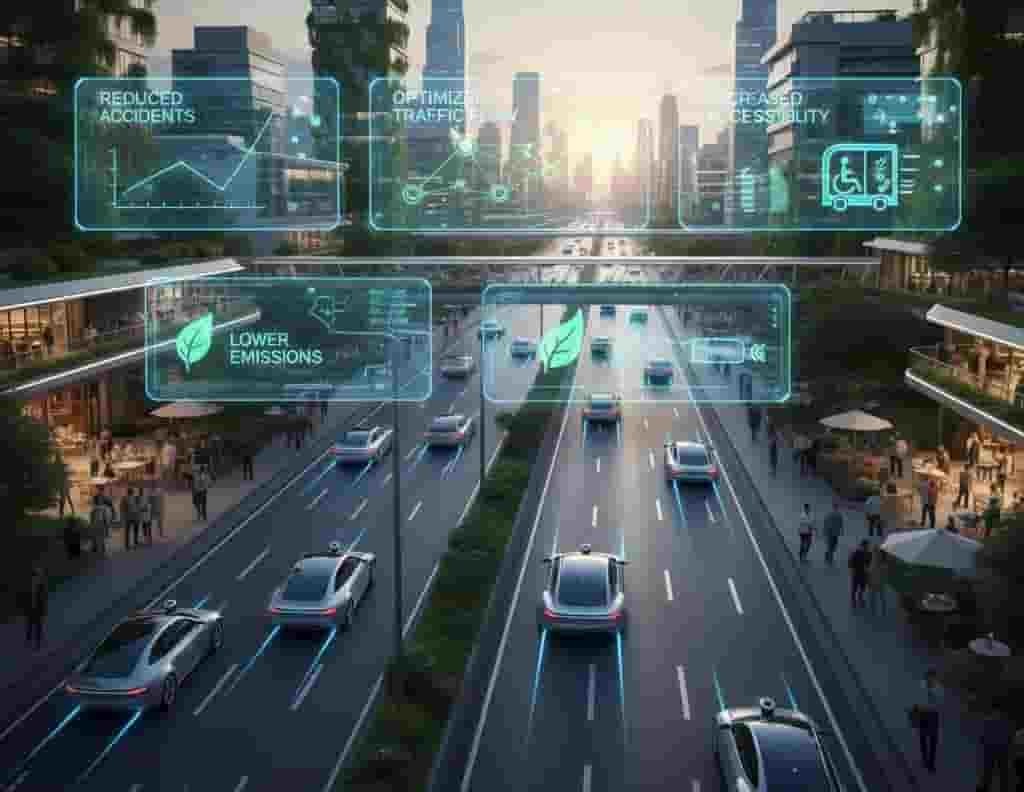 Self-driving vehicles are designed to provide more efficient driving by maintaining optimal speeds, avoiding sudden stops, and selecting fuel-efficient routes, thus resulting in lower vehicle miles travelled and reduced fuel consumption. Using self-driving vehicles will lead to lower carbon emissions and support the creation of cleaner cities and greater environmental sustainability.
Challenges and Risks of AI in Self-Driving Cars
The use of AI-enabled self-driving vehicles has tremendous potential, but there are also great challenges and risks associated with their widespread use. Understanding the limitations of these technologies will help in the development of safer, more reliable, and socially-accepted autonomous transportation systems.
Technical Limitations
So far, self-driving vehicles have made great technological advances but have not yet advanced to full capability. When put in situations where variables are extreme and unpredictable, such as severe weather, poorly marked roadways, or unorthodox traffic scenarios, many self-driving vehicles encounter difficulties. Also, AI Decision-making will suffer from a lack of availability of data for these rare scenarios and, as a result, will still require human involvement in many instances.
Cybersecurity Threats
Additionally, since self-driving technology is heavily reliant on both software and connectivity, it is susceptible to being hacked. A hacker could gain access to the vehicle’s internal systems and be able to either disrupt the vehicle’s operation, use its systems to obtain confidential information from other vehicles, or alter how a vehicle drives. To protect both passengers and associated infrastructures, it is essential to implement advanced cybersecurity protocols.
Ethical and Legal Concerns
There are also many complex legal and ethical issues associated with the use of AI in
self-driving vehicles. For example, if an accident does occur, who is liable, the manufacturer, software developer or owner of the vehicle? Also, in a scenario where a self-driving vehicle creates an accident that was unavoidable, how do you ethically regulate this behaviour and create a transparent decision-making process?
Public Trust Issues
Public perception will play a significant role in the way people accept or reject these types of technologies. Many people will not hand over complete control of their vehicle to an AI system because of safety concerns and lack of familiarity with how an AI system will react in all possible situations. Creating trust in an AI controlled self-driving vehicle will depend on the extent to which testing is completed in a transparent manner, the required adherence to rigorous safety
standards, and whether or not real-world results support those standards as applied during testing/prototyping processes.
The Future of AI in Self-Driving Cars
As advancements in Artificial Intelligence continue into the future, autonomous vehicles will be able to operate with greater intelligence and safety through AI. In addition, the continued evolution of this type of technology will lead to significant changes in urban transportation networks.
Fully Autonomous Vehicles
In the future, we expect to see the development of fully autonomous vehicles that will not rely on human operation whatsoever. These vehicles are intended to have the ability to navigate through complex traffic conditions and drive on unfamiliar roads without any driver oversight (at least in terms of handling) while being able to respond within milliseconds to whatever is occurring around them accurately. Furthermore, because of advanced machine learning models, they will be able to continue learning from real-time experience and eventually develop increased levels of safety and dependability based on those learnings.
Smart Cities and Connected Traffic Systems
We believe AI-based autonomous vehicles will be critical to smart city development. Autonomous vehicles will provide connectivity to traffic signals, road sensors, and each other by providing an intermediate layer between traditional traffic management systems and smart transportation systems, thereby creating a connected transportation network that will facilitate increased efficiency in transportation while also providing for a significant decrease in the number of people who are injured or killed in traffic resulting from human error.
Integration with IoT and 5G Technology
The addition of IoT-enabled devices and 5G technology connected to self-driving cars will improve the capabilities of both cars and cities as a whole. With the use of high-speed 5G networks, autonomous vehicles will communicate instantaneously with one another, and their traffic management system will allow them to react quickly to changes in the road, accidents, or weather conditions.
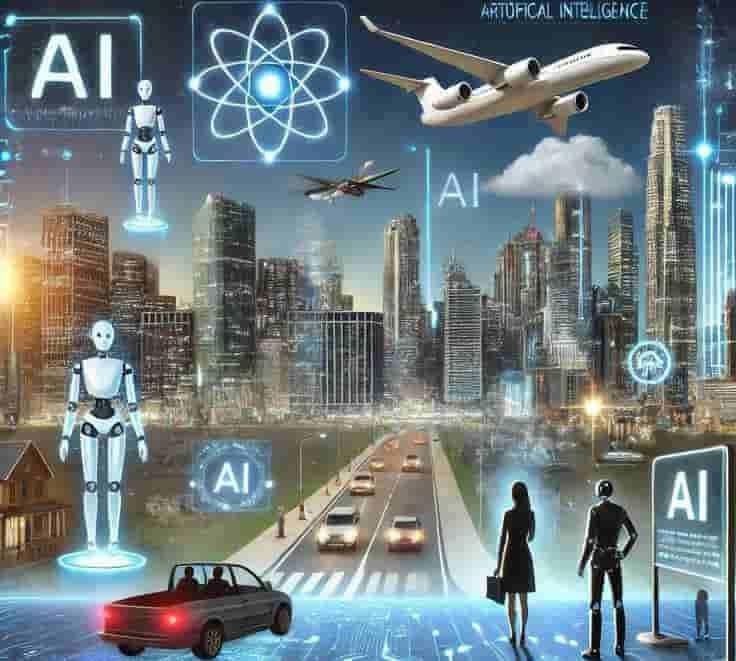
Future of AI
Conclusion: Is AI the Key to Safer Roads?
Artificial intelligence is rapidly changing the landscape of road safety by minimizing human error, improving on-the-spot decision-making and giving vehicles the ability to react quicker than they have ever been able to react previously. AI is also essential when it comes to self-driving vehicles being safer and more trustworthy because it offers assistance to detect possible dangers, anticipate accidents, and avoid them.
In the long run, an AI-based transportation system will change the way we travel because it will help to reduce accidents, relieve congestion, and develop more intelligent and connected roadways. As autonomous technology advances, it has the potential to create transportation systems that are not only efficient, but also environmentally friendly and socialable.
The future direction of driving is to have intelligent vehicles that are controlled primarily by AI. There are still challenges that must be overcome, however, continued innovation, responsible governmental regulations and public confidence can make a safer and smarter driving experience for everyone. It may be that AI will assist drivers, but it could also become the key to enhancing road safety throughout the world.

Author: AI Learner Tech
AI Learner Tech is a premier research and educational hub dedicated to mastering Artificial Intelligence, Machine Learning, and Computer Vision. We bridge the gap between complex academic theories and real-world industrial applications. Join our community to access high-quality tutorials, open-source projects, and expert insights. Website: ailearner.tech