
AI in Healthcare: How Machines Help Doctors
There has been a lot of talk this year about AI in healthcare, and some of that talk may have instilled you with excitement, some fear, and some curiosity surrounding whether it will ultimately replace doctors, disrupt hospitals, or put patients at risk. In reality, the amount of hype around AI in healthcare does not represent the realities of AI in healthcare. If you are interested in how technology is evolving, see our breakdown of AI vs Human Intelligence 2026.
The reality is not that AI will replace human workers or that robots will take over ORs. Rather, the reality of AI in healthcare is more about augmenting and assisting humans in making quicker, more accurate decisions, and identifying trends earlier and reducing human error. As someone who is in the field of healthcare or who uses the healthcare system, you deserve clear information about how AI in healthcare works in real life clinical practice, as opposed to tech demos.
This article will describe precisely how AI in healthcare assists physicians with diagnosing patients, planning treatment, administering care, and monitoring patients. You will also learn where AI in healthcare has limitations and why human judgement and interaction are critical to the success of AI in healthcare. Ultimately, you will see how machines can be an extremely beneficial tool or partner to the physician or other healthcare worker based on the realities of the health care process.
What Is AI in Healthcare (Without the Jargon)
Let’s reduce this to its basics! AI in Healthcare simply means using a computer to provide assistance in the decision-making process for the medical profession by understanding from data how to assist in making better choices for patients. Rather than strictly following
pre-determined “rules,” such as “If the patient presents with XYZ, then the provider should
do ABC,” a system that is AI in Healthcare, examines large volumes of data to develop their own methodology and algorithms to produce better outcomes for patients and their families.
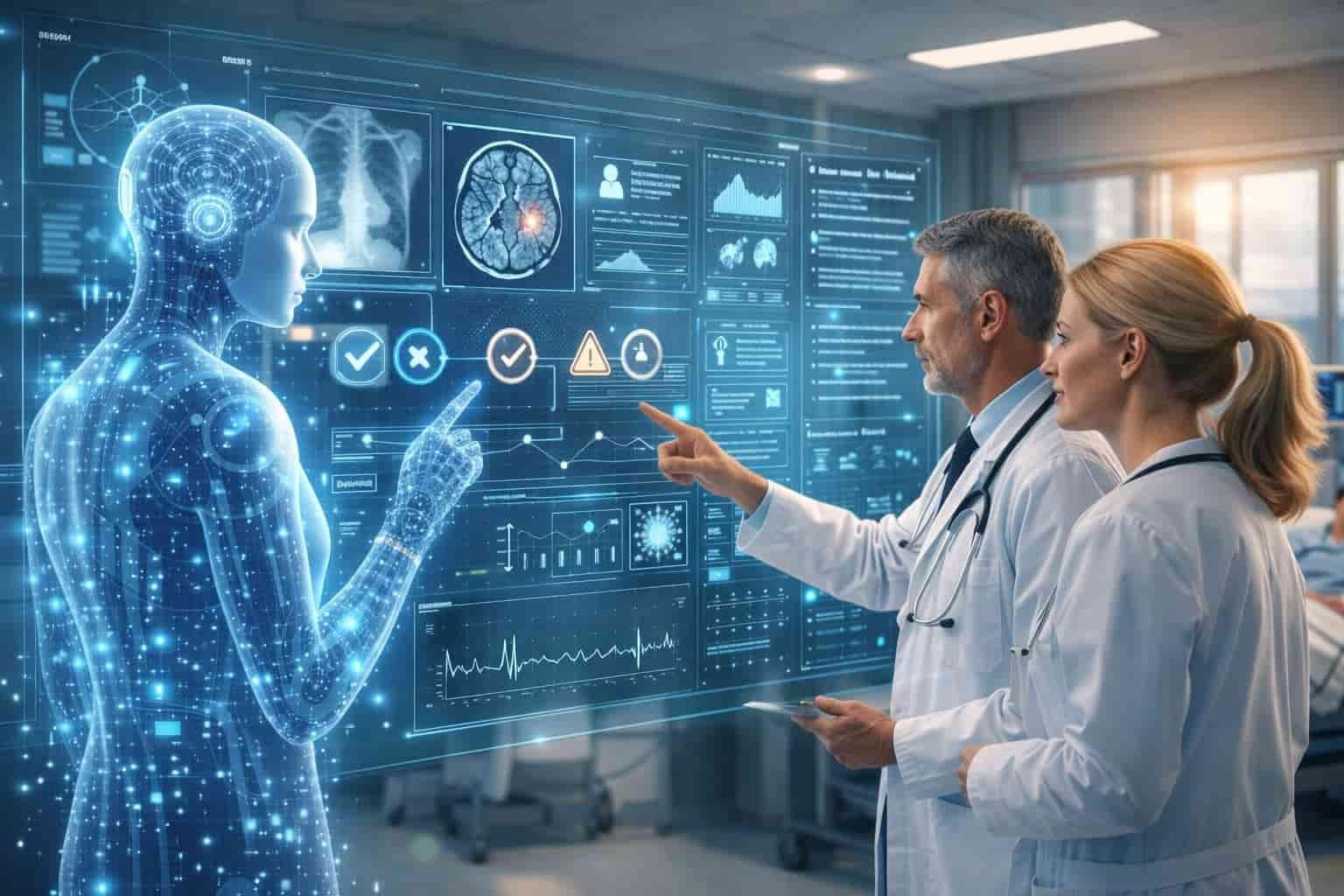 Picture thinking of AI in Healthcare as a knowledgeable assistant who has read millions of pieces of medical data, scanned millions of images, and researched a considerable number of all the history associated with how patients present – and when a new patient presents with similar symptoms/diagnosis as X amount of other patients they are able to very quickly compare various areas and get an idea of how best to assist in that particular patient’s care. AI in Healthcare is able to identify connections to various conditions and symptoms, which would take a human a significantly longer period of time to identify.
Lastly, AI in Healthcare does not “think” like a doctor. It has no emotional or intuitive capabilities. But it does have speed, size, and accuracy that no human currently possesses. It can scan millions of images using pixels; it can analyse lab results immediately; and it can identify many combinations of symptoms, at oceans of rates, fatigue, or distraction tone.
AI for Healthcare is already a reality, whether you know it or not! AI for Healthcare is already being implemented in hospitals and other healthcare facilities through technologies – both hardware and software – that assist with interpreting X-Ray images or predicting patient deterioration. AI for Healthcare is used to supplement the work of physicians and other healthcare providers, rather than be a replacement of their skills.
The most important fact to understand is that AI for Healthcare cannot replace the physician’s skills, but IA for the Healthcare System will serve as a tool that assists physicians with making informed decisions, allows them to perform their duties efficiently, while assisting them with communicating to their patients in a manner that makes clear what the options are for treatment and the level of risk involved with their selected treatment options. Learn how these technologies apply to other sectors in Top 5 AI Tools That Will Change Your Business in 2026. By providing a modern method of accessing and reviewing information about people and
treatment services, AI for Healthcare provides an additional layer of cognitive ability for clinical staff, rather than replacing the clinical staff’s cognitive ability.
How AI in Healthcare Helps with Diagnosis
The field of diagnosis in Artificial Intelligence in Health Care has seen some of the largest advances thus far. Pattern recognition is a vital component of every diagnosis because all are made by recognizing patterns in diagnostic images (scans), laboratory results and symptoms/medications history. AI in Healthcare is very effective at pattern recognition because it is able to analyze large numbers of records, quickly and consistently.
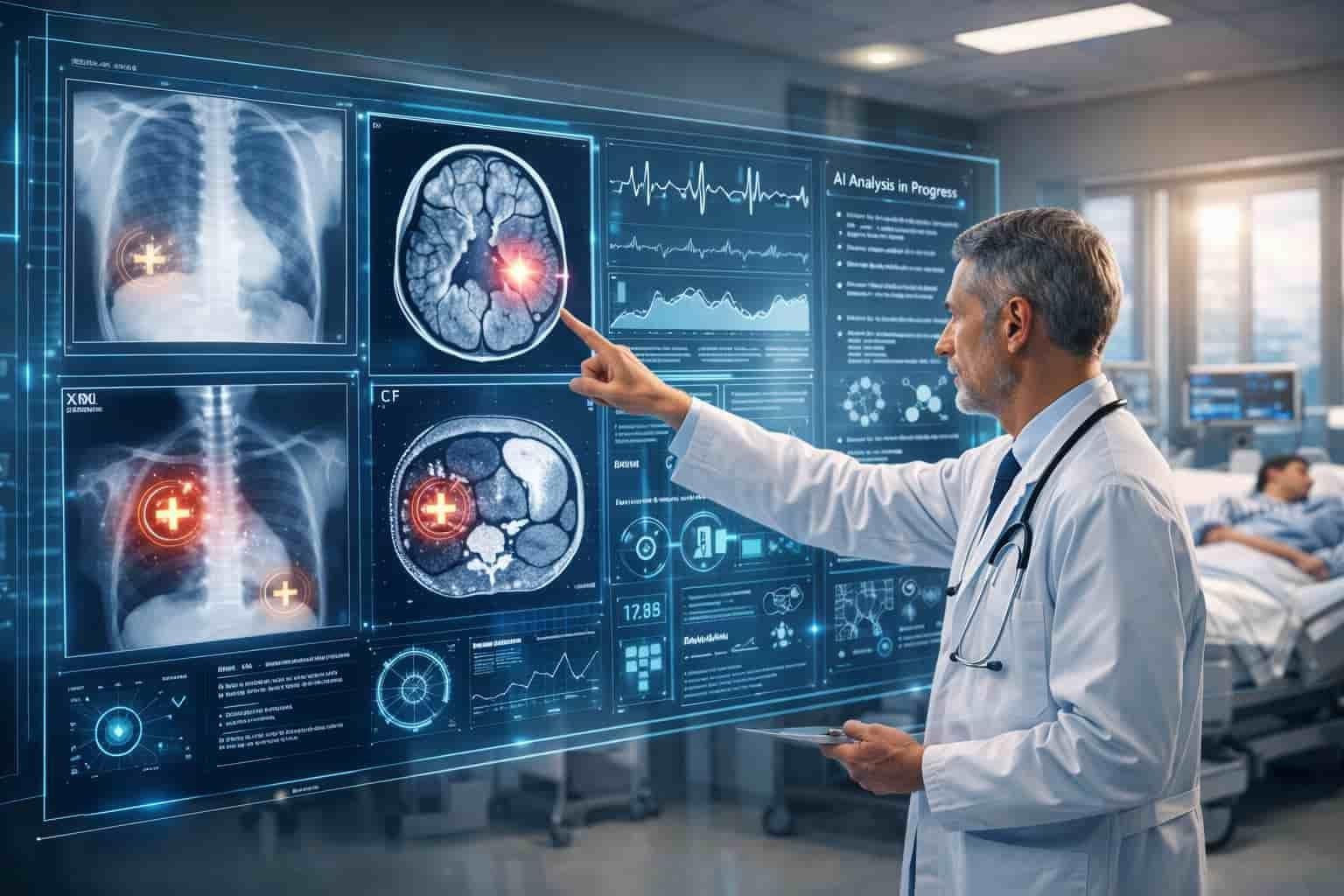 Take the case of Imaging as an example. A Radiologist will normally view at least hundreds of (X-ray, CT, MRI) scans a week. That means that even the best doctor in the world may miss very subtle signs of abnormalities when he or she is tired or stressed. In contrast, AI in Healthcare systems can process scans very quickly (in seconds) and recognize and highlight possible (suspicious) areas that may need further analysis. In some instances, the AI acts as a second pair of eyes for the doctor and helps to identify possible cases of oversight.
Early detection is also a very important way that AI in Healthcare can help. For example, with certain forms of cancer, there are usually very small signs of an abnormality (disease) already present long before the symptoms of the disease appear. AI in Healthcare will assist the physician by comparing the most current scan of a patient against the previous scans of thousands of previously diagnosed patients to help identify possible signs, even if they are too subtle for a human doctor to see. This does not mean that the AI will make the final diagnosis, rather the AI will give the physician a much stronger basis for his or her diagnostic decision.
Artificial intelligence (AI) can assist in diagnosing diseases by analyzing a tremendous amount of physician and laboratory data as well as electronic health records. By evaluating all of these data sources together with genetic data, AI in Healthcare can flag individuals with certain conditions based on their matched risk profile. Thus, prompting the physician to evaluate them sooner than if they had to wait until symptoms develop.
The benefit of this for you is immediate access to answers. Fewer missed or ignored warning signs. Therefore, when an AI system assists physicians with their complex cases, they save time by not having to manually analyze this data when making clinical decisions. It is still the physician that makes the determination, however the intelligent analysis provided by an AI system supports the decision-making process.
How AI in Healthcare Supports Treatment Decisions
The diagnosis of a patient is only one part of the process of successfully treating that patient. Once a diagnosis has been made, doctors must answer the question, “What is the best treatment for this individual patient?” This is where the value of using AI in Healthcare really comes into play. Rather than using only general guidelines for putting together a treatment plan, AI in Healthcare provides physicians with the ability to analyse massive amounts of data in order to make more personalised decisions for each patient.
Each patient is unique and has different responses to medications, even if they are given the same medication and are diagnosed with the same condition. AI in Healthcare provides physicians with the ability to look at many data points regarding a patient’s age, medical history, genetics, lifestyle, and history of success or failure from similar patients who have previously been treated. This helps the physician determine which treatment will be most likely to work for that patient and will not pose an unnecessary risk of harm.
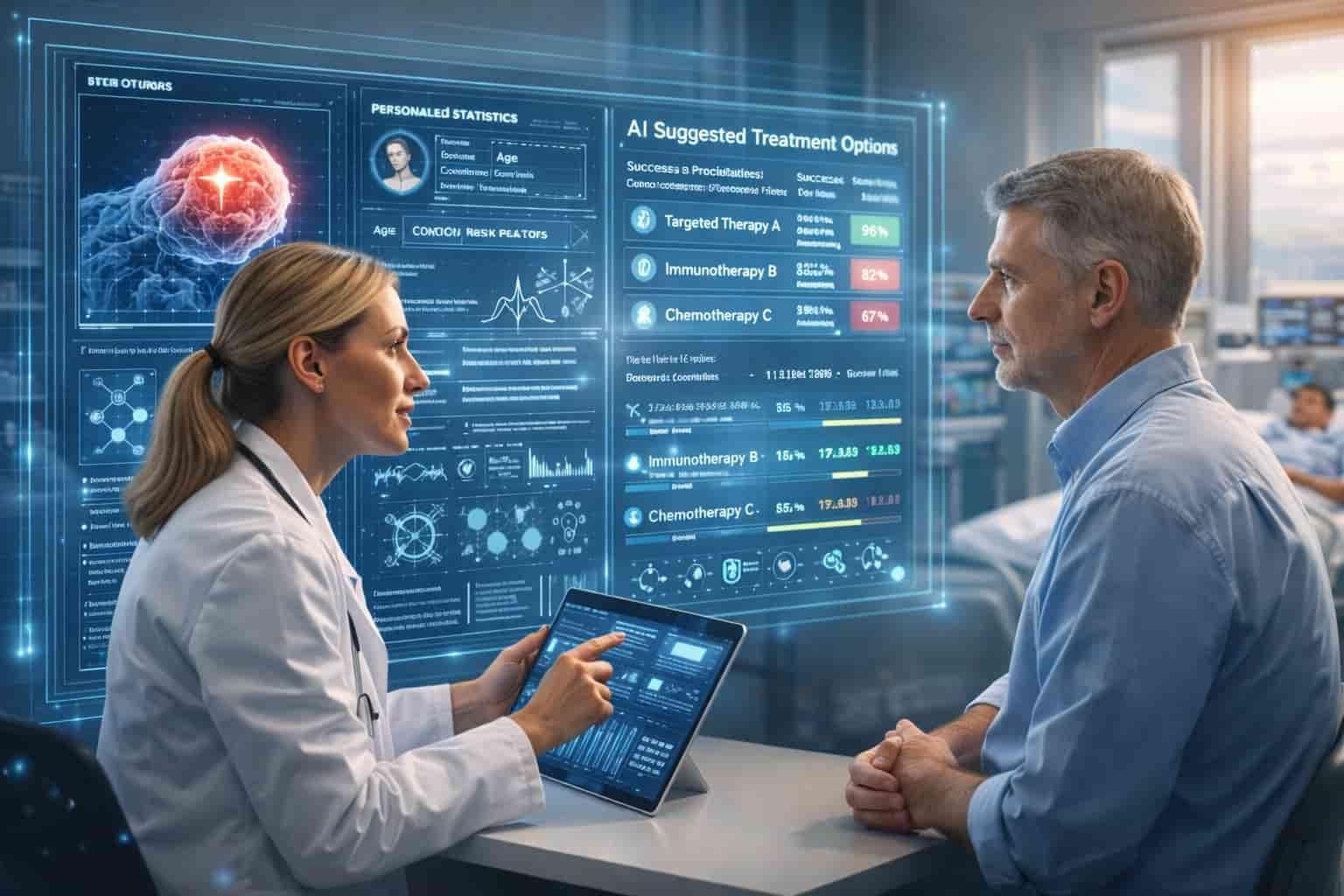 For example, AI in Healthcare can review characteristics of tumours and suggest targeted therapies that have been indicated by historical patterns from previous patients with similar tumours. This allows the physician to reduce the number of potential treatments to be further explored and eliminates the need to rely on trial and error in finding options that are most likely successful. Ultimately, this provides physicians with greater insight than they had before when choosing the course of treatment.
As AI is used by the healthcare industry to predict the occurrence of complications, historical data is analyzed by these systems to determine the chance of developing side effects, being readmitted to the hospital, or experiencing an adverse reaction. This information can be used by physicians to proactively adjust patients’ treatment plans instead of waiting until something goes wrong after it has already happened. In other words, AI is used by the healthcare industry to prevent problems from occurring.
In turn, you will have a more personalized and individualized experience with your care. AI does not replace clinical judgement; rather it enhances clinical decision-making with actual evidence from massive amounts of data. As a result, you will be able to make better choices, accurately assess risks and develop treatment plans based on real life experiences, rather than relying only on professional guesswork.
How AI in Healthcare Reduces Administrative Burden
As someone in the medical field, you likely have experienced this already — all the paperwork you do is very time consuming. From documentation and billing codes, to appointment scheduling and compliance, it all takes time away from your patients. One huge benefit of AI in healthcare is that it will reduce the amount of administrative work so that doctors can spend more time with their patients.
AI in healthcare systems can automatically record consultations and convert spoken words into clinical notes. So rather than spend hours typing up clinical notes after a busy day in the office, doctors can simply review and approve the notes created by AI in real time. This can save a significant amount of time per week and the accuracy of AI in healthcare will continue to improve with more interactions processed.
 AI in healthcare is also a major player when it comes to scheduling appointments. Intelligent scheduling systems can predict how long an appointment will last, reduce no shows by analyzing patient behaviors, and help create optimal staffing levels. Rather than constantly reacting to situations out of control, AI in healthcare will help create a smoother workflow in hospitals or family practice offices.
Billing and coding are also becoming much easier because of AI in healthcare. Medical billing and coding are both incredibly complex and prone to human error. Such errors can delay billing payments or cause compliance issues with insurance payers. AI in healthcare tools can review documentation and suggest the appropriate billing codes. By using AI in healthcare, the doctor remains accountable, but the AI does most of the work.
What does this mean for you? Burnout is a real issue in medicine. Use of AI in Healthcare to eliminate repetitive tasks from a physician’s responsibilities creates more time that a physician can spend with patients and thinking clinically. AI will help reduce responsibility but it will not eliminate it; rather, it will remove AI-related inefficiencies or “friction”. When there is less friction, physicians provide better patient care, stay more focussed on the task at hand, and can handle their workload in a sustainable manner.
How AI in Healthcare Improves Patient Monitoring and Safety
Continuous patient monitoring is one of the most effective ways that AI is being utilised in Healthcare. Patients in busy hospitals and intensive care units generate an enormous amount of data every single minute eg, heart rate, blood oxygen level, blood pressure, laboratory results. No person could feasibly monitor all of this data in real time.
AI in Healthcare technologies can monitor streams of patient data and identify subtle changes that may indicate an impending clinical decline. For example, a slight change in someone’s breathing pattern may not stand out to a clinician but AI in Healthcare has the ability to identify early changes in this same patient’s breathing pattern and alert the medical team to the potential problem before it becomes a critical situation.
Early warning systems powered by AI in Healthcare are currently helping hospitals to decrease the number of unexpected ICU admissions and cardiac arrests. Instead of needing to react when a patient eventually crashes, doctors are able to intervene much sooner due to having access to AI in Healthcare technologies with which they can monitor patient progress continuously. In summary, AI in Healthcare technologies do not replace the need for clinical observation, rather they provide the clinician with an additional source of constant digital monitoring of their patient.
Another important area is remote monitoring, which is growing rapidly. Wearable devices and home health equipment can provide real-time data to the hospital while patients are outside of it, at home. AI in healthcare uses this data to identify potential risks and alert healthcare practitioners, enabling them to intervene before the patient comes into a scheduled appointment with a physician. This is extremely helpful for chronic disease patients, as most chronic diseases are preventable with early intervention, resulting in fewer hospitalizations.
 The advantages to you of AI in healthcare are additional safety by providing an extra layer of safety to provide protection against risk 24 hours a day, 7 days a week. Physicians will always make the decisions. Nurses will continue to perform their assessments of the patient. However, AI in healthcare will provide an extra layer of reassurance that is always available and never tired, distracted or overwhelmed.
Common Concerns About AI in Healthcare
Let’s be straight about it – AI is an exciting frontier in healthcare, and with that excitement comes a lot of potential issues. You might have concerns over: how accurate AI will be in Healthcare; what happens to patients when their information is mishandled; and whether AI could ever make an error that could put a patient’s life at risk. Clearly these are legitimate concerns that should have straightforward answers.
Accuracy – although AI systems in healthcare have been built on vast amounts of data, they have limitations. For example, biases that are present in the dataset will influence an AI’s results based on whatever the AI ultimately learned from that particular dataset. Therefore, AI in Healthcare will complement physicians but not replace them; the physician is ultimately responsible for the decision made, and one would want that decision to be based on numerous variables and past experiences.
Data Privacy – AI in Healthcare is driven off of patient information. Therefore, one must be assured that stringent safeguards are implemented to protect that data once it has been collected via AI in Healthcare. Hospitals utilize encryption, anonymization, and other regulatory controls to make sure AI in Healthcare products are compliant with any existing laws governing data privacy within that jurisdiction. Without adequate governance, no one would want to receive any of the benefits derived from AI in Healthcare.
There is also the worry of being overly reliant on AI in the Health Sector. If Medical staff rely too much on AI, will this compromise their ability to practice their clinical competencies?
Finding a balance is imperative. AI in the Healthcare Sector works best when it is applied as an assistant; i.e., provides recommendations, indicates potential problems and supports pattern analysis with the application of the Medical staff members‘ ability to think critically and make independent judgements.
Another concern is with the emotional aspect of medicine. The practice of medicine is a human-focused environment, where empathy, trust and communication play a key role. AI in the Healthcare Sector cannot comfort or acknowledge a person’s apprehensions. It cannot replace the vital relationship that provides good quality care, which is also not the intent of AI technology. AI in the Healthcare Sector is designed for processing and handling data; trained Medical Professionals are designed for processing and handling people.
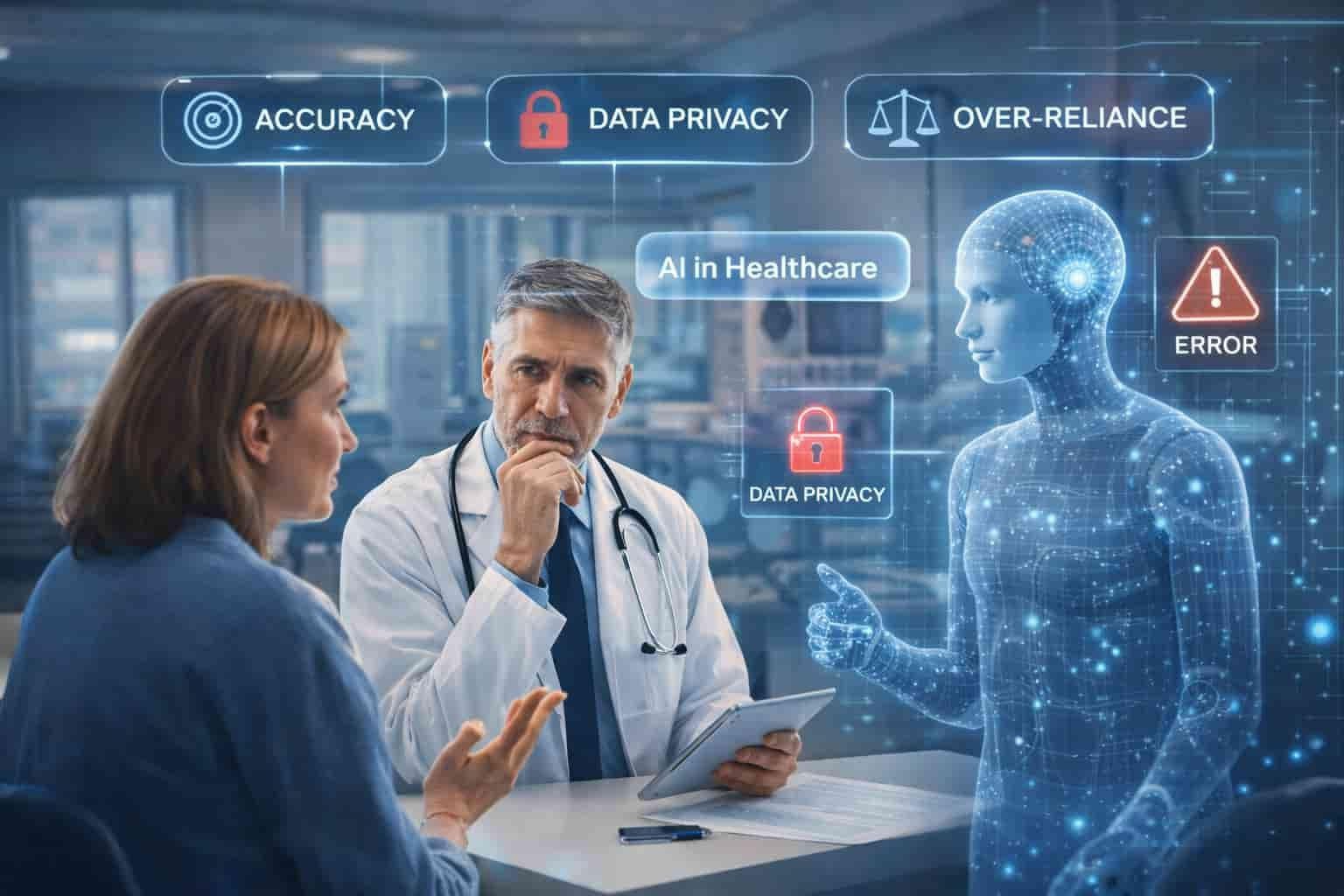 The underlying theme of these many concerns is consistent when properly evaluated. AI in the Healthcare Sector can provide considerable benefit, but will require responsible management and oversight of the technology to achieve its full potential. The problems will not be generated from the actual technology; the problems will be generated from how the technology is applied to patient care.
Will AI in Healthcare Replace Doctors?
This is a question that has been silently yet persistently hanging in the air: Is AI in Healthcare going to replace physicians at some point in the near future? The fear of this possibility is understandable, especially when you think about how much more capable technology has become over the years, creating doubt about the future of human job availability. However, the evidence surrounding AI in Healthcare tells another story.
Medicine is not merely the result of recognizing patterns. In addition to being able to identify patterns, AI in Healthcare supports many healthcare providers to determine what is “good,” “bad,” or “ugly” when making decisions in uncertain situations and making ethical choices. Machines can give probabilities for specific medical situations, but machines cannot express sympathy and compassion to patients when bad news must be conveyed, and they cannot take into consideration either family dynamics or cultural context.
The main thing AI does well is augmenting the physician’s ability to make well-informed decisions. Think of AI in Healthcare as a clinical co-pilot because it takes in all of this data, often stores information, identifies potential red flags, and recommends
evidence-based approaches. At the end of the day, the physician remains the captain of the ship and will make the ultimate decision about patient care.
History has shown that technological advances do not eliminate skilled professionals. However, technological advances typically change the work environments for these professionals. For example, radiologist’s job functions have not been replaced since the advent of digital imaging. Laparoscopic tools have not resulted in the elimination of surgeons. AI in Healthcare will also change the work and job functions of healthcare professionals without eliminating their expertise and experience developed through ongoing education and experience.
AI in Health Care will likely result in the overall increased value of human physicians. As machines do more of the repetitive analytic work doctors have to do, doctors will have more time available to spend on patient interaction, use their complex reasoning skills, and build more substantial relationships with patients.
Therefore, AI will not replace physicians; it will assist in providing them with additional capabilities. The future isn’t going to be about machines vs. humans. The future will be about machines working together with humans to offer the best possible patient care.
The Future of AI in Healthcare
The future of healthcare is only going to expand into areas with AI. Hospitals, clinics, and research facilities are making investments to develop systems that help connect patient information, improve the quality of care provided to customers, increase efficiency, and support the predictability of patient care through predictive analytics.
A huge trend is moving towards personalised medicine. AI in Healthcare allows for using a person’s genetic information, lifestyle factors, and medical history to develop individualised treatment plans for that person. Instead of using standard treatment plans for all patients, physicians are going use AI in Healthcare to develop usage strategies based on the maximum effectiveness and minimisation of potential side effects of such therapies.
Another big trend is the use of predictive analytics. AI in Healthcare can be used to predict when the number of admissions to a hospital will increase, monitor the trends of health within a population and themselves help identify potential disease outbreaks. The availability of both real-time epidemiological data as well as insights that can be obtained from predictive analytics using AI in Healthcare allow health care to operate in a proactive manner rather than a reactive one.
Collaboration is essential. Future AI in Healthcare will not just be a standalone application – but integrated into all phases of clinical management – from diagnosis and treatment to patient engagement and hospital administration. Embracing AI technology allows physicians to perform their tasks more efficiently, make improved decisions, and spend less time doing functions that computers can accomplish – provide support for building meaningful relationships with patients.
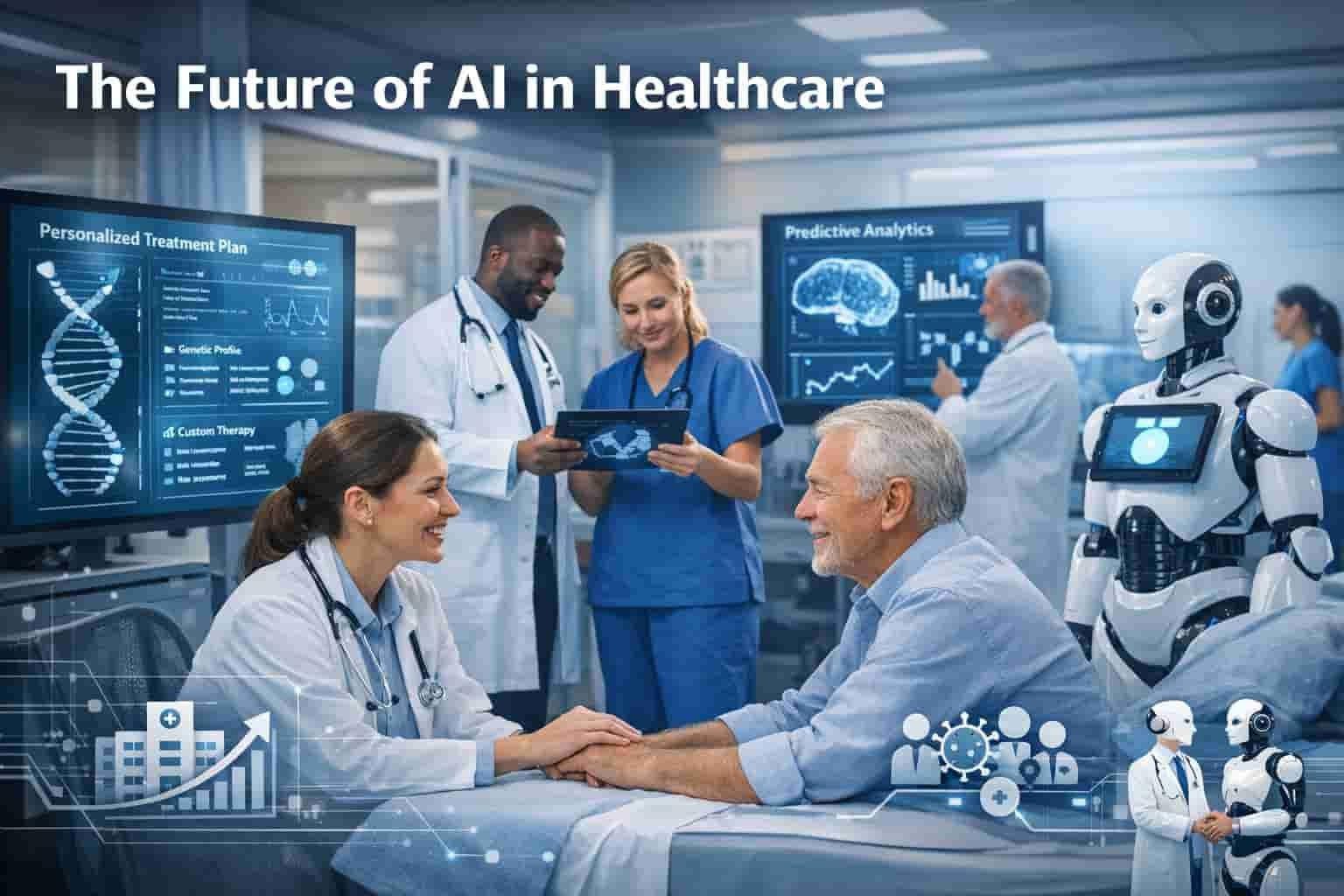 As such, the human aspect will remain critical in patient care. AI in Healthcare cannot replace compassion, judgement, or faith. Instead, AI in Healthcare supplements human skillsets, corrects inaccuracies in care delivery, and increases the efficiency and accuracy of healthcare delivery. In the end, the future of AI in Healthcare will be collaborative – a union of people and machines working together to improve patient safety, assist clinical professionals in making smarter and more informed decisions, and personalize healthcare for each patient.
Conclusion
AI is currently revolutionizing the healthcare industry, but it does not pose a threat to physician autonomy as many fear. In actuality, AI is helping to improve patient care, patient safety, clinician efficiency, and manage/reduce administrative burdens through the use of data-based decision-making tools.
The physician remains in full control of the decisions made regarding patients and their care, and AI provides access to methods for better serving one’s patients by examining data, finding trends or patterns, and supporting the decision-making process by supplying necessary information in an efficient manner. As such, clinicians are able to focus more upon patient interactions while reducing the amount of time spent interacting with paperwork, and have a lower risk of making errors when treating and caring for patients.
Clinicians can maximize one another’s potential by utilising AI in their clinical practice as a method of combining both machine intelligence with clinician judgement and empathy in order to produce the most optimal healthcare system ever established. AI in healthcare is not solely going to be the future of medicine – it will be the future of medicine with human beings placed at the center of everything that happens within the healthcare system.

Author: AI Learner Tech
AI Learner Tech is a premier research and educational hub dedicated to mastering Artificial Intelligence, Machine Learning, and Computer Vision. We bridge the gap between complex academic theories and real-world industrial applications. Join our community to access high-quality tutorials, open-source projects, and expert insights. Website: ailearner.tech