
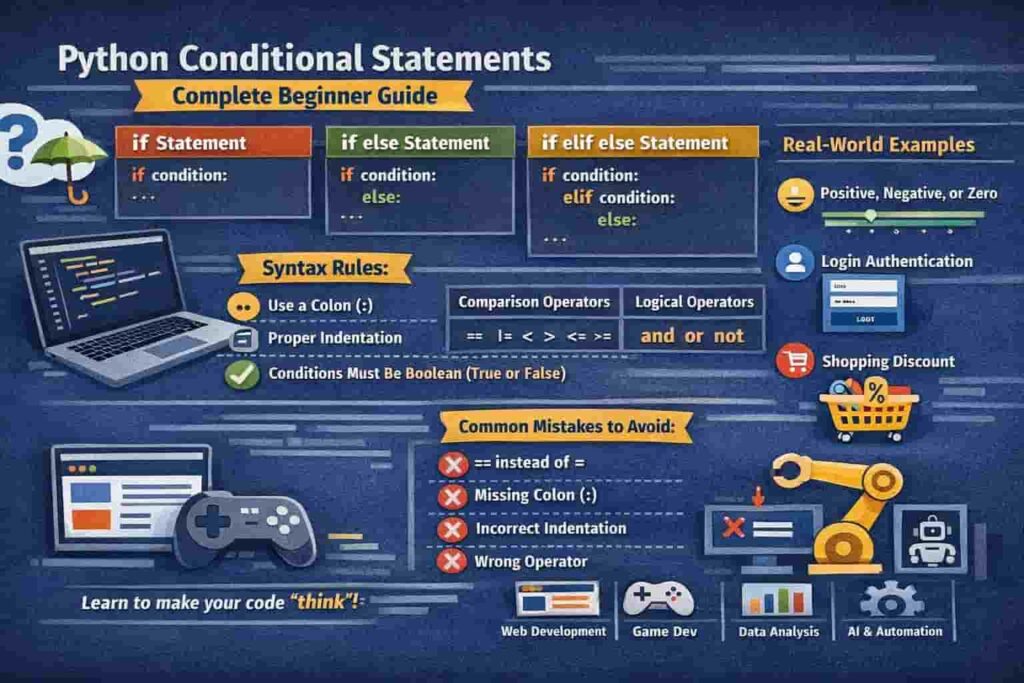
Python Conditional Statements – Complete Beginner Guide (2026)
Introduction to Python Conditional Statements
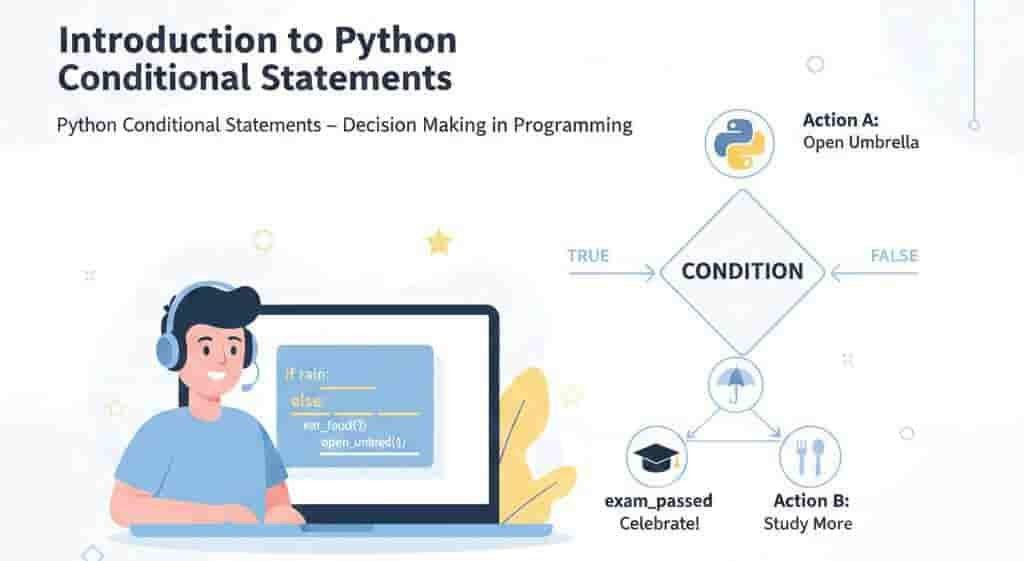
One of the most crucial ideas you need to grasp when you start learning programming is decision-making. In real life, we have to make decisions all the time. We have an umbrella in case it starts to rain. We consume food if we are hungry. We rejoice if we pass an exam.
The same applies to programming.
Your program bases its judgements on circumstances when you use Python conditional statements. These circumstances can be evaluated as True or False. Different code blocks run according to that outcome. Before start conditional Statements read blog Basics of Python.
Without a Python conditional statement, programs would just execute logically line by line. Data, user input, and shifting circumstances wouldn’t cause them to respond.
Gaining confidence in Python programming starts with learning how to use conditional statements, which is a basic skill for beginners.
In this complete guide, you will learn:
- What Python conditional statements are
- How the Python if statement works
- How to use if else in Python
- How to handle multiple conditions with if elif else in Python
- Comparison and logical operators
- Real-world examples
- Common beginner mistakes
- Best practices Let’s start from the basics.
What Are Python Conditional Statements?
Python conditional statements are a programming technique for making decisions. They enable your code to carry out particular operations exclusively in response to predetermined criteria.
In simple words:
If a condition is true → do something
If a condition is false → do something else
Because they regulate the execution flow, they are also referred to as Python decision-making statements or control flow statements.
Python conditional statements can be divided into three categories:
- if
- if else
- if elif els
The number of conditions that need to be checked determines which one is used.
The Python If Statement
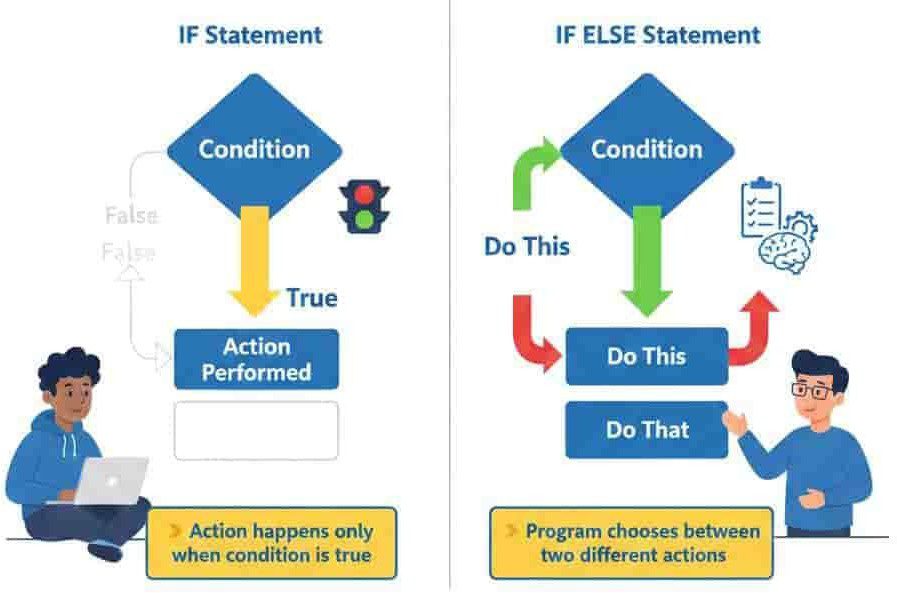
The most fundamental kind of Python conditional statement is the if statement. Only if a condition is true does it check it and run a block of code.
Basic Syntax

Important rules:
- A colon : must follow the condition.
- The code inside must be indented.
Example 1: Age Check
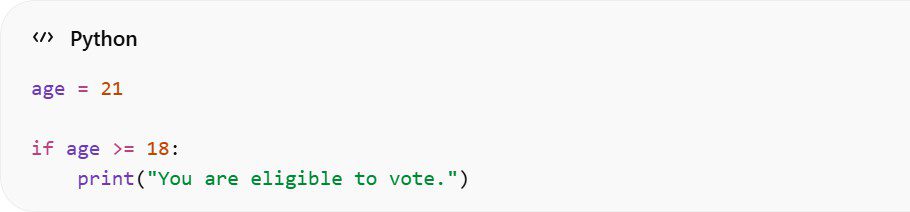
In this case, the software determines whether the user is older than or equal to 18. It prints the message if it is true.
Nothing occurs if the condition is false.
When you only need to check one condition, the Python if statement comes in handy.
If Else in Python
The Python structure is used when you want your program to take one action if a condition is true and another action if it is false. One of the most significant and frequently used Python conditional statements, particularly for novices learning decision-making logic, is this one.
Your program can evaluate a condition and run various code blocks depending on the outcome thanks to the Python conditional statement. Programs become more dynamic, intelligent, and interactive as a result. A basic component of learning Python control flow is comprehending if else.
Syntax of If Else in Python
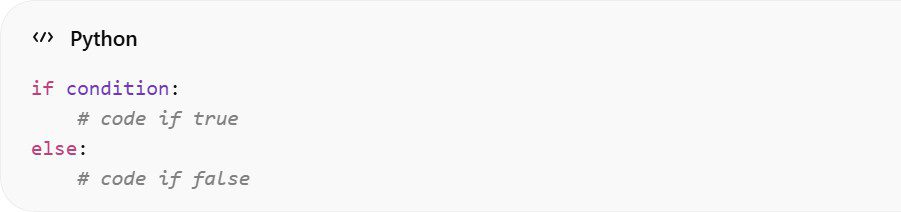
Python first determines whether the condition is met. The code within the if block is executed if the condition evaluates to True. The code inside the else block runs instead if the condition evaluates to False.
Example: Even or Odd Checker
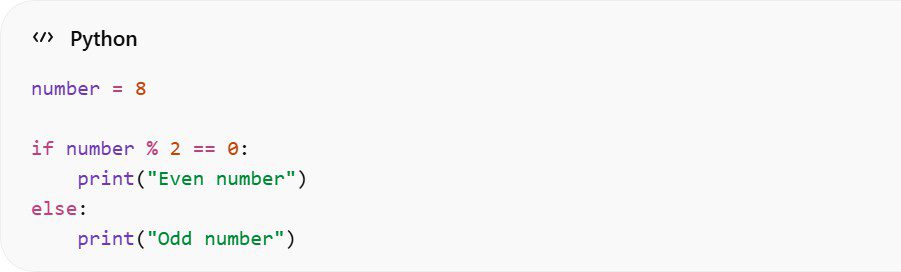
This example shows how the program will check to see if a number divides into 2 evenly using the modulus operator (%). If the result of dividing that number has a remainder of 0, the condition is true and the program displays “Even number” to the console. If the division result does not divide evenly, it will print to the console “Odd number.”
The if-else structure of the Python programming language is key for basic tutorials as this is the first example of two-way decision making in programming. A solid understanding of this conditional statement will allow you to easily develop more complex applications such as loops, data validation, and real-world scenarios.
If Elif Else in Python
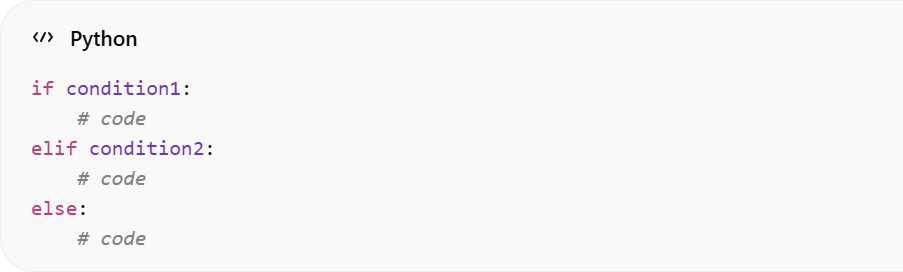
There are occasions when multiple conditions must be verified together; in these situations, if elif else gives a great deal of flexibility within Python.
Else if is really the definition of elif, giving you the ability to check conditions in serial manner.
Syntax
Example: Grading System
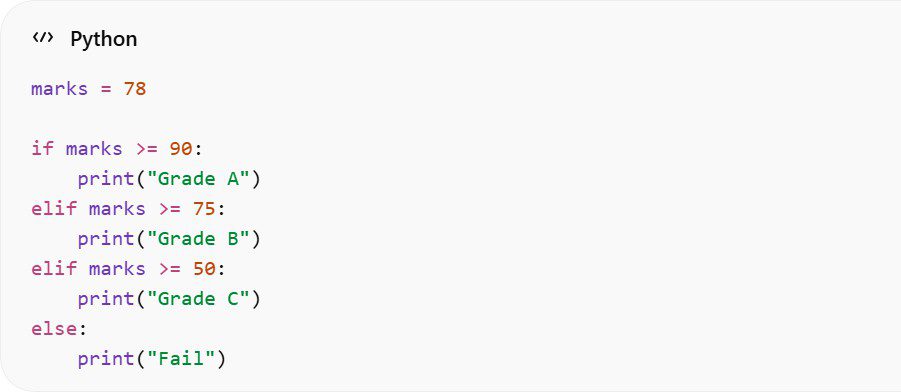
In this example:
- Python checks the first condition.
- If false, it moves to the next.
- It stops as soon as one condition is true.
This structure makes Python conditional statements extremely flexible.
Syntax Rules for Python Conditional Statements
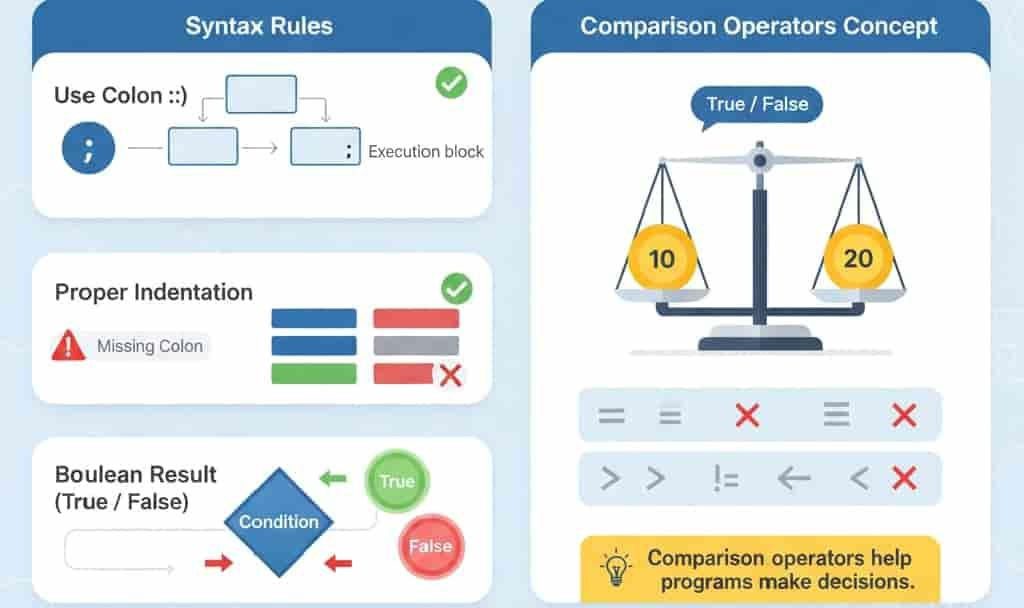
It is essential to follow syntax rules when programming in Python with a Conditional Statement because Python is designed with clear and definitive structure, so it has strict formatting, which means that even small formatting errors can lead to a programming error. Understanding these syntax rules is one of the major aspects you must learn when writing conditional statements in Python as a beginner and to ensure your programs are error-free.
Here are some of the essential syntax rules you must adhere to:
Use a Colon (:)
In all Python conditional statements, the use of the keywords if, elif, and else must always be followed by a colon (:). The colon is indicating to Python that following this statement will be a block of code.

If you forget to type in the colon, then syntactically speaking your program is going to raise an error. The colon is such a small character, but it plays such an important function in defining the logic of conditions in Python.
Proper Indentation
Python uses indentation to define blocks of code.
Correct:

Conditions Must Return Boolean Values
Whenever a Python conditional statement runs, there is always a condition that is evaluated to create either a Boolean result (True or False). This result will help Python to determine which block of code will execute next: if the condition is evaluated as True, the associated if code block is executed; otherwise, if the condition evaluates to be false, Python will use the elif or else code blocks (if they are provided) to execute another code block.
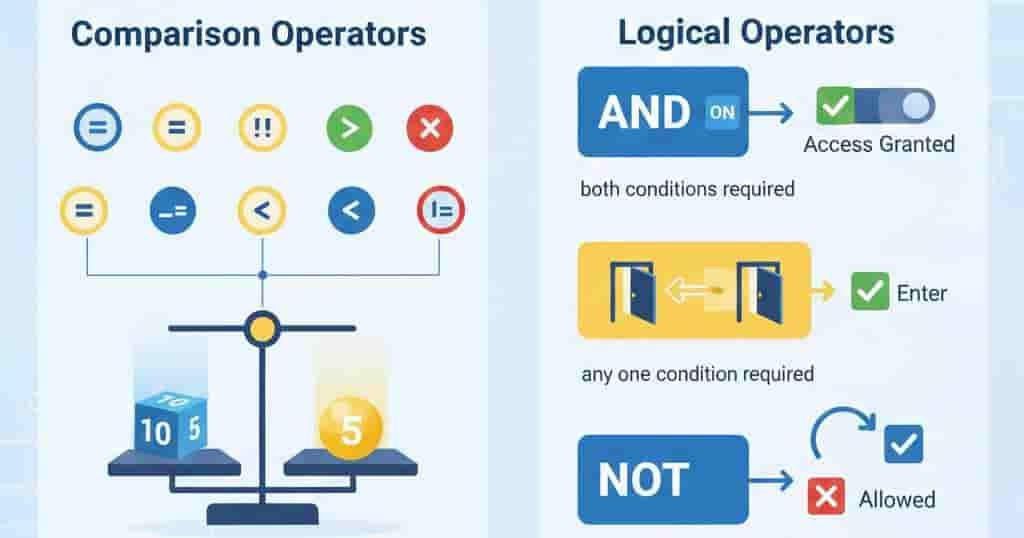
Comparison Operators in Python
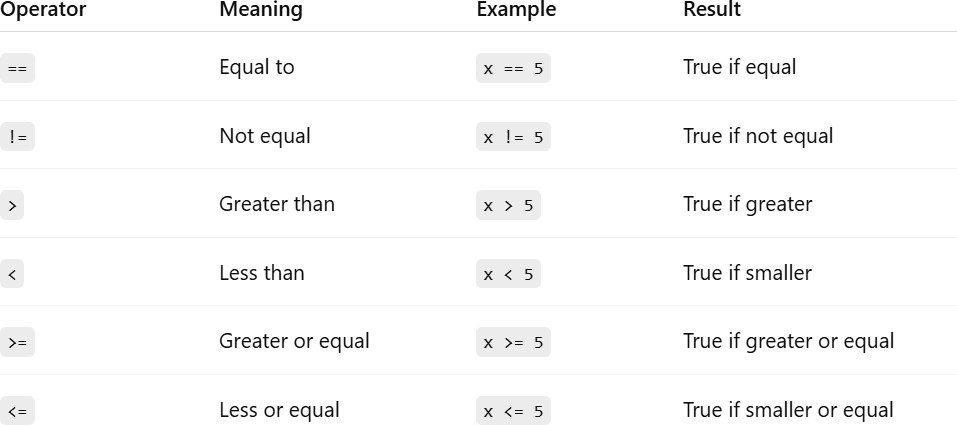
Comparison operators are heavily relied upon in Python for determining the conditions of a conditional statement, and they allow for comparison between two different values and return a Boolean result (True or False). They are the basis for the decision-making process in Python and are used extensively throughout both simple and complex Python programs.
Table 1: Comparison Operators in Python
Example:
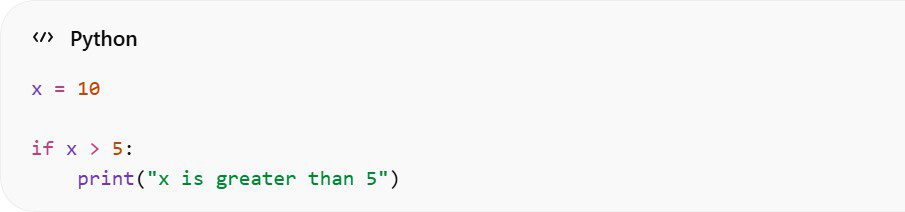
These operators form the backbone of Python conditional logic.
Logical Operators in Python
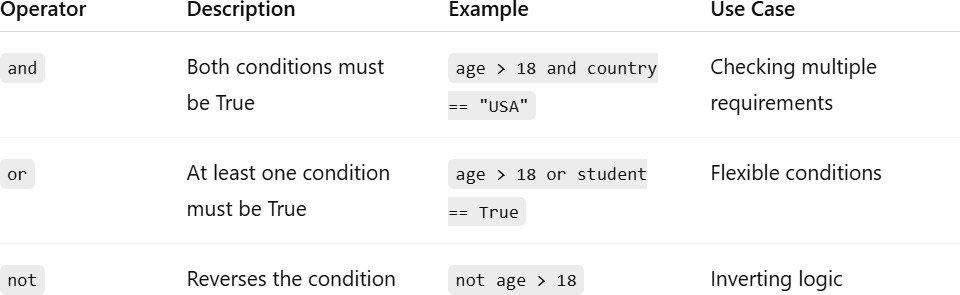
Logical operators allow you to combine multiple conditions inside Python conditional statements.
Table 2: Logical Operators in Python
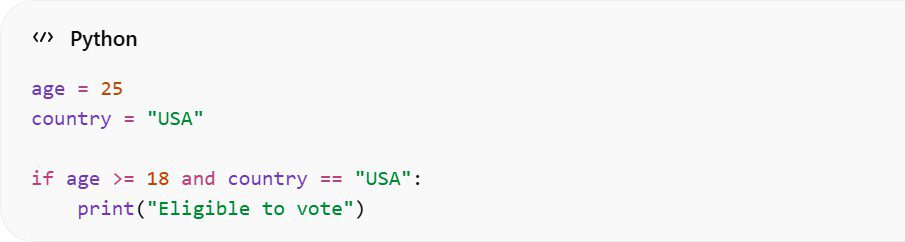
Example:
Comparison: If vs If Else vs If Elif Else
Understanding when to use each type of Python conditional statement is important.
Table 3: Conditional Structure Comparison
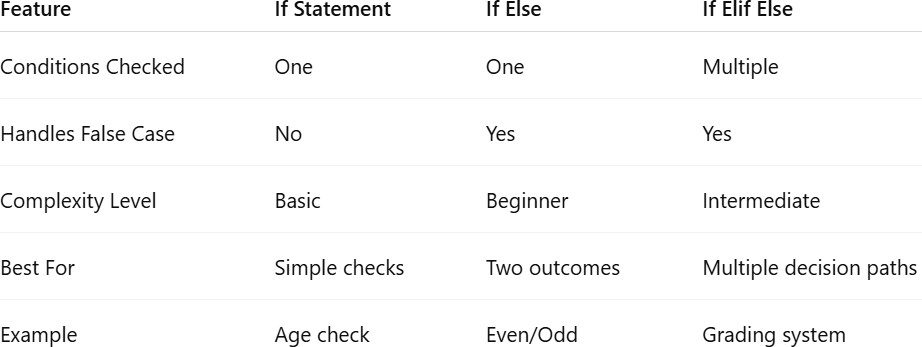
This comparison helps beginners choose the correct structure.
Real-World Examples of Python Conditional Statements
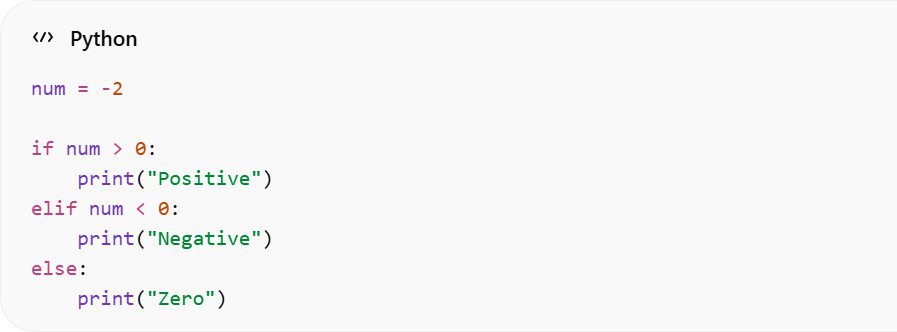
- Positive, Negative, or Zero
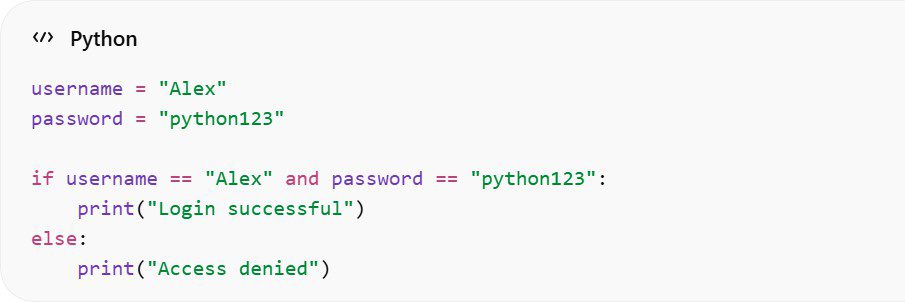
- Login Authentication
- Shopping Discount
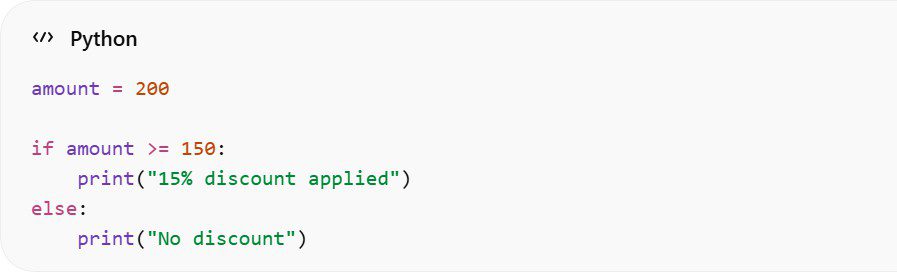
These examples show how Python conditional statements are used globally in real applications.
Common Mistakes Beginners Make
When learning Python conditional statements, beginners often:
- Use = instead of ==
- Forget the colon
- Make indentation errors
- Arrange conditions in the wrong order
- Misunderstand logical operators
Example of incorrect code:
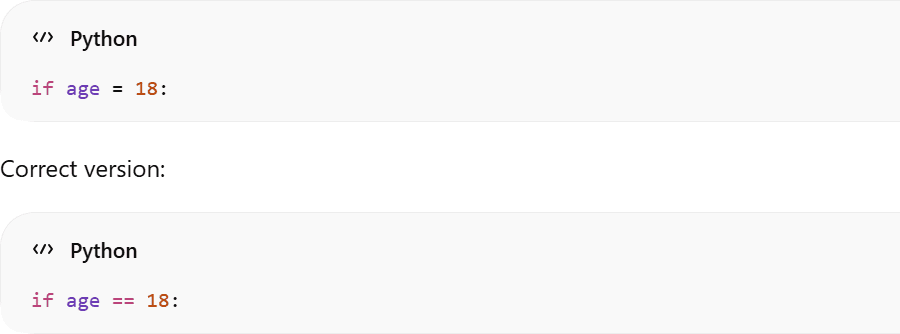
Avoiding these mistakes improves your Python coding skills significantly.
Why Python Conditional Statements Are Important
Every major software application uses Python conditional statements in some form. They are essential in:
- Web development
- Mobile applications
- Game development
- Data analysis
- Automation scripts
- Artificial Intelligence systems
Without Python conditional statements, programs cannot respond intelligently to input or data.
They are the foundation of Python control flow.
Conclusion
In this complete beginner guide, you learned everything about Python conditional statements in a simple and structured way.
The Python if statement
- How to use if else in Python
- How if elif else in Python works
- Comparison operators
- Logical operators
- Real-world examples
- Common mistakes
- Best practices
You’ve now acquired all of the necessary information about Python conditional statements in this Beginner’s Guide.
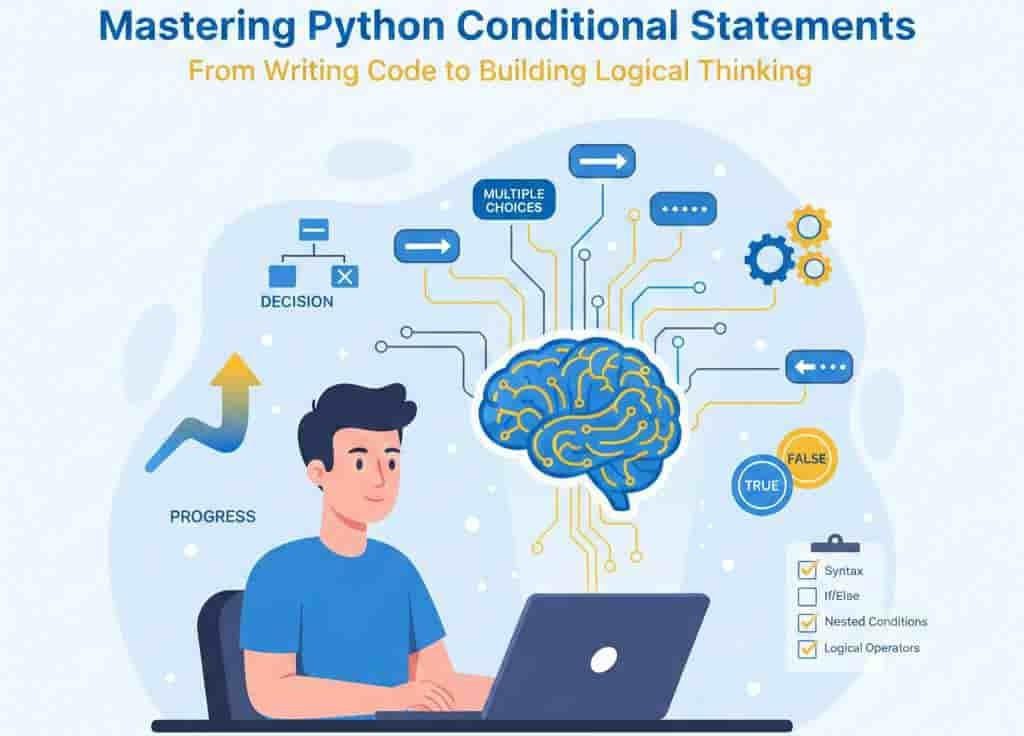
Becoming comfortable with Python coding includes an appreciation of how conditional statements in Python work. Once code can “think” (understanding the meaning of what is written), developers are developing logical processes in their code.
Once your code has gained the ability to “think,” you are no longer simply writing procedures; you have built a logical process into your code.
Next Blog will be on Python Loops
“Now that you understand Python conditional statements, the next important step in your programming journey is learning Python loops. While conditional statements help your program make decisions, loops in Python allow your code to repeat actions efficiently without writing the same code multiple times. In the next guide, we will explore for loops in Python, while loops in Python, and how loops work together with conditional logic to build powerful beginner programs.”

Author: AI Learner Tech
AI Learner Tech is a premier research and educational hub dedicated to mastering Artificial Intelligence, Machine Learning, and Computer Vision. We bridge the gap between complex academic theories and real-world industrial applications. Join our community to access high-quality tutorials, open-source projects, and expert insights. Website: ailearner.tech