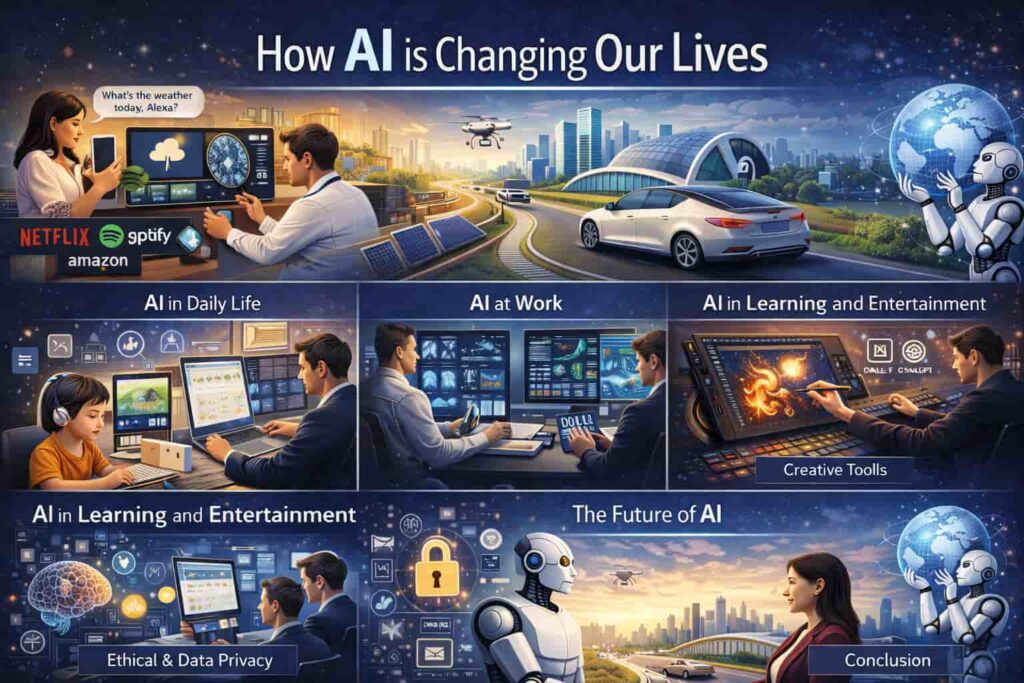
Artificial intelligence (AI) is everywhere. The news talks about it, it’s in your business meetings, and AI is claimed to be changing the world as we know it. The big surprise is that you are actually using AI every day.
You may believe that AI is still in the future and that it is a technical system that has been created by engineers in Silicon Valley, but the truth is, AI is already accessible to you today in everyday situations and throughout your interactions.
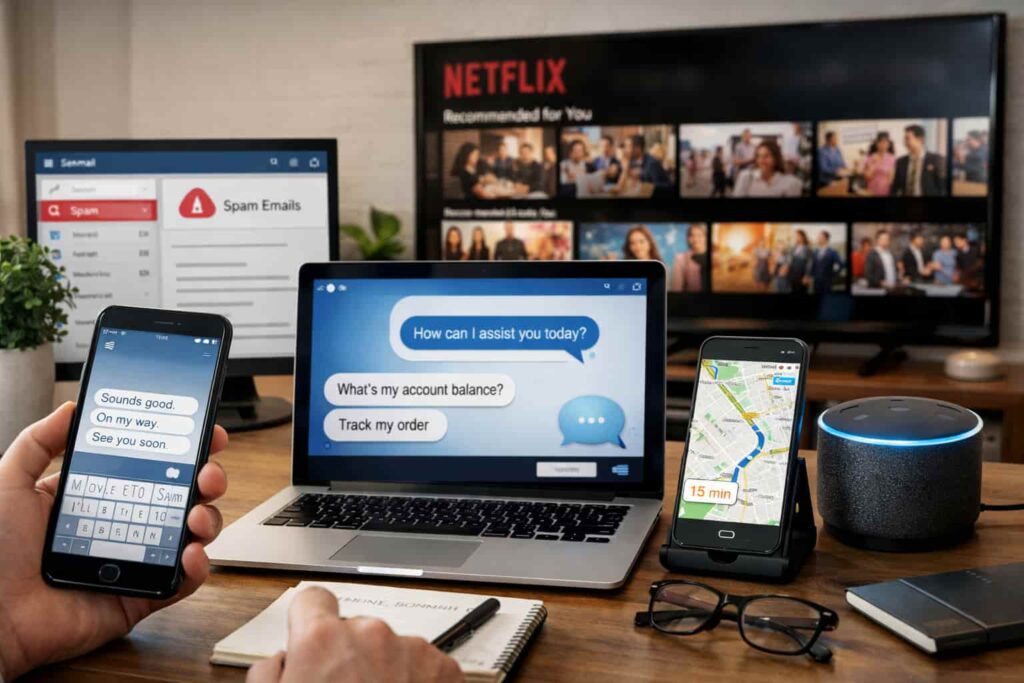
You may have spoken to Siri, used customer support via live chat on a company’s website, received Netflix movie and TV show suggestions to watch, or seen your phone append a text message and/or add punctuation to what you text. These are all examples of how you are currently using AI in a practical way (actual/machine based solutions) without being aware of it.
The trouble with AI is that many explanations about AI are unclear, and there are so many different definitions of AI technology that it is easy to believe that you will never understand AI.
The good news is that, by knowing what are Some Examples of AI You Use Every Day, you will:
- Feel confident rather than confused;
- Understand how your information is being utilized;
- Understand where the industry is heading; and
- Make better decisions regarding the types of tools you will use for work.
What Is Artificial Intelligence in Simple Terms?
For you to understand the Everyday Examples of AI You Already Use, first you have to have a simple definition of AI without the technical jargon.
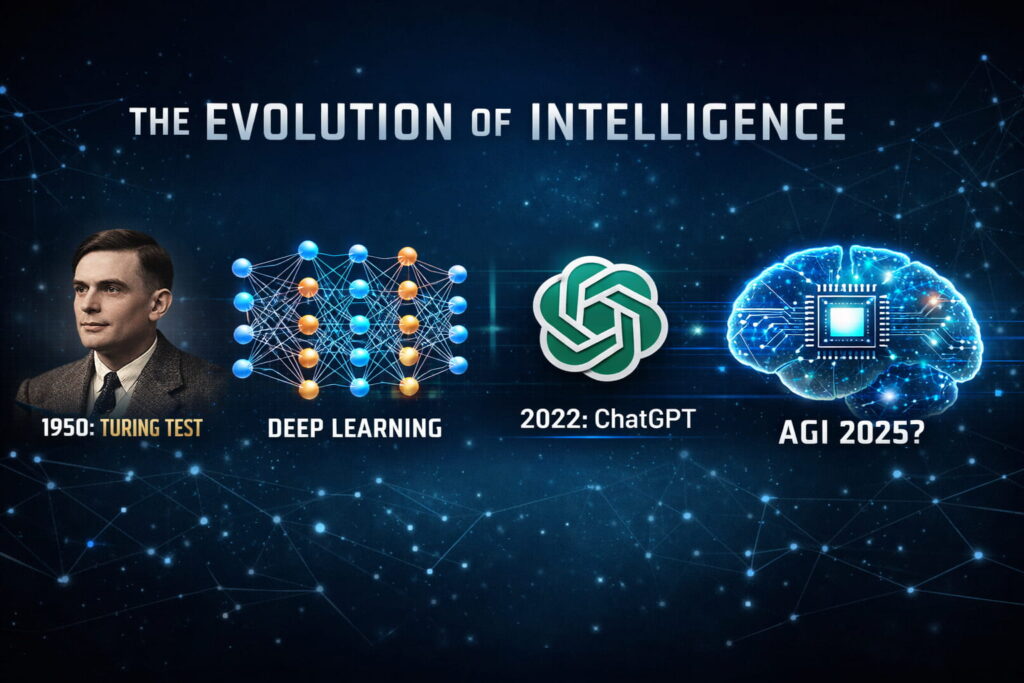
Artificial Intelligence (AI) is when a computer system is made to do the same types of things that humans do with their brain. No robots and no sci-fi, just systems that are trained to recognise patterns and then use those patterns to make decisions and improve continually.
When you look at the Everyday Examples of AI You Already Use, you’ll see a commonality that exists across all of them: They are all predictive in nature. For instance, your phone can predict the next word you are going to type. Netflix can predict what you are going to want to watch next. Google can predict what you are going to search for before you finish typing.
The ability to be predictive is based on data.
AI systems are trained through substantial amounts of data and information. The systems are looking for patterns. Once they have a pattern, the system will use the pattern to make a decision or suggestion. The more data/information the system receives, the more accurate its predictions become. Therefore, the Everyday Examples of AI You Already Use feel smarter and more accurate as they learn from your actions versus thinking the same way humans do.
Let me tell you about something very important.
AI does not have an understanding of things like humans do. It does not have emotions, consciousness, or opinions. The Everyday Examples of AI You Already Use are systems that do calculations so well and so fast that they can reach conclusions before you are able to complete your calculations.
 That is why AI appears to be intelligent.
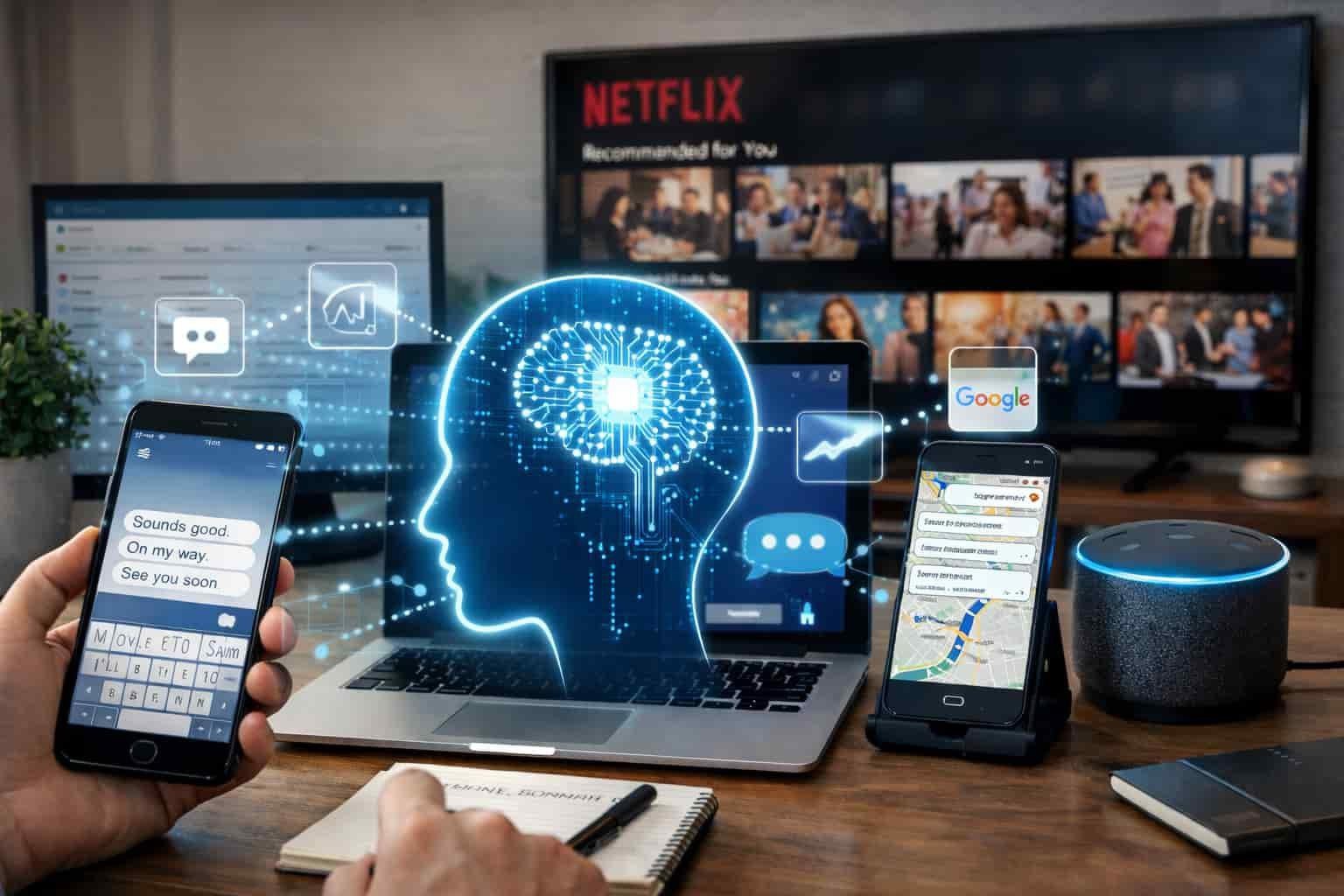 That is why AI appears to be intelligent.
AI responds rapidly to queries, customises results to fit the user’s needs and can adapt to your use of the AI over time. But at the core of AI are just the mathematical calculations and patterns that result from those calculations.
When you think about AI as I have described, the mystery evaporates further. The Everyday Examples of AI You Already Use do not come from a science fiction future; they are simple tools that help you accomplish routine tasks faster, easier and more precisely than you could do on your own.
Now that you know what AI is, let me show you how AI is present in all aspects of your life, most of the time without your realising it.
Artificial Intelligence in Daily Life
AI in Everyday Life: 20 Real-World Examples
Everyday Examples of AI – You’re Already Using Them!
We know what AI is; now let’s look at ways it is relevant to your day and your life. Everyday examples of AI are not just found in laboratories or at technological conventions; they feature prominently (and seamlessly) in every routine activity you carry out.
Smartphone
Predictions and Replies
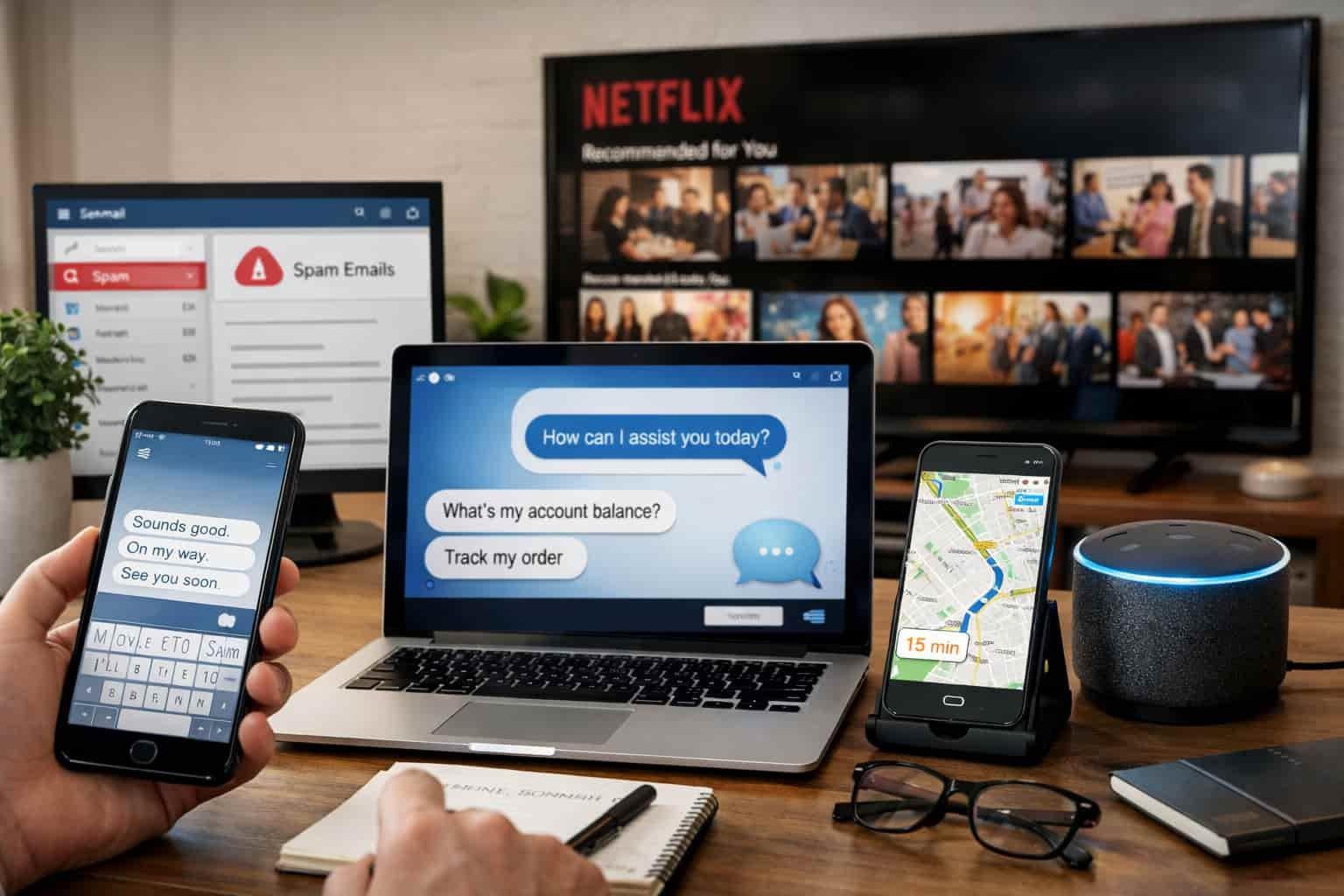
One of the most apparent instances of Everyday AI Examples is seen when your mobile device finishes typing a sentence for you before you even do. Your mobile device is analysing your language, analysing your use of words, predicting what word you use next. Your device is not reading your mind; rather, it is simply calculating the probability of the next word using the data it possesses.
The same concept applies when the suggested responses section of your email offers you options like “That sounds good” or “I will get back to you”. These automatic replies come from your device learning from millions of responses already created and building a response to your email maximising relevant information.
AI in Action – Simple. Quick.
Recommended Streaming Services
To further illustrate that everyday examples of AI exist in many forms, when Netflix recommends the next series and when Spotify creates a custom playlist; they are both using AI.
Like Netflix and Spotify, they source data based on user viewing activities; actions include: what content you watch, what content you skip, what content you re-watch, and what content you search. Using the data from your viewing habits, they compare how you view as an individual to how millions of other users view the same content, thereby creating a prediction of the content you will enjoy watching next. The process of learning continues as you consistently view content.
Social Media Streams
Have you ever thought about how different posts are organized in your stream? Well, the posts that you see at the very top of your stream don’t just happen to be there randomly. Your streams are all built through Artificial Intelligence determining what it is that you would be likely to interaction with based on the type of things you Like, Share, Comment on, and Watch. As such, the choices that you view in your daily life are deeply influenced by AI.
Your Attention is Determined by AI
Maps and Navigation
 Maps and Navigation
Google Maps provides another Everyday Examples of AI You Already Use, through it’s ability to re-route you out of traffic. This is accomplished by analyzing user-generated data such as Real-Time traffic, User Movement, and Historical Traffic data to establish the route from your current location to your destination that will be the Fastest. This tool is constantly updated and changed live and in real-time. When some area of traffic becomes congested, Google Maps learns this and will change the route accordingly, automatically without any direct human intervention.
AI will adjust this data for you within Seconds.
Spam Filtering
Another one of the Everyday Examples of AI You Already Use is Spam! Spam filtering is what has allowed your Email Inbox to stay relatively clean and neat because the AI Systems filter out suspicious email based on Words, Patterns and History of known Spam activity.
Spam Filtering is one of the least obvious Everyday Examples of AI You Already Use, but it is still one of the most important! Without Spam filtering History, your Email would be a total mess!
You can see the Pattern!
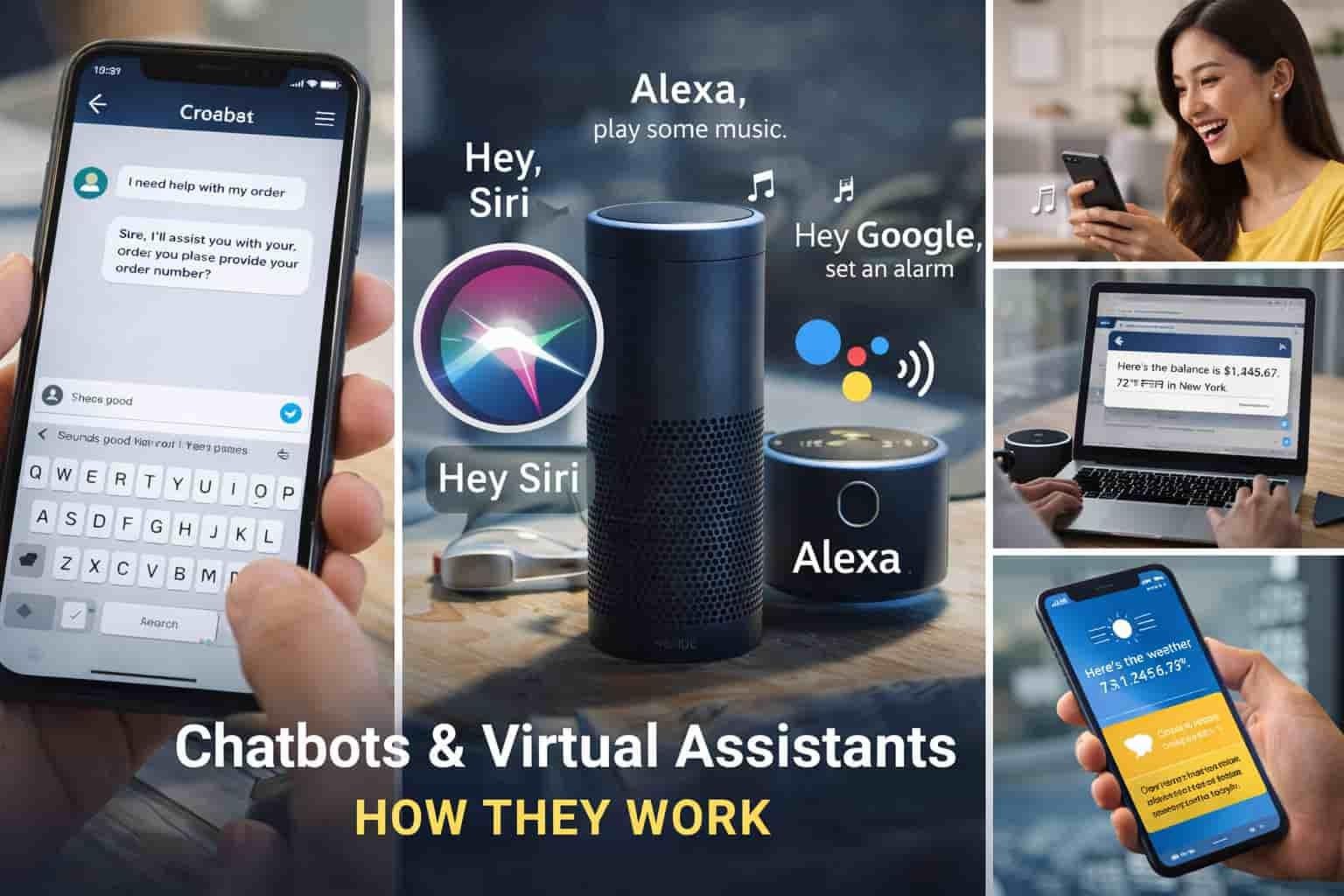
Chatbots and Virtual Assistants: How They Work
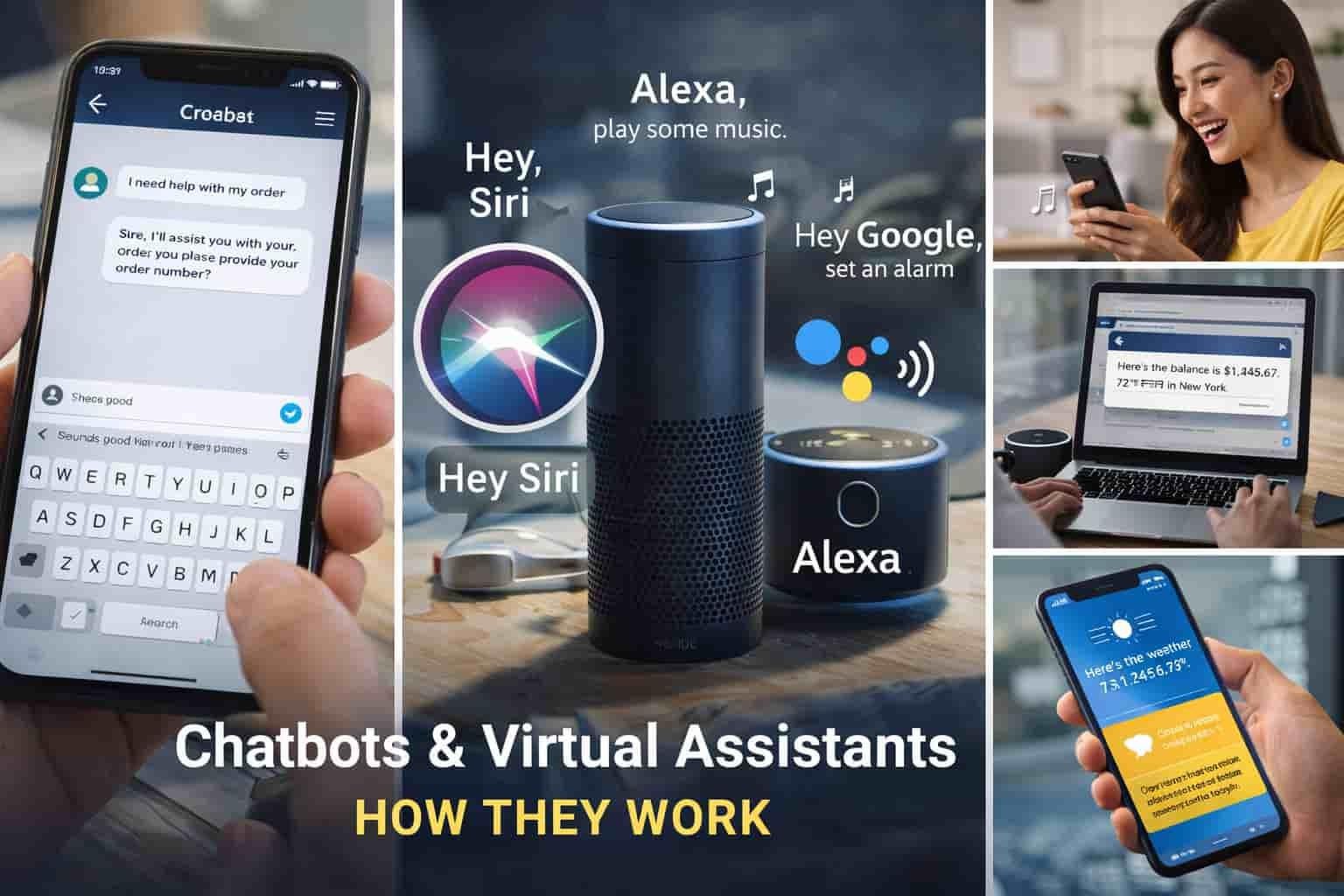
Chatbots and Virtual Assistants are at the forefront of what we think about when we’re considering the most prominent examples of AI found in everyday life.
You have likely typed something into the chat box on a website. You may have asked Siri a question.
You may have requested Alexa to play some songs.
These aren’t some advanced technology that’s going to take place in the future; they are practical, common examples of AI in everyday life that rely on a system built to comprehend and respond to human language.
What Are Chatbots and Virtual Assistants?
Chatbots (also referred to as Conversational Commerce (CC)) and Virtual Assistants (VA) are powerful applications of artificial intelligence (AI); they are designed for interaction via text and/or voice.
A chatbot typically exists on websites, applications, and/or messaging platforms and provides a user with answers to their questions, tracking orders, making appointments, and/or directing users through customer support issues. These Chatbots are common examples of AI in regular use for customer service every day.
Conversely, a virtual assistant is a voice-driven feature built into the user’s device. Apple’s Siri, Amazon’s Alexa, and Google’s Assistant are examples of VAs. Virtual assistants help users with various tasks, such as setting reminders, checking the weather forecast, or sending text messages. Therefore, virtual assistants are also examples of AI in regular use because they combine voice recognition and intelligent responses.
Both chatbots and virtual assistants operate on the same principles: linguistics and predictive analysis.
How Chatbots function
If you’ve ever wondered how chatbots work, the process actually operates differently than you might think.
When you send a message to a chatbot, it performs the following steps:
- The chatbot analyses the context of the user’s input.
- The chatbot determines the user’s intention based on their input.
- The chatbot selects the correct response to the user’s input.
 To perform these functions, chatbots use a form of artificial intelligence called Natural Language Processing (NLP). Simply put, NLP is a way for machines to understand human language. NLP achieves this using various approaches including; breaking sentences down into smaller units and
Virtual Assistants in Everyday Life
Now let’s discuss how we use virtual assistants on a daily basis, and what everyday examples of AI are present in this.
For example, when I say “Hey Siri, what is my weather for today?” several things happen immediately:
- My voice gets translated into words.
- The computer determines what I am requesting.
- The computer figures out where I am.
- The computer looks up weather information.
- The computer returns a spoken response.
All this occurs in a matter of seconds.
The same process is occurring when I ask Alexa for music or Google Assistant to set an alarm. The virtual assistant technology is built by taking voice recognition, speech language
understanding, and prediction algorithms and combining them together in order to complete a task.
As these services are used, they become more personalised to your use. They gather data on your interests, how often you issue commands, and your general behaviour with their use.
This personalisation is what defines everyday AI examples.
Real World Examples of AI Chatbots
Let’s look at specific examples of how we use AI Chatbots in our daily life. Banking apps that provide real-time balance inquiries.
E-commerce sites that track packages. Travel sites to book flights and hotels.
24/7 Customer support to resolve problems through chat methods.
By offering chatbots and virtual assistants, customers can save time while waiting for responses.
What Is Chatbots & Virtual Assistants True Intelligence?
While Chatbots & Virtual Assistants do exhibit a level of ‘intelligence’ by performing specific tasks well, the term ‘intelligent’ should not be used to describe them. Rather, they perform very narrow tasks that involve; identifying patterns, retrieving information and making predictions about their ability to perform those tasks.
They do not possess the ability to ‘think’ in the way you & I do, i.e. they do not have a depth of understanding of emotional states, do not reason like we do, and operate solely on the parameters of established algorithms and learned behaviours.
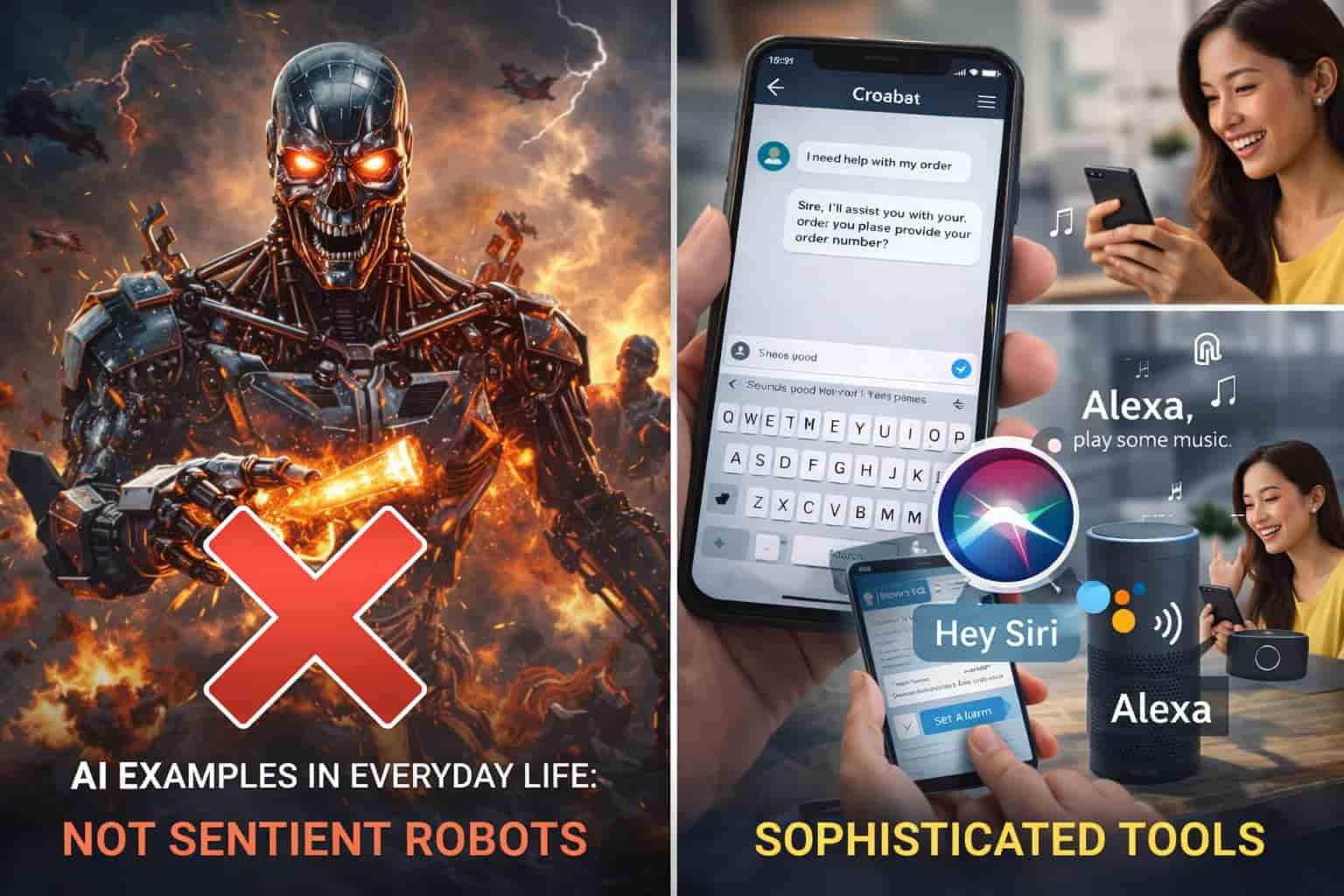 This distinction enables us to demystify Your Everyday Examples of AI You Use; they are sophisticated tools, not sentient life forms.
From this standpoint, it should be clear…
Your Everyday Examples of AI You Use, do not equate to; extraordinary robots attacking humanity but rather, practical systems that have been developed to help create efficiencies, reduce barriers and personalised experience for you.
As a result, Chatbots & Virtual Assistants will be at the forefront of making this transformation a reality.
Everyday Examples of AI You Already Use
Artificial intelligence (AI) is everywhere. The news talks about it, it’s in your business meetings, and AI is claimed to be changing the world as we know it. The big surprise is that you are actually using AI every day.
You may believe that AI is still in the future and that it is a technical system that has been created by engineers in Silicon Valley, but the truth is, AI is already accessible to you today in everyday situations and throughout your interactions.
You may have spoken to Siri, used customer support via live chat on a company’s website, received Netflix movie and TV show suggestions to watch, or seen your phone append a text message and/or add punctuation to what you text. These are all examples of how you are currently using AI in a practical way (actual/machine based solutions) without being aware of it.
The trouble with AI is that many explanations about AI are unclear, and there are so many different definitions of AI technology that it is easy to believe that you will never understand AI.
The good news is that, by knowing what are Some Examples of AI You Use Every Day, you will:
- Feel confident rather than confused;
- Understand how your information is being utilized;
- Understand where the industry is heading; and
- Make better decisions regarding the types of tools you will use for work.
What Is Artificial Intelligence in Simple Terms?
For you to understand the Everyday Examples of AI You Already Use, first you have to have a simple definition of AI without the technical jargon.
Artificial Intelligence (AI) is when a computer system is made to do the same types of things that humans do with their brain. No robots and no sci-fi, just systems that are trained to recognise patterns and then use those patterns to make decisions and improve continually.
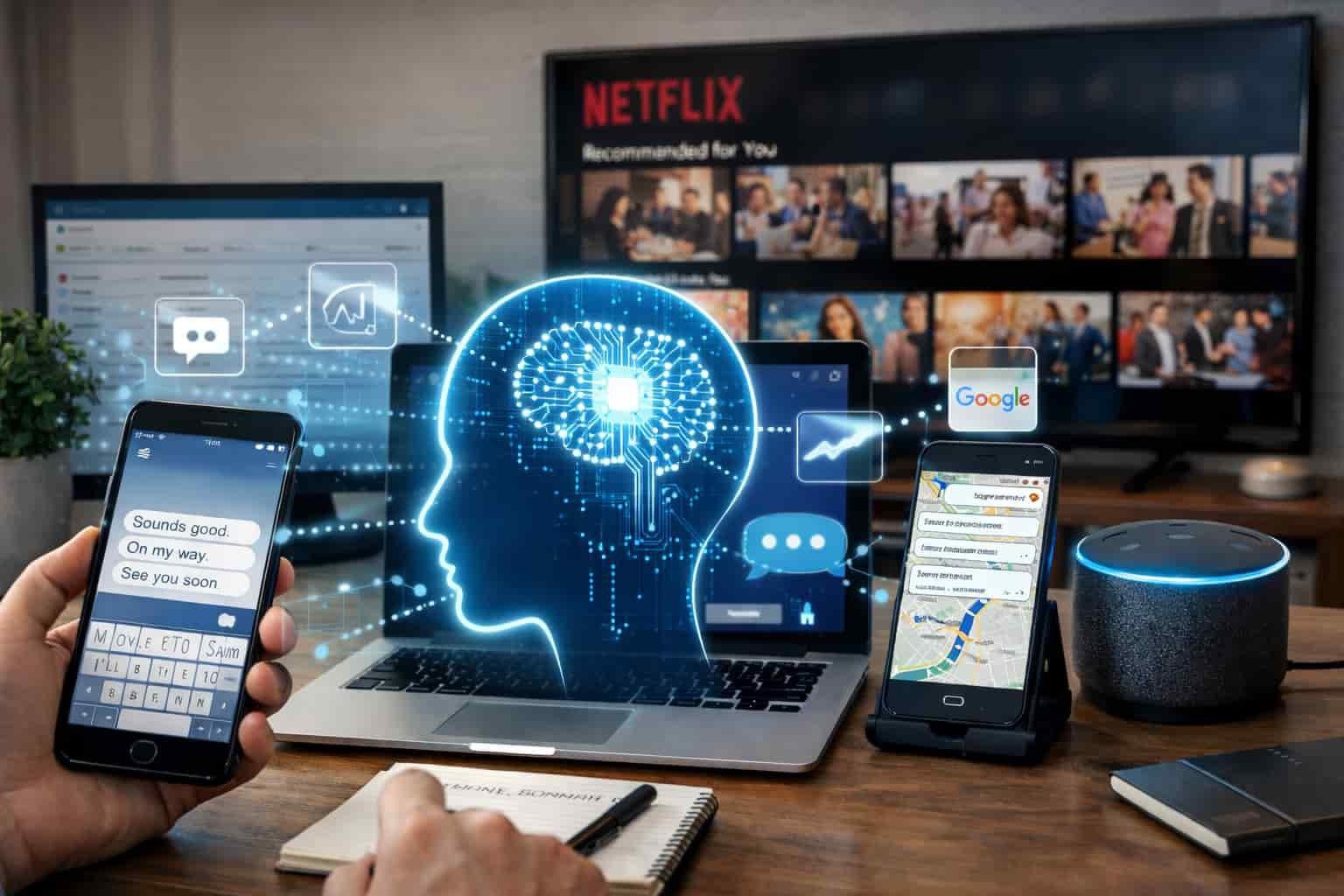
When you look at the Everyday Examples of AI You Already Use, you’ll see a commonality that exists across all of them: They are all predictive in nature. For instance, your phone can predict the next word you are going to type. Netflix can predict what you are going to want to watch next. Google can predict what you are going to search for before you finish typing.
The ability to be predictive is based on data.
AI systems are trained through substantial amounts of data and information. The systems are looking for patterns. Once they have a pattern, the system will use the pattern to make a decision or suggestion. The more data/information the system receives, the more accurate its predictions become. Therefore, the Everyday Examples of AI You Already Use feel smarter and more accurate as they learn from your actions versus thinking the same way humans do.
Let me tell you about something very important.
AI does not have an understanding of things like humans do. It does not have emotions, consciousness, or opinions. The Everyday Examples of AI You Already Use are systems that do calculations so well and so fast that they can reach conclusions before you are able to complete your calculations.
That is why AI appears to be intelligent.
 That is why AI appears to be intelligent.
AI responds rapidly to queries, customises results to fit the user’s needs and can adapt to your use of the AI over time. But at the core of AI are just the mathematical calculations and patterns that result from those calculations.
When you think about AI as I have described, the mystery evaporates further. The Everyday Examples of AI You Already Use do not come from a science fiction future; they are simple tools that help you accomplish routine tasks faster, easier and more precisely than you could do on your own.
Now that you know what AI is, let me show you how AI is present in all aspects of your life, most of the time without your realising it.
Everyday Examples of AI You Already Use
Everyday AI Examples – You’re Already Using Them!
We know what AI is; now let’s look at ways it is relevant to your day and your life. Everyday examples of AI are not just found in laboratories or at technological conventions; they feature prominently (and seamlessly) in every routine activity you carry out.
Smartphone
Predictions and Replies
One of the most apparent instances of Everyday AI Examples is seen when your mobile device finishes typing a sentence for you before you even do. Your mobile device is analysing your language, analysing your use of words, predicting what word you use next. Your device is not reading your mind; rather, it is simply calculating the probability of the next word using the data it possesses.
The same concept applies when the suggested responses section of your email offers you options like “That sounds good” or “I will get back to you”. These automatic replies come from your device learning from millions of responses already created and building a response to your email maximising relevant information.
AI in Action – Simple. Quick.
Recommended Streaming Services
To further illustrate that everyday examples of AI exist in many forms, when Netflix recommends the next series and when Spotify creates a custom playlist; they are both using AI.
Like Netflix and Spotify, they source data based on user viewing activities; actions include: what content you watch, what content you skip, what content you re-watch, and what content you search. Using the data from your viewing habits, they compare how you view as an individual to how millions of other users view the same content, thereby creating a prediction of the content you will enjoy watching next. The process of learning continues as you consistently view content.
Social Media Streams
Have you ever thought about how different posts are organized in your stream? Well, the posts that you see at the very top of your stream don’t just happen to be there randomly. Your streams are all built through Artificial Intelligence determining what it is that you would be likely to interaction with based on the type of things you Like, Share, Comment on, and Watch. As such, the choices that you view in your daily life are deeply influenced by AI.
Your Attention is Determined by AI
Maps and Navigation
 Maps and Navigation
Google Maps provides another Everyday Examples of AI You Already Use, through it’s ability to re-route you out of traffic. This is accomplished by analyzing user-generated data such as Real-Time traffic, User Movement, and Historical Traffic data to establish the route from your current location to your destination that will be the Fastest. This tool is constantly updated and changed live and in real-time. When some area of traffic becomes congested, Google Maps learns this and will change the route accordingly, automatically without any direct human intervention.
AI will adjust this data for you within Seconds.
Spam Filtering
Another one of the Everyday Examples of AI You Already Use is Spam! Spam filtering is what has allowed your Email Inbox to stay relatively clean and neat because the AI Systems filter out suspicious email based on Words, Patterns and History of known Spam activity.
Spam Filtering is one of the least obvious Everyday Examples of AI You Already Use, but it is still one of the most important! Without Spam filtering History, your Email would be a total mess!
You can see the Pattern!
Chatbots and Virtual Assistants: How They Work
Chatbots and Virtual Assistants are at the forefront of what we think about when we’re considering the most prominent examples of AI found in everyday life.
You have likely typed something into the chat box on a website. You may have asked Siri a question.
You may have requested Alexa to play some songs.
These aren’t some advanced technology that’s going to take place in the future; they are practical, common examples of AI in everyday life that rely on a system built to comprehend and respond to human language.
So, let’s break this down.
What Are Chatbots and Virtual Assistants?
Chatbots (also referred to as Conversational Commerce (CC)) and Virtual Assistants (VA) are powerful applications of artificial intelligence (AI); they are designed for interaction via text and/or voice.
A chatbot typically exists on websites, applications, and/or messaging platforms and provides a user with answers to their questions, tracking orders, making appointments, and/or directing users through customer support issues. These Chatbots are common examples of AI in regular use for customer service every day.
Conversely, a virtual assistant is a voice-driven feature built into the user’s device. Apple’s Siri, Amazon’s Alexa, and Google’s Assistant are examples of VAs. Virtual assistants help users with various tasks, such as setting reminders, checking the weather forecast, or sending text messages. Therefore, virtual assistants are also examples of AI in regular use because they combine voice recognition and intelligent responses.
Both chatbots and virtual assistants operate on the same principles: linguistics and predictive analysis.
How Chatbots function
If you’ve ever wondered how chatbots work, the process actually operates differently than you might think.
When you send a message to a chatbot, it performs the following steps:
- The chatbot analyses the context of the user’s input.
- The chatbot determines the user’s intention based on their input.
- The chatbot selects the correct response to the user’s input.
To perform these functions, chatbots use a form of artificial intelligence called Natural Language Processing (NLP). Simply put, NLP is a way for machines to understand human language. NLP achieves this using various approaches including; breaking sentences down into smaller units and
Virtual Assistants in Everyday Life
Now let’s discuss how we use virtual assistants on a daily basis, and what everyday examples of AI are present in this.
For example, when I say “Hey Siri, what is my weather for today?” several things happen immediately:
- My voice gets translated into words.
- The computer determines what I am requesting.
- The computer figures out where I am.
- The computer looks up weather information.
- The computer returns a spoken response.
All this occurs in a matter of seconds.
The same process is occurring when I ask Alexa for music or Google Assistant to set an alarm. The virtual assistant technology is built by taking voice recognition, speech language
understanding, and prediction algorithms and combining them together in order to complete a task.
As these services are used, they become more personalised to your use. They gather data on your interests, how often you issue commands, and your general behaviour with their use.
This personalisation is what defines everyday AI examples.
Real World Examples of AI Chatbots
Let’s look at specific examples of how we use AI Chatbots in our daily life. Banking apps that provide real-time balance inquiries.
E-commerce sites that track packages. Travel sites to book flights and hotels.
24/7 Customer support to resolve problems through chat methods.
By offering chatbots and virtual assistants, customers can save time while waiting for responses.
What Is Chatbots & Virtual Assistants True Intelligence?
The simple answer is…they are not.
While Chatbots & Virtual Assistants do exhibit a level of ‘intelligence’ by performing specific tasks well, the term ‘intelligent’ should not be used to describe them. Rather, they perform very narrow tasks that involve; identifying patterns, retrieving information and making predictions about their ability to perform those tasks.
They do not possess the ability to ‘think’ in the way you & I do, i.e. they do not have a depth of understanding of emotional states, do not reason like we do, and operate solely on the parameters of established algorithms and learned behaviours.
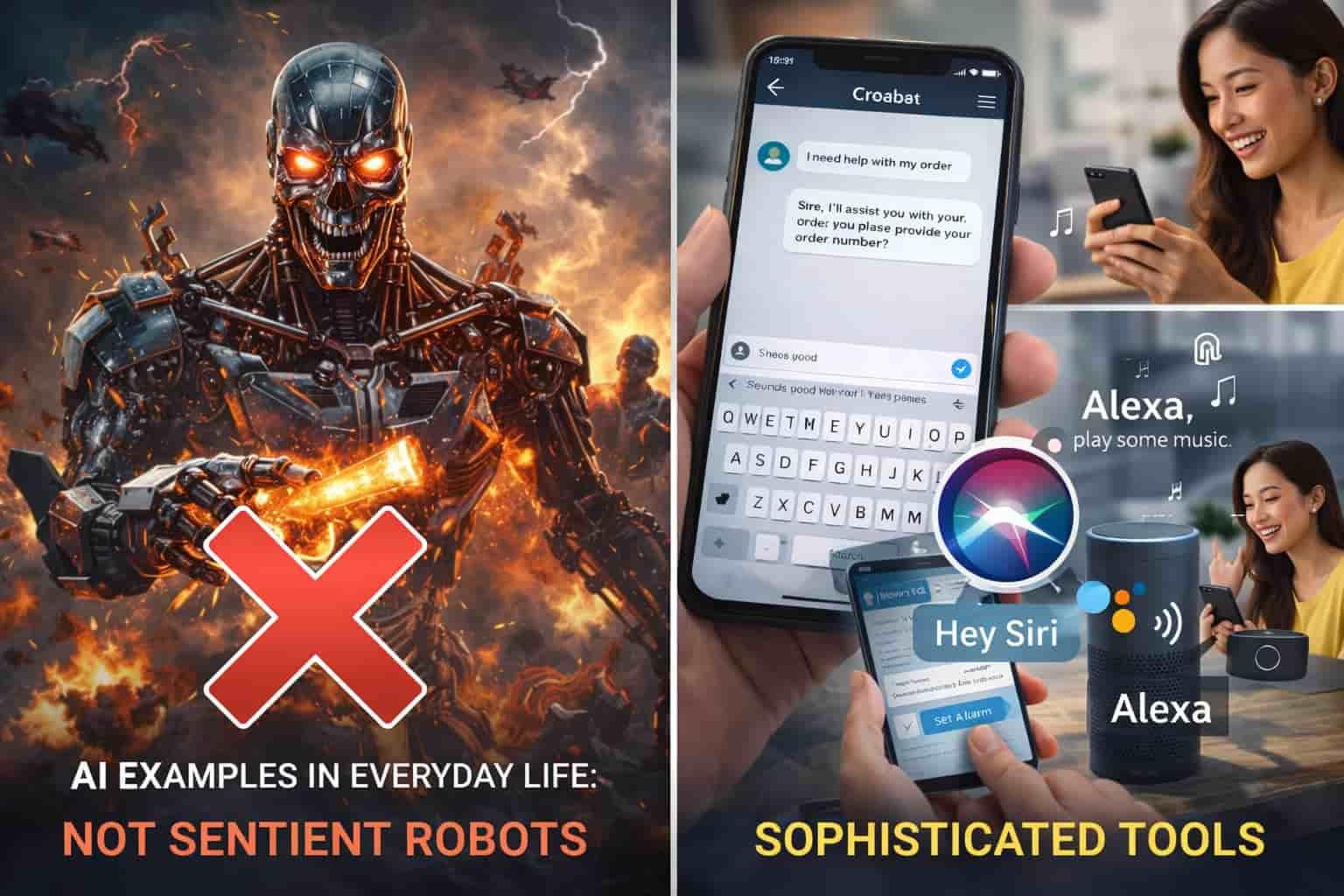
This distinction enables us to demystify Your Everyday Examples of AI You Use; they are sophisticated tools, not sentient life forms.
From this standpoint, it should be clear…
Your Everyday Examples of AI You Use, do not equate to; extraordinary robots attacking humanity but rather, practical systems that have been developed to help create efficiencies, reduce barriers and personalised experience for you.
As a result, Chatbots & Virtual Assistants will be at the forefront of making this transformation a reality.
Conclusion
Artificial Intelligence in daily life is already shaping the way you live, work, and interact with technology. From smartphones and streaming platforms to maps, spam filters, chatbots, and virtual assistants, AI quietly powers many of the tools you use every day. These systems are not futuristic robots — they are data-driven technologies designed to make tasks faster, easier, and more personalized.
The truth is simple: AI is not the future anymore. It is already a natural part of your everyday life.

Author: AI Learner Tech
AI Learner Tech is a premier research and educational hub dedicated to mastering Artificial Intelligence, Machine Learning, and Computer Vision. We bridge the gap between complex academic theories and real-world industrial applications. Join our community to access high-quality tutorials, open-source projects, and expert insights. Website: ailearner.tech