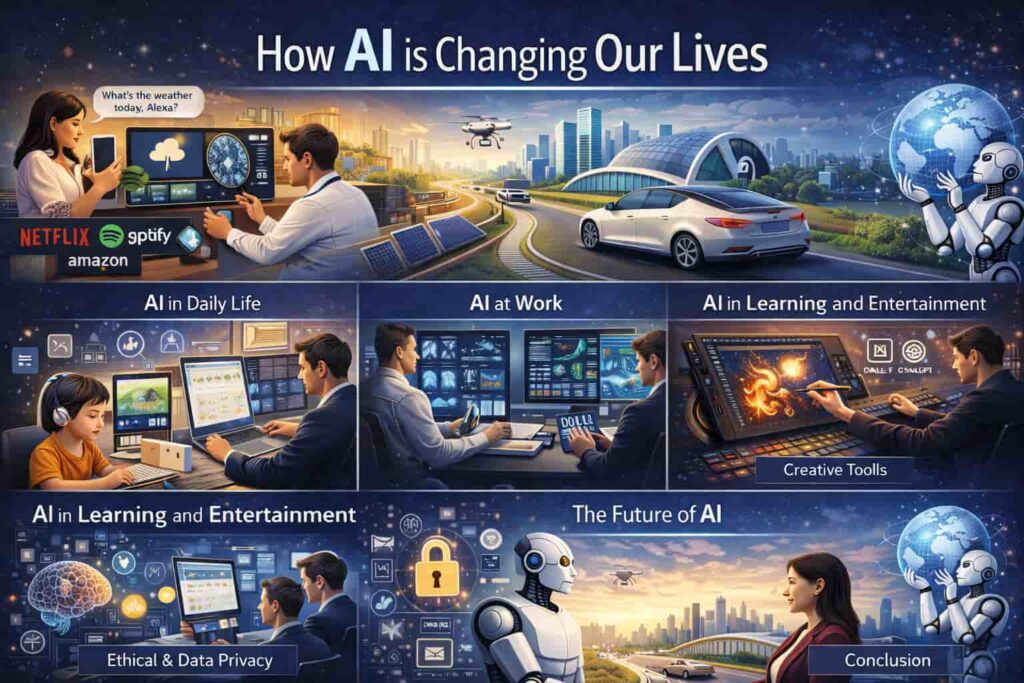
Learning AI is no longer just a concept from science fiction; it has become a daily occurrence in our lives. Today, AI is everywhere—from the movie recommendations you see on Netflix and YouTube to the smart chatbots used for customer service.
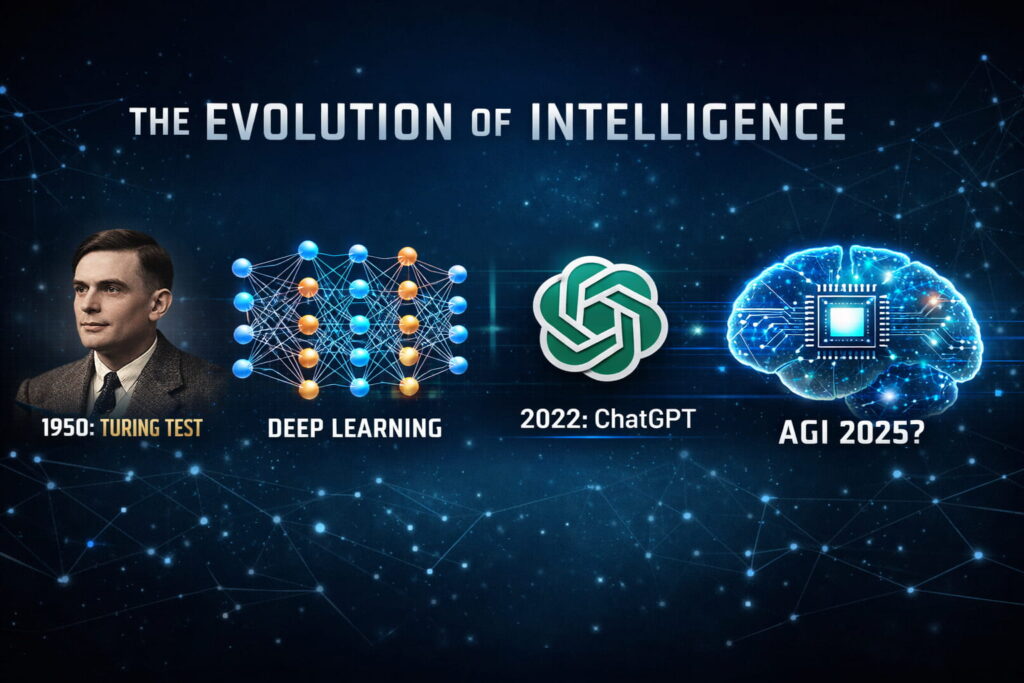
Before you begin your roadmap, you can also read about the History of AI to see how far the technology has come.
This guide will show you how to start your own journey in this exciting field. AI is a hidden part of your life that has been working to improve your life without you knowing it. If you are a student looking for the best way to start learning about AI, you’re not alone: many students feel overwhelmed by how much they need to know and might be asking themselves: “Do I need to be good at Math?” “What programming language should I start with to learn how to code with respect to the creation/development of AI?” “As an individual
without prior experience, do I have what it takes to be able to create an AI system?” However, the reality is that anyone can begin to learn about and use AI today, regardless of their experience. The purpose of this guide is to provide an organized guide for students who are just starting to learn about AI. Along with providing practical tips, tools and resources for learning, this information will also include step-by-step instructions to give students a solid foundation for continuing to learn about AI
and to build their skills as they develop their understanding of how AI works and to eventually develop their own AI systems.
Artificial Intelligence (AI) at its essence is the capacity for machines and/or software systems to complete tasks typically requiring human thought. Examples of AI include: Learning from datasets
(large collections of data), recognising patterns in images and/or spoken phrases, predicting outcomes, comprehending people’s spoken language and problem-solving capabilities.
Examples of where you can find AI today include: Netflix movie recommendations; Google Assistant responding to your commands via voice; a self-driving vehicle using data from multiple sensors to
successfully navigate roads.
Facial recognition on cell phones Learning AI is yet another example of AI in action. In addition to being classed as a single technology, AI is composed of many other areas of study or competence (programming, mathematics, statistics, calculations and data analysis); therefore, it is an area of study that provides diverse opportunities for students.
So what does learning about AI mean for students? There are plenty of Learning AI reasons why students should spend time on learning about AI. One reason would be that AI skills are becoming increasingly sought after across the globe with engineers, machine learning professionals, and data scientists being at the forefront in terms of compensation. Another reason is the fact that AI represents a skill set that is future-proof. As automation continues to replace manual labour jobs, AI skill sets will be in greater demand across most industries. In addition to these benefits, learning about AI opens up new avenues to entrepreneurship and start-up opportunities as students develop intelligent applications (e.g., chatbots and other technologies) which solve real-life challenges. Furthermore, those with AI skill sets will be able to work remotely as contract workers for international companies. Finally, AI enables students to create innovative ideas since they will have the skillset to create intelligent systems rather than merely basic programs. As a result, students equipped with AI skills have a major competitive advantage when they enter into an employment market.
For those just starting out in AI, often one of the main concerns is if advanced math is needed in order to get started learning this field. While it will be beneficial for you to have a strong understanding of math, you don’t need to be a “math wizard” to start. For most beginners, having foundational knowledge in subjects such as algebra, probability and statistics; basic linear algebra (vectors & matrices); and basic calculus will be sufficient. Instead of memorizing complex mathematical formulas from the beginning and trying to fit them into your coding projects or working to implement them before actually knowing how they work, I suggest that you should learn these concepts as you are doing your practical coding projects. This way, it will be much easier for you to understand the mathematics of these concepts.

Learning artificial intelligence requires first understanding some basics of programming first. As for programming languages, Python tends to be the most commonly used one because Learning AI has a simple syntax, many tools available to write programs, and a lot of people creating tutorials, articles, and free software programs to help you. The first step in programming is understanding what programming is. Variables, loops, conditional statements, functions/lists/dictionaries, file I/O, and basic OOP are some of the most important things a programmer needs to know how to do. One great way to practice programming skills is by creating small applications such as a calculator or a basic to-do app, creating simple games, or automating tasks through scripting. Once you learn Python, you’ll have a good base to build off of when you start using AI libraries and frameworks in the future.
Once you’ve built your programming skill set, you’ll want to build your math skills so that you can understand the mathematics that drive AI. Once you know the mathematics involved with AI, you will be able to better understand the machine learning and deep learning algorithms. The first step in building your mathematics skill set is to get comfortable using statistics. Some of the basic statistics will be needed for machine learning, including the average (mean/median), some sample statistics of data sets (probability), and know how to describe a data distribution.
The second part of your math skill set would be the fundamentals of linear algebra, including being familiar with vectors (1D arrays) and matrices (2D arrays) and working them together to solve problems. These skills will also be important for building a machine learning model.
Finally, students Learning AI should become familiar with basic concepts from calculus including derivatives and gradients. These concepts are vital to understanding how to optimize deep learning models effectively.
You do not have to have a full understanding of calculus at this point to start working with AI algorithms; Learning AI a basic understanding is sufficient as you continue to expand your knowledge of AI.
Once you’re familiar with Data Collection, you can start exploring Machine Learning (ML). As an essential component of AI, ML allows systems to learn and improve from experience (i.e., through data) without being specifically written for it. Machine Learning has three primary categories of
Algorithms: Supervised Learning (predicting outcomes based on variable input data and previous known outcomes); Unsupervised Learning (finding hidden relationships in data); and Reinforcement Learning (using rewards and punishments to govern how an agent learns based on experience). For beginners, suitable ML algorithms include: Linear Regression, Logistic Regression, Decision Trees, K-Nearest Neighbor (KNN), and K-Means Clustering. Scikit-learn provides extensive support in Python to implement many algorithms with ease and test the results of implemented ML algorithms on actual datasets.
Once individuals have finished with their introductory course work around machine learning, they can move on into the realm of deep learning, which is the underlying engine driving many of today’s sophisticated forms of artificial intelligence, including self-driving vehicles, image recognition, and chatbots. Learning deep learning begins with an understanding of how neural networks operate:
Understanding Neurons, layers, and activation functions, as well as, back propagation and the training of a neural network. In addition, students should be familiar with different types of deep learning networks such as convolutional neural networks (CNNs), which are used primarily for image recognition, and recurrent neural networks (RNNs), which are utilized for sequential data, such as written text or spoken language. Additionally, Learning AI students will need to become acquainted with various software platforms used for deep learning, including TensorFlow, Keras, and PyTorch. It may be beneficial to start with smaller projects, such as identifying hand-written digits or performing sentiment analysis of written text, before progressing to developing more complex models.
Once you feel comfortable with the fundamental concepts and principles of deep learning, you may want to consider specializing in one of the numerous branches of artificial intelligence. Because AI is so vast in scope, the many fields of study are endless. For example, if you have an interest in computer vision, you will want to work on projects such as facial recognition or object detection. If you find the study of natural language processing (NLP) intriguing, you can choose to work on projects such as developing chatbots, developing language translation tools, or summarizing written documents. If you have an interest in robotics, you may wish to develop projects that integrate AI technologies with hardware devices. If you are interested in the application of AI in the healthcare industry, you may focus on building models to predict disease or modelling to analyze medical images. Ultimately, selecting an area of specialization helps to focus your learning and develop particular expertise in an area of artificial intelligence.
Gaining hands-on experience is very important; therefore, pursuing as many real-world AI projects as possible is essential. Some examples are building a spam email filter, creating a movie recommendation engine, building a simple chatbot, and developing an image classifier. Completing projects like these will allow you to solidify your understanding of the theory and further develop your problem-solving abilities, plus they will add value to your portfolio.
Once you’ve built up your project experience, you will want to learn how to use tools used in the industry to help you get ready for work. Tools like Jupyter Notebook and Google Colab will allow you to run experiments with code and test models. GitHub will provide you with version control and a way to share your projects, and you can use Docker to make applications portable. Cloud platforms such as AWS, Azure or Google Cloud will allow you to deploy AI Models for real-world applications, all of which will increase your competitiveness in the job market.
The learning experience of artificial intelligence can be significantly enhanced by participating in both communities and competitions. For example, individuals who are interested in artificial intelligence can participate in competitions and engage with the data collections provided on Kaggle. There are also several online communities, including LinkedIn groups and AI forums, where members can receive assistance, mentorship, and collaborate with others. Competing in a competition helps to build analytical and problem-solving skills, as well as provide recognition for work, which may assist in obtaining internship or freelance positions later.

In addition to competing in AI competitions, it is essential for individuals to create a portfolio of real-world examples. A portfolio should consist of completed works, GitHub repositories, blogs that describe the projects and/ or how to complete tasks, video demonstrations of the completed projects, and previous internships and/or freelance experience. A strong portfolio demonstrates the ability to apply AI principles in real-world scenarios, and can often be more convincing to recruiters than degrees or certifications.
Once an individual has gained a solid understanding of the basics of AI, there are numerous advanced areas of interest that students can pursue. These areas include generative AI (focused on the production of text, images, and music), AI model deployment (the process of developing RESTful APIs and hosting AI models in the cloud), MLOps (managing production-level AI models), and ethical AI (addressing issues of bias, fairness, and privacy). Engaging with advanced topics provides the opportunity to remain up-to-date in the field and find more job opportunities. The most important part of learning AI is consistency. Practicing every day, even just one hour at a time, can add up over the long run. A good strategy for students is to regularly work on small coding problems, find datasets to explore, create small side projects, read research papers, and watch tutorials. All of these activities provide opportunities to reinforce what was learned and build confidence, and they will also develop skills faster than not practicing regularly.
For a more structured approach to learning AI, below is a roadmap for students for their first 12 months:
1-2 months: Learning basic Python Programming.
3-4 months: Improving math/bookkeeping, and working with data in Python.
5-6 months: Learning machine learning basics.
7-8 months: Working on practicum projects using real-world datasets.
9-10 months: Studying deep learning and neural networks.
11-12 months: specializing in one particular AI area and completing a capstone project. By following this roadmap, students will have gained enough experience in AI by the end of their first year to apply for internships, freelance work, or personal projects using AI.
Once students feel comfortable using AI, they should explore ways to earn money from their newfound skill set. Examples include freelance work developing tools using AI, automating processes using AI, or providing data analysis services using AI to clients. Students will also gain valuable work experience by completing an internship with a technology company. Developing software as a service (SaaS) applications using AI, writing instructional blogs, or creating Youtube tutorials can lead to income streams. Other students may also consider starting their own companies with the intention of using AI to solve problems for people in the real world; through hard work and perseverance, AI skills can provide significant career and income opportunities.
AI Careers Have Great Potential More and more companies are implementing advanced technologies to help automate their operations. Robotics, healthcare systems, driverless cars, education, and customized digital experiences are some of the many areas that will be changed by the introduction of artificial intelligence (AI). Students who begin studying and understanding these concepts today will be among the ones who create new, and innovative, solutions tomorrow and develop highly sought after skills.
Getting Started in AI
If you want a successful future in Learning AI , you have to work towards your goal. Building a roadmap and putting in the necessary time and effort will ensure you get there. The first step to starting your career in AI is to learn to program in Python. The next is to improve your math and data skills. Then, you should work on acquiring skills in machine learning and deep learning. Once you have a strong skill set, start developing projects that demonstrate your skills. After you have some projects to showcase, pick an area of specialization and learn all about it. Finally, you should continue to learn more advanced topics in your specialty. The key to becoming successful with AI is practice and consistency. The longer you work at it, the better you will become. To put it simply, yesterday was the best time to start your AI journey. The second best time is now. Start by completing small tasks, stay focused, and within a year you will be able to create an intelligent system, which would set you on your path toward a successful AI career.
What Is Artificial Intelligence?

Let’s take a closer look at AI before we begin to learn about it.
Artificial Intelligence refers to the capability of software or machines to perform tasks that require
- human intelligence; these tasks may include:
- Learning based on data
- Recognizing sound and images
- Making predictions and decisions
- Interpreting human communication-or language
- Fixing problems with no human assistance.
Artificial Intelligence is an option you could use to simulate various elements of human intelligence.
Examples of Artificial Intelligence are:
- Netflix recommends shows to you they think you will like based on predictions
- Siri and Alexa respond to your instructions
- Cars that drive themselves based on information from sensors
- Phones that know who you are by identifying your face. Artificial Intelligence is not a separate technology; it is made up of programming, math, statistics, and data analysis working together to provide intelligent solutions.
Why Should Students Learn AI?
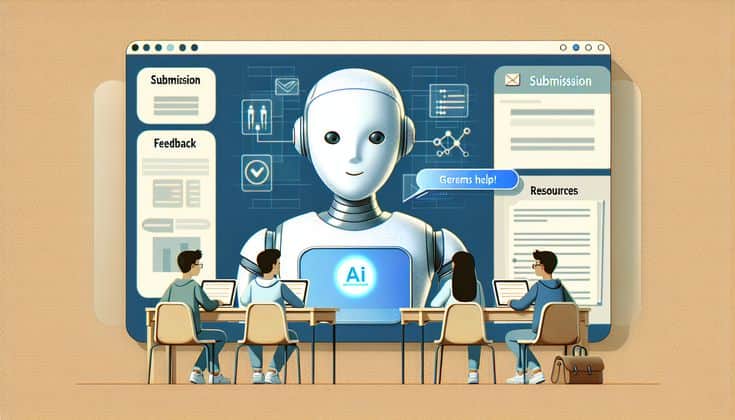
You may be asking, “What’s so great about using my time to start learning AI?” To that, here are some
compelling reasons why AI will radically change the world for students:
- – Career choices are plentiful, high-paying and in demand. People working in AI, machine learning and data scientists have among the highest global salaries.
- –Skills learned today will be as valuable tomorrow as they are now. Many manual, repetitive jobs are being automated, but AI-related skills are going to be “must haves” for many job classifications.
- – Startups can use AI technologies to build and release new products quickly. For instance, many students are already creating AI-powered applications and chatbots to help solve significant challenges facing society.
- – Students will have more opportunities than ever before to find work all over the world because of the availability of AI and machine learning-based jobs that permit working from anywhere in the world.
- – Students will be able to create smart applications rather than simple applications so they will have a substantial advantage over their competitors when applying for jobs.
Do You Need Advanced Math to Learn AI?

When learning how to use AI, many people believe that they must be skilled mathematicians; while it can be advantageous to have some math skills, it isn’t required that you learn all mathematical concepts before starting your journey of building an AI project.
Some examples of the Mathematical concepts you will need when building AI models are:
- Algebra (formulas and equations),
- Probability & Statistics (data and predicting),
- Linear Algebra (matrices and vectors) and
- Calculus basics (finding gradients and optimizing).
The best way to learn math, while creating AI, is to learn mathematical concepts through application instead of memorizing complicated mathematical formulas or theories before starting.
Step 1: Learn Programming Fundamentals

AI is primarily composed of code. The first step in building an AI program is programming itself.
Python is the best programming language for developing AI.
The following are the reasons Python has become the number one programming language for AI development:
- The syntax of Python is very easy to read and understand.
- There are numerous libraries available in Python for AI applications.
- The community that supports Python development is very large.
- Newcomers can start programming in Python easily.
- Here are some topics that you will learn about while learning to program in Python:
- Data Types and Variables
- Loops and Decisions
- Functions
- Lists, Dictionaries, and Sets
- Reading and Writing Files
- Introduction to Object Oriented Programming
Some beginner projects you might work on are:
- Calculator
- To Do List Application
- Simple Games (Tic-Tac-Toe)
- Scripting for Automation
After becoming comfortable with Python, you will be ready to work with Python libraries designed for developing AI.
Step 2: Learn Basic Mathematics for AI
Once your code has been created, Learning AI is then the moment that you could start brushing up on your mathematics knowledge – BUT YOU ONLY NEED TO KNOW THE BASICS AT THE BEGINNING OF THIS LEARNING EXPERIENCE
Key Focus Areas:
- Statistics
– Mean, median and mode
– Concepts of probability
– Data patterns and distributions
- Linear Algebra
– Vectors
– Matrix multiplication and operations
- Calculus (Basic Understanding)
– Derivatives and gradient
– Minimizing your parameter choices from Machine Learning to create better predictions You will build up to these math’s basics over time as you continue to code by doing coding projects over time.
Step 3: Understand Data
AI depends on data, and before creating models for AI systems, one must understand how to manage data.
Topics That Will Be Covered:
- Data that is either structured or unstructured;
- Data cleaning (preparation of data) and pre-processing (the procedure that must be followed before an AI system can use the data) of data;
How to handle missing values;
How to visualize data;
Tools and Libraries Used For Data Analysis:
- NumPy – Used for numerical calculations;
- Pandas – Used for processing data;
- Matplotlib/Seaborn – Used for creating visual displays of data.
Practical Idea:
Get a small data set to explore (such as student scores, weather data, sales data) – analyze data for any trends; create graphs and display patterns found in the data.
Step 4: Learn Machine Learning Basics
Machine Learning is a critical aspect of AI. ML makes it possible for devices to learn via large amounts of information; there are several distinct forms of machine learning based on data collection methodology: supervised learning based on identified target values (e.g., predicting property values); unsupervised learning based on non-identified subscriptions (e.g., classifying customers into groups); Reinforcement learning based on experience, where the system attempts to maximize reward while completing tasks (e.g., video gaming, robotics).
Examples of entry-level form machine-learning systems include linear regression, logistic regression, decision trees, k-nearest neighbors (KNN), and clustering (K-means). Scikit-learn is a library in the Python programming language ideal for beginners to apply algorithms quickly.
The final steps to AI Learning is deep learning, and deep learning is another form of AI that supports various technologies such as self-driving cars, chat bots, and image recognition.
Deep learning is based on the following topics:
- – Basic elements of neural networks
- – Activation functions- Back propagation
- – Convolutional neural networks (CNN) for images
- – Recurrent neural networks (RNN) for sequences of text.
Commonly used tools in deep learning are TensorFlow, Pytorch, and Keras.For example, you can begin deep learning by creating/developing a simple neural network for digit recognition or learning to classify sentiments.
Step 5: Choose an AI Specialization
Now that you have the fundamentals, it is time to focus on a specific area of Artificial Intelligence.
There are multiple areas in AI which are organized as follows:
- Computer Vision
These systems will analyze visual images and video.
Examples: Facial Recognition and Object Detection
- Natural Language Processing (NLP)
These systems will understand human natural language so that they can communicate naturally.
Examples: Chat Bot and Language Translation
- Robotics
This is a combination of hardware and AI technology.
Examples: Autonomous Robot and Drones
- Healthcare
Healthcare AI will assist in predicting disease and will be able to analyze medical images.
Choose an area to focus on that fits your interests and desired career path.
Step 6: Be Involved in Real World Projects
Being involved in real-world projects will enhance your learning experience and help build your
portfolio.
Potential projects to be involved with while learning:
- Spam email classification
- Movie recommendations
- Chat Bot development
- Image classification
- Predicting academic performance
Tip: Post your open-source work on GitHub to demonstrate your ability to recruiters and potential clients.
Step 7: Learn Industry Tools
AI professionals make use of different tools to help them with developing, managing and deploying their own AI models.
Some of the tools available include:
- Jupyter Notebooks for coding/testing.
- Google Colab (cloud-based python environment)
- Github to track versions of your code.
- Docker allows you to create containers.
- Cloud providers such as AWS, Azure, GCP.
If you have experience using these tools, you’re on your way to becoming “industry-ready” as an AI developer.
Step 8: Join AI Communities & Competitions
Learning AI by yourself is much slower than learning with others! Use communities to learn and compete with other people.
Use these platforms:
- Kaggle – data science competition community
- GitHub – open source projects and collaborations
- AI/Machine Learning communities and forums
- LinkedIn AI Groups – connect with like-minded individuals
When you enter competitions, you develop problem-solving skills and gain recognition for your work.
Step 9: Build an AI Portfolio
More important than any degree or certification out there is having a strong portfolio.
Your portfolio can include things like:
- Projects which contain code and demos
- GitHub repositories
- Blog posts detailing your projects
- Videos of your models in action
- Internships and/or freelance work
Your portfolio will show that you have hands-on experience to solve problems using AI.
Step 10: Explore Advanced AI Topics
Once you have learned the fundamentals of AI, it’s time to dive deeper into some new and innovative technologies:
- Generative AI – Tools that generate text, images, or audio content. ChatGPT, DALL·E, MidJourney.
- AI Model Deployment – Creating an API to deploy your trained AI model(s) in the cloud.
- MLOps – Managing your deployed ML models through versioning, pipeline automation, and monitoring.
- Ethical AI – Avoid bias in your AI models and build responsible, fair, and respect the privacy of users.
Step 11: Practice Daily
Your routine should include working on Code/Algorithm problems daily, exploring Data Sets, working on Mini Projects, reading Ethically like books/blogs, watching tutorial videos and learning about new Tools. You will be amazed at how much just one hour of daily practice will build up into being an accomplished coder over time.
12-Month AI Roadmap for Students12-Month AI Roadmap for Students
A practical timeline is as follows:
- Python Programming Fundamentals (1-2)
- Mathematics and Data Handling (3-4)
- Machine Learning Fundamentals (5-6)
- Real-World Datasets Projects (9-10)
- Deep Learning/Neural Networks (11-12)
Specialization and Deployment In one calendar year you will be capable of successfully implementing your own AI project(s) and beginning to apply to internships or freelance positions.
How Students Can Earn Money With AI
Upon acquiring adequate skill sets, students can consider earning money by:
- Freelancing – Building AI-based software applications (tools), automating tasks, and analyzing data.
- Internships – Obtaining hands-on experience at technology-related companies.
- Creating SaaS-based products by designing applications based on AI.
- Content Creation – Blogging or creating YouTube videos and/or tutorials about AI applications.
- Startups – Solving actual business-related issues using AI.
As skills improve, so too do potentials for income.
Tips to Stay Motivated

If you’re learning AI, it’s easy to lose focus; here’s how to stay motivated.
- Always be creating small projects
- Create an ongoing record of your accomplishments.
- Network with others who are learning AI or working on AI projects.
- Use competitions to hone your skills.
- Take time to celebrate all of your small successes. Spend time with others (friends/mentors) who share your passion for AI.
- Be patient; success in AI will take time and many months of practice — it won’t happen overnight!
Future of AI Careers
Technological advancements and business-innovators are shaping our future through AI in many
different sectors. These include:
- – Robotics and Automation
- – Healthcare with smart systems
- – Self-Driving Vehicles
- – Education that incorporates AI
- – Personalized Digital Experiences
Tomorrow’s technologists will be the ones who learn the valuable skills related to AI today
Conclusion

Beginning your journey into AI may be daunting, but with a roadmap, every student can successfully achieve success.
Summary:
Learn how to program with Python
- Gain knowledge and understanding of mathematics and statistics. Study both machine learning and deep learning.
- Complete actual projects.
- Decide on an area of specialty.
- Become familiar with industry standards.
- Become part of online communities and participate in competitions.
- Create an impressive portfolio of your work.
- Learn more about complex AI subjects.
- Practice regularly.
- AI isn’t just another job skill; it’s the 21st-century superpower. The best time to start was yesterday;
- The second best time to start is today. If you start small and are consistent, in one year, you will have
- Built an intelligent system and started on a career in AI that will be incredibly rewarding!
Author: AI Learner Tech
AI Learner Tech is a premier research and educational hub dedicated to mastering Artificial Intelligence, Machine Learning, and Computer Vision. We bridge the gap between complex academic theories and real-world industrial applications. Join our community to access high-quality tutorials, open-source projects, and expert insights. Website: ailearner.tech